
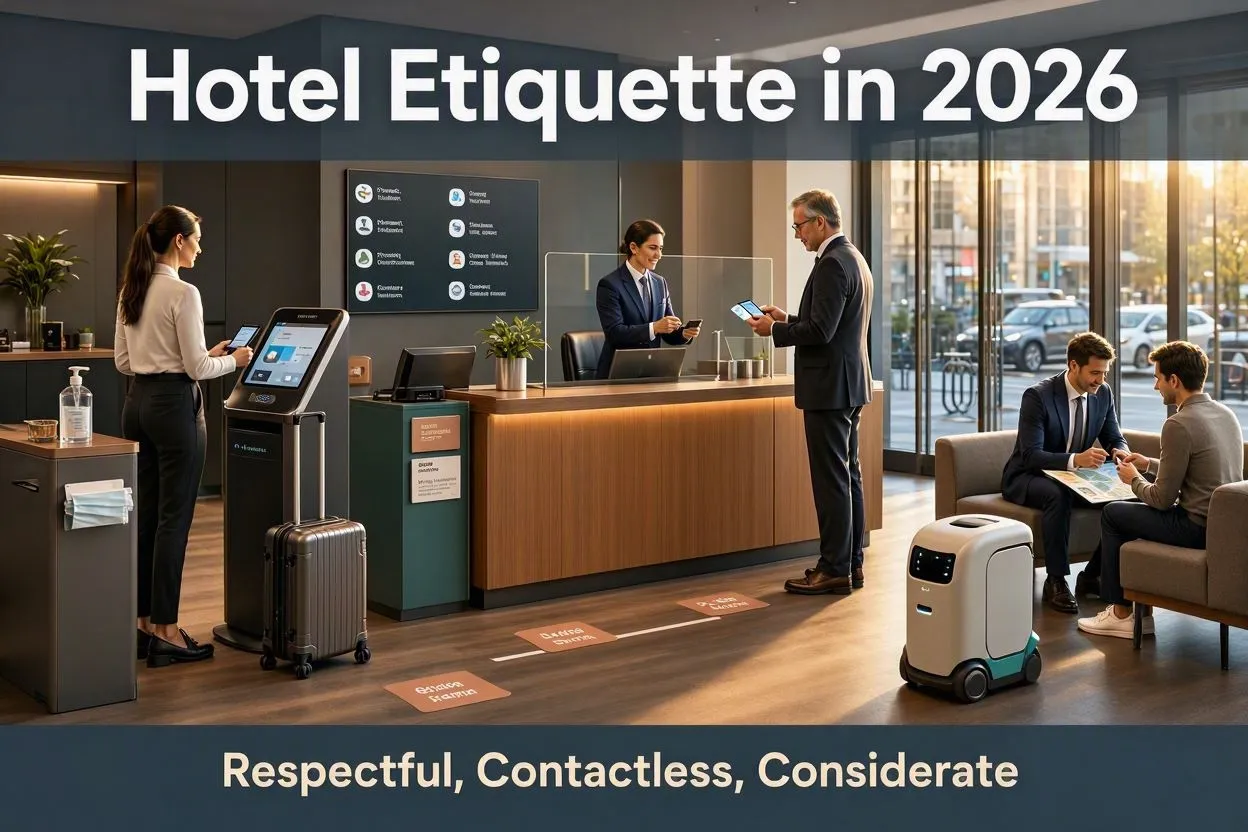
Hotel etiquette covers the unwritten rules that separate a considerate guest from a forgettable one, and most travellers learn these rules through trial and error rather than any single reliable source. A hotel functions as a shared space between paying guests, hard-working staff, and neighbours who never chose to share a wall with you. Small habits, including how you tip, how loudly you talk in a hallway, and what you take home from the minibar shelf, shape whether a hotel remembers you fondly or quietly hopes you book somewhere else next time.
This guide breaks hotel etiquette into the exact situations guests face most often, with specific numbers instead of vague advice.
What Counts as Good Hotel Etiquette
Good hotel etiquette rests on three habits: treating staff as skilled professionals rather than servants, respecting the fact that walls and doors carry sound further than expected, and leaving spaces in roughly the condition you found them. None of these habits cost money. A guest who greets housekeeping by name, keeps a private phone call brief in a shared hallway, and tidies a room before checkout has already covered most of what separates a good stay from a memorable complaint filed by the guest next door.
Staff notice guests who treat requests as favours rather than entitlements. A polite tone at the front desk often earns a guest better service throughout a stay, since front-desk staff control room assignments, upgrade availability, and how quickly problems get resolved.
Etiquette expectations also scale with the type of property. A budget roadside hotel and a five-star resort share the same baseline courtesy, but a luxury property adds unspoken expectations around dress, noise, and how guests interact with a larger service staff, including a dedicated concierge, valet, and multiple daily housekeeping visits. Matching effort to setting, rather than applying one fixed standard everywhere, keeps a guest from either underdressing at a formal property or overtipping at a budget one.
Tipping Etiquette: Who to Tip and How Much
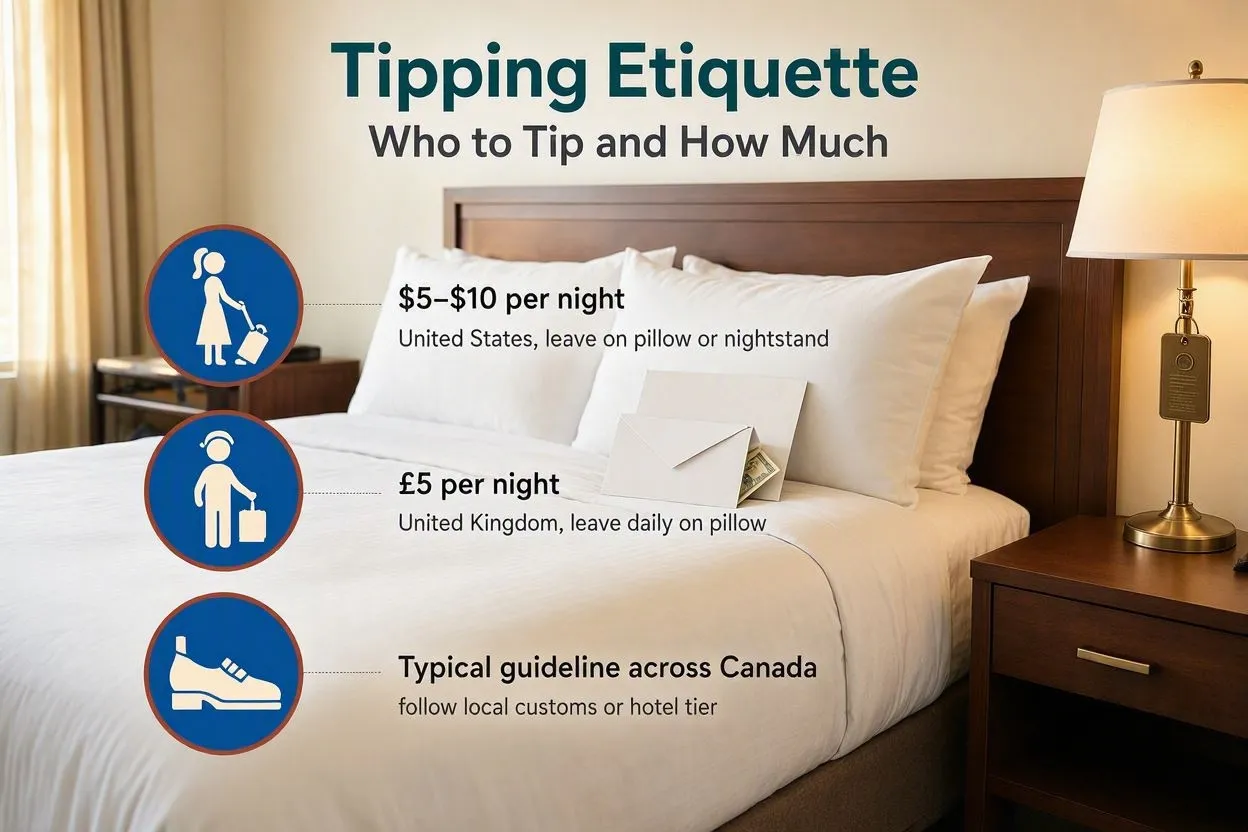
Tipping expectations shift by country and hotel tier, but a few benchmarks apply across most full-service properties in the United States, the United Kingdom, and Canada.
Housekeeping
Leave $5 to $10 per night in the United States, or £5 per night in the United Kingdom, placed visibly on the pillow or nightstand with a short note. Leave the tip daily rather than in one lump sum at checkout if the stay runs longer than one night, since housekeeping staff rotate shifts and the person who cleaned night one may not clean night four.
Valet, Porter, and Concierge
Tip a valet attendant $3 to $7 at pickup and again at drop-off. Tip a porter or bellhop $1 to $2 per bag delivered to the room. Tip a concierge $10 to $20 for securing hard-to-get reservations or tickets, paid once at the end of the service rather than per interaction.
Food and Beverage Staff
Tip restaurant and room-service staff 15% to 20% of the bill, checking first whether a service charge already appears on the total. Tip a bartender $1 to $2 per drink at a hotel bar, or 15% to 20% on a full tab. Room-service delivery often includes a built-in delivery fee separate from a tip, so check the receipt line-by-line before adding a second gratuity on top of a charge that already covers the delivery itself.
Check-In and Check-Out Etiquette
Arrive during standard daylight check-in hours when possible, since early or unusually late arrivals put extra pressure on front-desk staff managing room turnover. Notify the hotel in advance if arrival will happen after 10 PM so the reservation stays held without a guarantee call.
Request a late checkout politely rather than assuming it, since housekeeping schedules build around a fixed departure window. A hotel running near full occupancy has far less flexibility to grant a late checkout than one running half-empty, so ask early in the stay rather than on the last morning. Loyalty programme membership often unlocks a later checkout window automatically, so joining a hotel’s free rewards programme before arrival can solve this request before it needs asking at all.
In-Room Etiquette
Towels, Linens, and Sustainability
Hang a towel on a rack or hook to signal reuse, and leave it on the floor to signal a change is wanted. Many hotels change bed linens every 3 nights by default; tell housekeeping directly if a full week’s stay doesn’t require a mid-week linen change, since skipping it saves water and staff time. on
What You Can (and Can’t) Take Home
Small toiletries, pens, notepads with the hotel logo, and disposable slippers count as fair souvenirs since hotels price these into the room rate. Towels, bathrobes, hairdryers, alarm clocks, coat hangers, and crockery do not leave with a guest under any circumstance, and hotels increasingly charge a guest’s card automatically for anything missing at checkout.
Noise and Quiet Hours
Most hotels observe quiet hours between 10 PM and 8 AM, applying to hallways, adjoining rooms, and shared balconies alike. Move a phone call to normal indoor volume rather than a lobby-style projection voice, since hotel corridors carry sound further than a private home due to hard flooring and narrow layouts. Call the front desk directly, rather than confronting a noisy neighbour in person, if noise becomes a problem, since staff have practiced experience de-escalating these situations without creating a confrontation between guests.
Breakfast Buffet Etiquette

Take only what will actually get eaten in one sitting, since half-eaten plates of pastries get thrown away and drive up food waste. Pack a small snack for later in a napkin or to-go container if the hotel offers one, rather than filling a bag directly from the serving trays in front of other guests. Queue in the order guests arrive at the buffet line, even during a busy morning rush, since queue-jumping remains one of the most commonly cited guest complaints in hotel etiquette surveys.
Dress Code in Shared Spaces
Cover swimwear and robes before entering the lobby, restaurant, or elevator, even at a beach or resort property. A hotel doesn’t require formal wear for shared spaces, but pyjamas, bathrobes, and pool attire stay confined to guest rooms and pool decks specifically. Keep a light cover-up on hand for hot climates, so your shoulders stay covered when walking between the pool and the room.
Pool and Spa Etiquette
Reserve a sun lounger only while actually using it, rather than draping a towel over it at dawn and returning hours later. Many properties now enforce a 2-hour maximum on unattended loungers specifically because this habit draws more complaints than almost any other pool-area behaviour. Shower before entering a shared pool or hot tub, and skip diving or splashing near guests who are clearly there to relax rather than swim laps. Keep spa-area conversations quiet, since treatment rooms and relaxation lounges sit close enough together that a loud phone call carries through the walls.
Family Travel Etiquette
A child’s behaviour in shared spaces remains the responsibility of the accompanying adult, not the hotel staff. Hold a young child’s hand through the lobby and near the pool deck rather than letting them run unsupervised, since hard marble floors and glass doors create real injury risk beyond the usual parenting eye-roll about noise. Ask the front desk about family-specific amenities, including cribs, kids’ clubs, and connecting rooms, at the time of booking rather than at check-in, since these resources sell out first during school-holiday periods. Keep a young child’s noise contained to guest rooms and designated play areas after 8 PM, matching the same courtesy adult guests owe each other during quiet hours.
Digital-Age Hotel Etiquette
Avoid posting a room number, door number, or visible key card in photos shared publicly, since this information can compromise security for the length of a stay. Keep video calls in a room rather than a hallway or lobby, and use headphones for any audio in shared spaces. Silence phone notifications during meals in hotel restaurants, matching the same courtesy expected in any public dining room.
Elevator and Lobby Etiquette
Let arriving passengers exit an elevator before entering it, and hold the door briefly for someone visibly rushing toward it rather than watching it close. Keep luggage carts and strollers positioned to one side of an elevator car so other passengers can board without climbing over bags. Speak at a normal conversational volume in a lobby, since these spaces amplify sound more than a private room does.
Hotel Etiquette Around the World
Tipping norms shift sharply by country, so research local convention before assuming a US-style tip applies everywhere. Japan and parts of Australia treat tipping as unnecessary or even mildly offensive in many service contexts, while much of Western Europe folds a service charge directly into the bill already. Canadian hotels generally mirror US tipping norms closely, though at a slightly lower rate in many provinces, while UK hotels increasingly add a discretionary service charge automatically, making an additional cash tip optional rather than expected. Ask the front desk directly about local tipping conventions on arrival if travelling somewhere unfamiliar, rather than guessing based on habits from home.
Handling Problems the Right Way
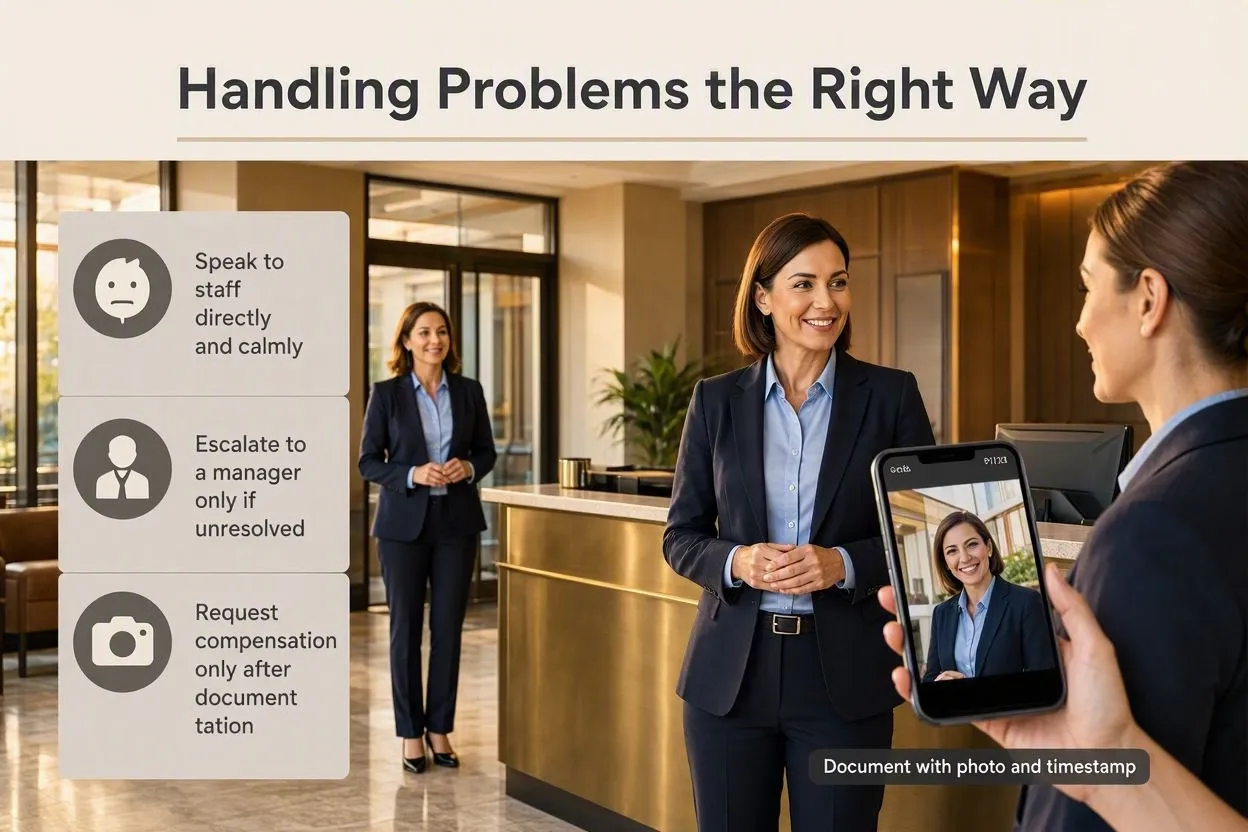
Speak to hotel staff directly and calmly at the first sign of a problem, whether that’s a maintenance issue, a noisy neighbour, or a billing discrepancy. Escalate to a manager only after the first request goes unresolved, rather than jumping straight to the top of the chain for a minor issue. Document a serious issue with photos and a timestamp before requesting compensation, since a hotel manager can resolve a documented problem far faster than a vague verbal complaint. Leave a detailed, factual review afterward if a serious problem never gets addressed, since specific feedback helps a hotel more than a vague complaint and helps future guests make an informed choice.
Conclusion
Hotel etiquette in 2026 comes down to a short list of habits: tip according to local convention rather than guesswork, respect quiet hours between 10 PM and 8 AM, take only what a hotel intends as a souvenir, and handle problems calmly through the right channel before escalating. None of these habits require extra spending or special knowledge, only a little more attention than most guests bring on vacation. A traveller who follows this guide will stand out to hotel staff for the right reasons and often gets treated a little better in return.