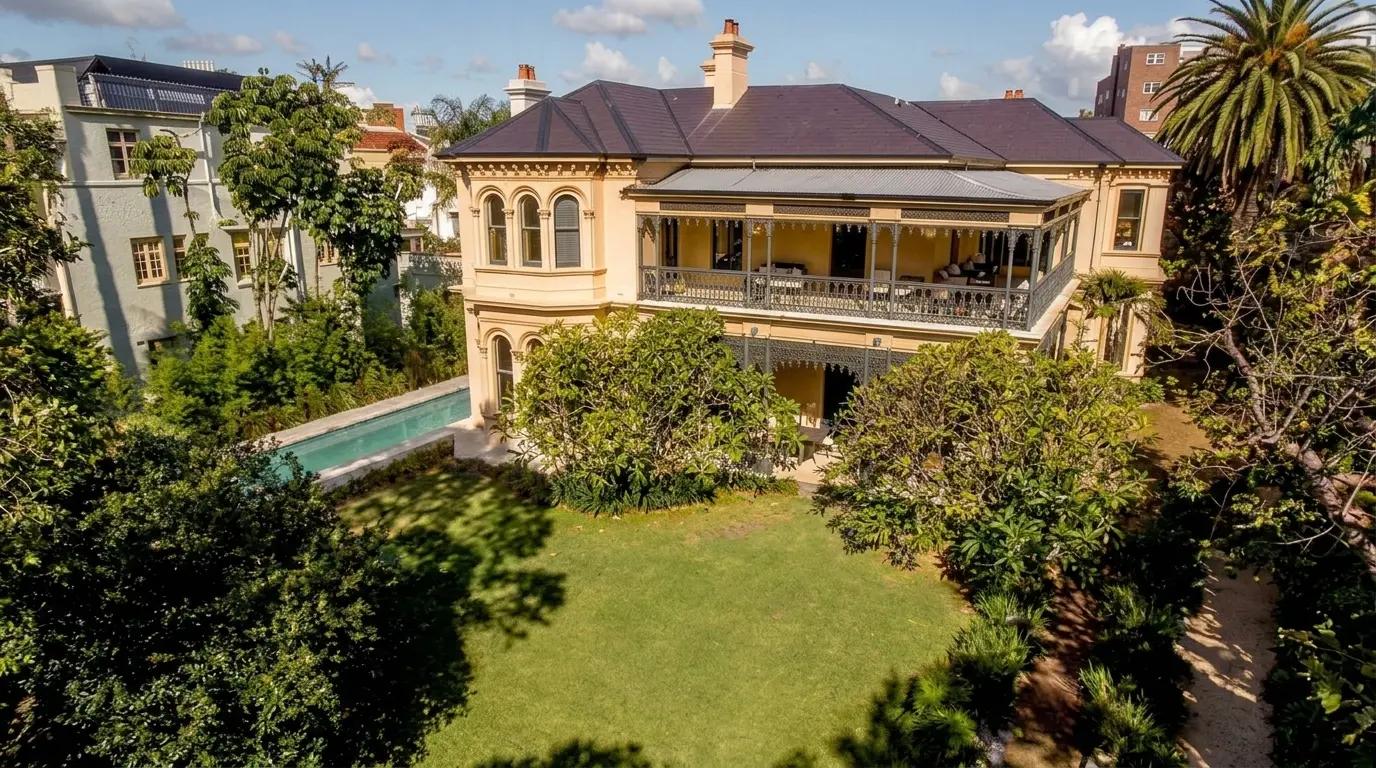

Villa amenities are the private facilities, services, and technology built into a rental villa that replace what a hotel would normally provide through shared spaces or staff. A private pool replaces the hotel pool deck. A stocked kitchen replaces room service. A dedicated concierge replaces the front desk. The category has expanded fast: a 2025 luxury rental report recorded a 119% jump in booking volume and a 169% jump in revenue for the luxury villa segment specifically. That growth tracks directly with how many amenities travelers now expect as standard rather than optional.
Ten years ago, “villa amenities” meant a pool, a kitchen, and maybe a hot tub. In 2026 the list runs a lot longer: smart locks, EV charging, wellness rooms, sustainability certifications, and accessibility features all show up in listings now. Renters comparing properties need a working knowledge of what’s actually available, not just what the marketing copy implies.
Core Villa Amenities Every US Renter Should Expect
Every villa marketed as “luxury” in the US should include a private pool, a fully equipped kitchen, high-speed Wi-Fi, and some form of concierge or on-call support. These four form the baseline. If a listing skips one, that’s worth a direct question to the host before you book.
A fully equipped kitchen means more than a stove and a fridge. Look for a dishwasher, a coffee maker, cookware for the full guest count, and, in higher-tier properties, a wine fridge or dual oven. Villa Privilege in Corfu, for example, lists a European kitchen with double patio doors and full cupboard space as a named selling point in its listing, and that’s the level of detail worth expecting from a US villa at a comparable price point.
Concierge service ranges widely in scope. Some villas include a single point-of-contact manager who handles check-in and maintenance calls. Others provide full-service concierge: private chef bookings, grocery stocking, spa scheduling, airport transfers. The gap between these two tiers is often the single biggest price differentiator between two villas that look nearly identical in photos.
Home theater and media rooms have become close to standard in the upper-luxury tier. Expect a wide-screen smart TV, a projector setup in higher-end properties, and built-in streaming compatibility rather than a bare cable hookup.
Wellness Amenities Gaining Ground in 2026
Wellness amenities, private gyms, spa rooms, saunas, and cold plunges, now directly affect nightly rate. A single well-executed wellness feature can justify a meaningful rate increase on its own. Interior design data from 2026 shows that even one high-design wellness addition, priced between $500 and $5,000 to install, can outperform a full property overhaul in guest reviews and repeat bookings.
Private gyms in villas differ from hotel fitness centers in one key way: exclusivity. No other guest shares the equipment, and no reservation system limits access hours. Higher-end villas stock cardio machines and free weights; some add Peloton-style connected equipment.
Spa and massage rooms follow similar logic. Some properties install a dedicated treatment room with a professional massage table; others rely on portable setups for outdoor or poolside treatments. Saunas and infrared cabins are becoming common upsells in mountain and desert markets specifically, where the climate makes heat therapy a natural fit instead of a novelty.
Cold plunge tubs are the newest addition to this category. Scottsdale’s 2026 rental market report lists cold plunges alongside saunas as a rising demand driver, particularly among wellness-focused bookings, where guests are traveling for a health-reset trip rather than sightseeing.
Smart Home and Tech Amenities
Smart home technology now appears in 65% of new luxury villa listings, and automated lighting, remote climate control, and keyless entry are the three most common integrations. This shift moved fast. As recently as 2022, smart locks were a differentiator. In 2026, their absence is a red flag for tech-savvy renters.
Keyless entry eliminates the lockbox-and-key exchange that used to define vacation rental check-in. Guests get a code or app-based access point tied to their reservation window, which removes coordination delays for both host and renter.
EV charging deserves its own line item. Roughly 18% of US vacation rental guests now prefer or require EV charging access, and listings with a Level 2 charger see booking rates increase by 12% compared to otherwise identical properties without one. A Level 2 charger delivers 25 to 35 miles of range per hour (about 40 to 56 kilometers), enough for a full overnight recharge.
Noise monitoring and mesh Wi-Fi routers round out the tech stack in most 2026-era smart villas. A complete smart home setup, lock, thermostat, noise monitor, router, typically costs the property owner $600 to $900 to install. Renters won’t see that cost directly, but it shows up in how reliable the technology feels during the stay.
Outdoor and Sustainability Amenities
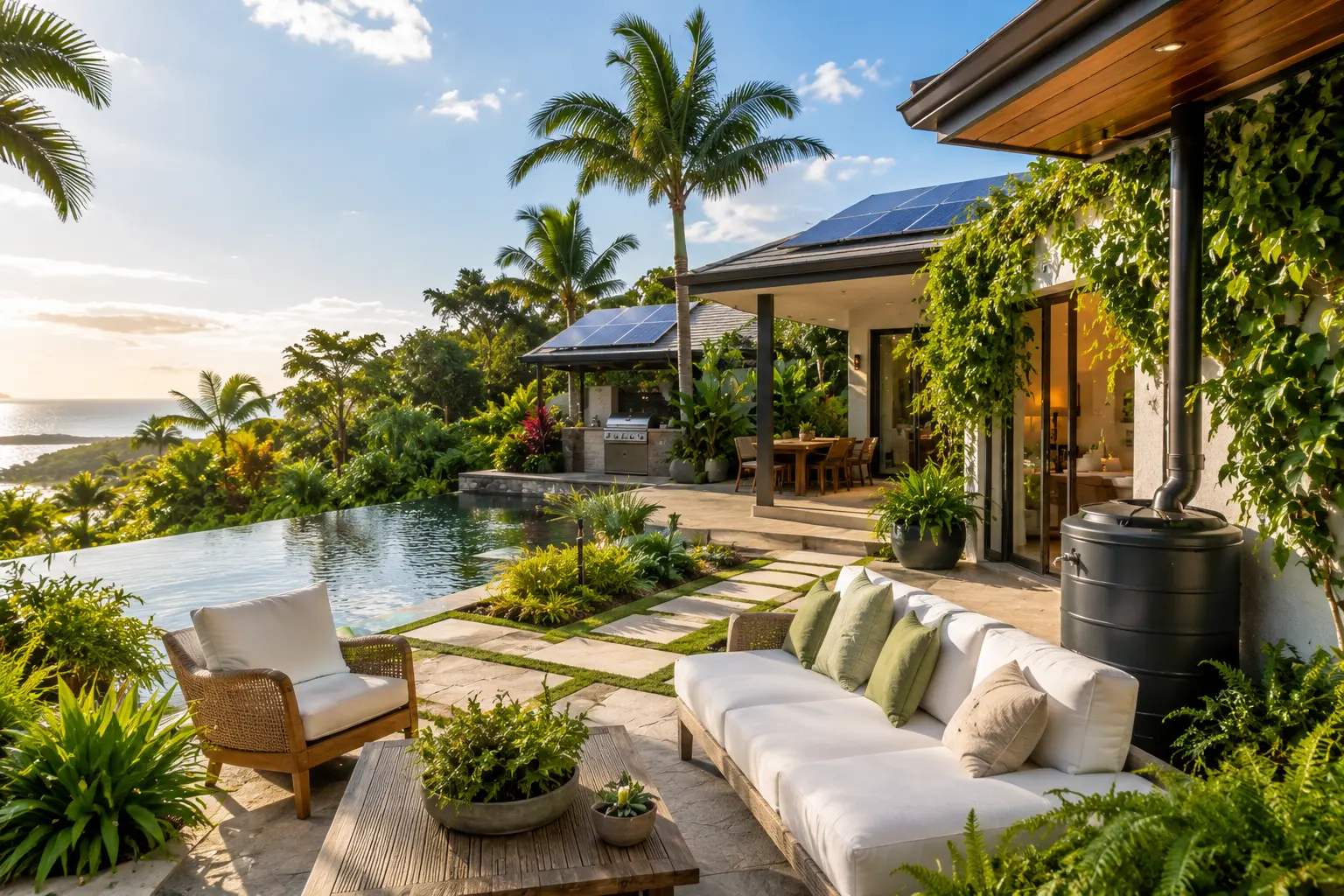
Sustainability amenities, xeriscaped landscaping, solar power, non-toxic cleaning products, now function as a pricing lever. About 38% of luxury travelers say they’re willing to pay 30% to 50% more for environmentally responsible properties, and green-certified rentals command a 3% to 13% rate premium over comparable non-certified properties, according to 2026 design industry data.
Desert-market villas in states like Arizona increasingly use xeriscaping and artificial turf for putting greens, cutting water usage while keeping the landscaping looking polished year-round. Coastal and mountain villas lean toward different sustainability signals: solar panels, rainwater collection, locally sourced welcome amenities like regional coffee or handmade soap.
Outdoor living space is the amenity category most renters weigh heaviest. A private pool, covered patio, outdoor kitchen, and fire pit or fireplace together define what separates a genuine luxury villa from a large rental house that happens to have a pool. Four bedrooms and a pool doesn’t make a villa luxury on its own. The outdoor build-out is what does.
Family, Group, and Accessibility Amenities
Family-friendly villa amenities include cribs, high chairs, childproofing, and dedicated kids’ game rooms. Accessibility amenities cover ramps, roll-in showers, and ground-floor bedroom access. Neither category gets consistent attention across competitor content, which makes both a real differentiator for a US-targeted villa guide.
Groups traveling with children benefit most from villas that physically separate adult and kid spaces. A game room or media room set apart from the main living area lets both groups use the property without constant overlap. Babysitting services, when offered, usually run as a paid add-on rather than an included amenity, so confirm pricing before you assume it’s covered.
Accessibility remains the most under-addressed amenity category in villa marketing generally. Renters with mobility needs should confirm doorway widths, step-free entry points, and roll-in shower availability directly with the host, since very few listings state these details upfront, even though the Americans with Disabilities Act (ADA) sets baseline expectations for public accommodations in the US.
Villa Amenities vs. Hotel Amenities: The Real Difference
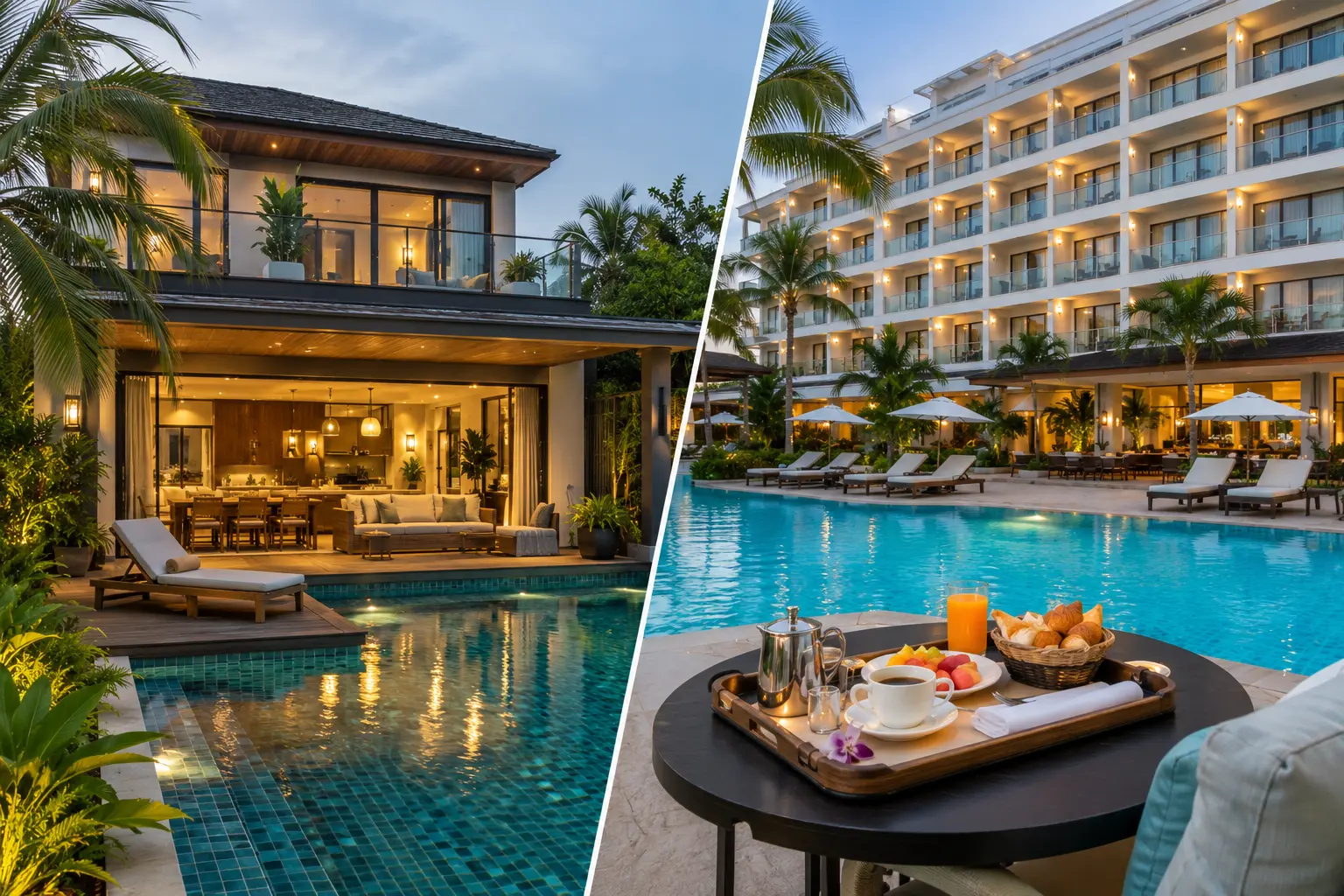
Villa amenities are private and included in one flat rental rate. Hotel amenities are shared and frequently billed as separate add-ons. A hotel gym serves every guest on the property and closes at a set hour. A villa gym serves one travel party for the full length of the stay, no closing time, no other guests waiting for equipment.
The financial logic runs the same direction. A hotel charges separately for spa treatments, room service, and sometimes even Wi-Fi. A villa folds pool access, kitchen use, and often concierge service into the base rate, which makes cost comparison between the two property types more complicated than it looks on a nightly-rate basis alone.
Privacy is the amenity that doesn’t show up on either list but drives the entire comparison. No shared lobby, no adjoining rooms, no hallway noise: villa privacy is structural, not a service add-on.
How to Verify Villa Amenities Before Booking
Renters should verify villa amenities by requesting recent photos of the specific amenity, checking the listing’s last update date, and confirming any paid add-ons in writing before payment. Listing photos age quickly. A pool photo from three years ago may not reflect current maintenance condition or added features like a heater or swim-up bar.
Direct communication with the host or property manager resolves most ambiguity. Ask specifically whether the private chef, EV charger, or accessibility feature advertised is included in the base rate or billed separately. Airbnb Luxe listings, for comparison, require properties to pass a 300-point inspection before amenities can even be listed, which sets a useful benchmark for what “verified” should mean.
Reading recent guest reviews, rather than just the listing description, catches gaps between advertised and actual amenities faster than any other method. A review mentioning a broken hot tub or an outdated kitchen appliance carries more weight than a professionally shot photo.
Regional Amenity Differences Across the US
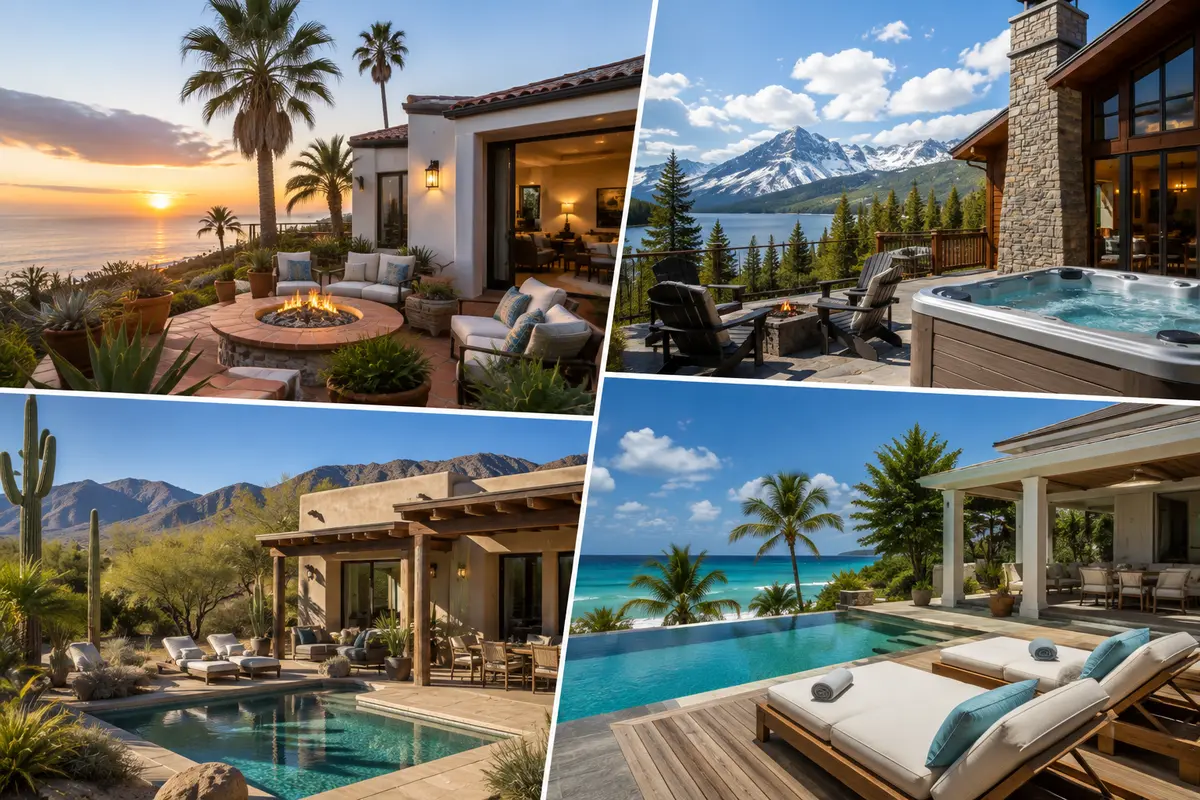
US villa amenities shift by climate and region. Desert markets like Scottsdale prioritize water conservation and cold plunges. Coastal markets prioritize outdoor living and beach access. Mountain markets prioritize heated floors and ski-specific storage. A villa in Arizona and a villa in Colorado can carry the same square footage and bedroom count while offering almost entirely different amenity sets.
Sun Belt properties across Arizona, Florida, and Texas lean on central air conditioning capacity, pool heating, and shaded outdoor structures given their extended high-heat seasons. Mountain properties in states like Colorado and Utah prioritize heated flooring, fireplace count, and dedicated gear or dry rooms for winter equipment. Coastal properties along both coasts weigh outdoor amenities, decks, direct beach access, outdoor showers, above indoor wellness features, since guests in these markets spend more time outside than in.
This regional variation is the single biggest gap in existing US villa amenity content. Most competitor guides treat “villa amenities” as one universal list, when the actual expectations shift meaningfully depending on where in the country the property sits.
Conclusion
Villa amenities in 2026 cover far more ground than a pool and a kitchen. Smart locks, EV chargers, cold plunge tubs, and sustainability certifications now sit alongside the traditional list, and each one has a measurable effect on booking rates and nightly pricing. Renters comparing properties in the US get the clearest picture by checking four things directly with the host: what’s included in the base rate, what regional amenities the climate demands, how recently the listing was updated, and whether accessibility needs are actually met on-site. A villa with eight bedrooms and a pool isn’t automatically luxury. The amenity depth behind it is what decides that.