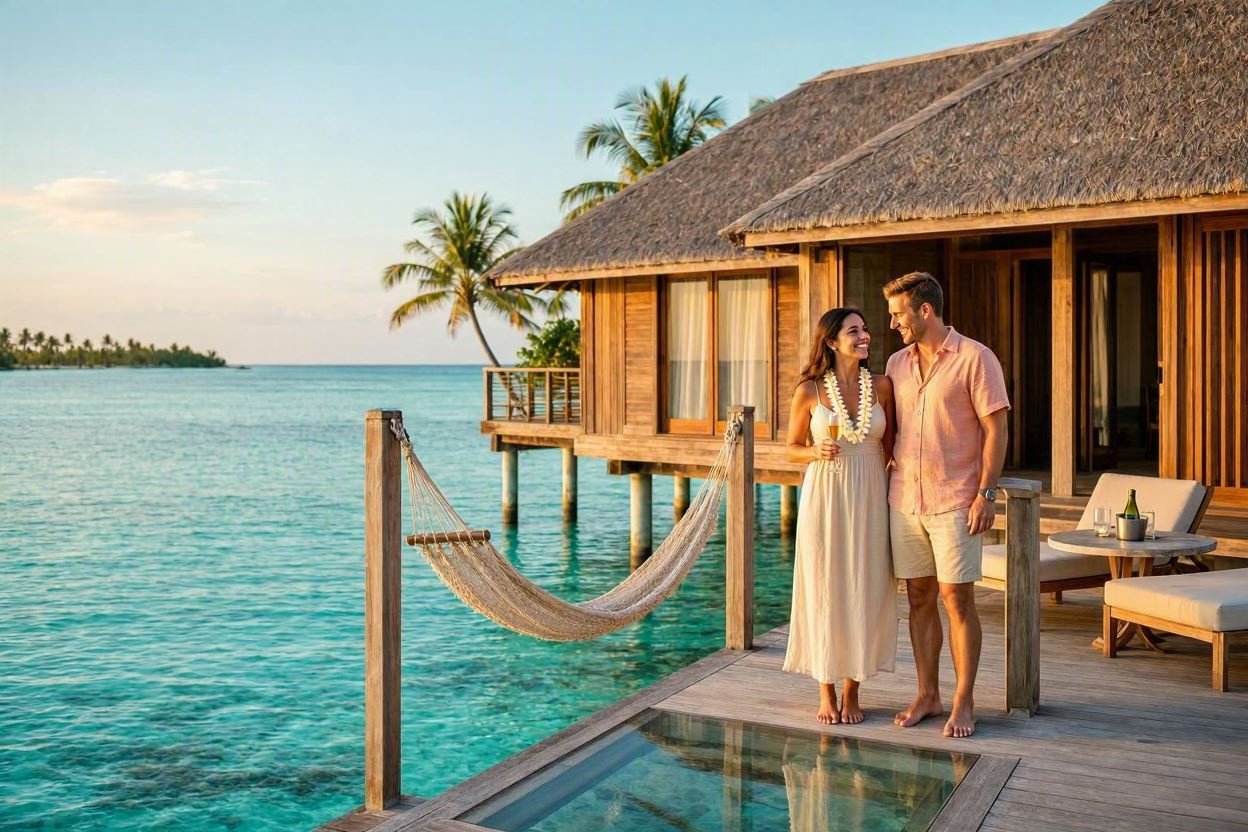
Waking up above turquoise water with nothing between the honeymoon suite and the lagoon but a pane of glass is the pitch behind every overwater bungalow honeymoon. This guide breaks down cost, destinations, timing, and booking logistics so the planning takes hours instead of weeks.
What Is an Overwater Bungalow?
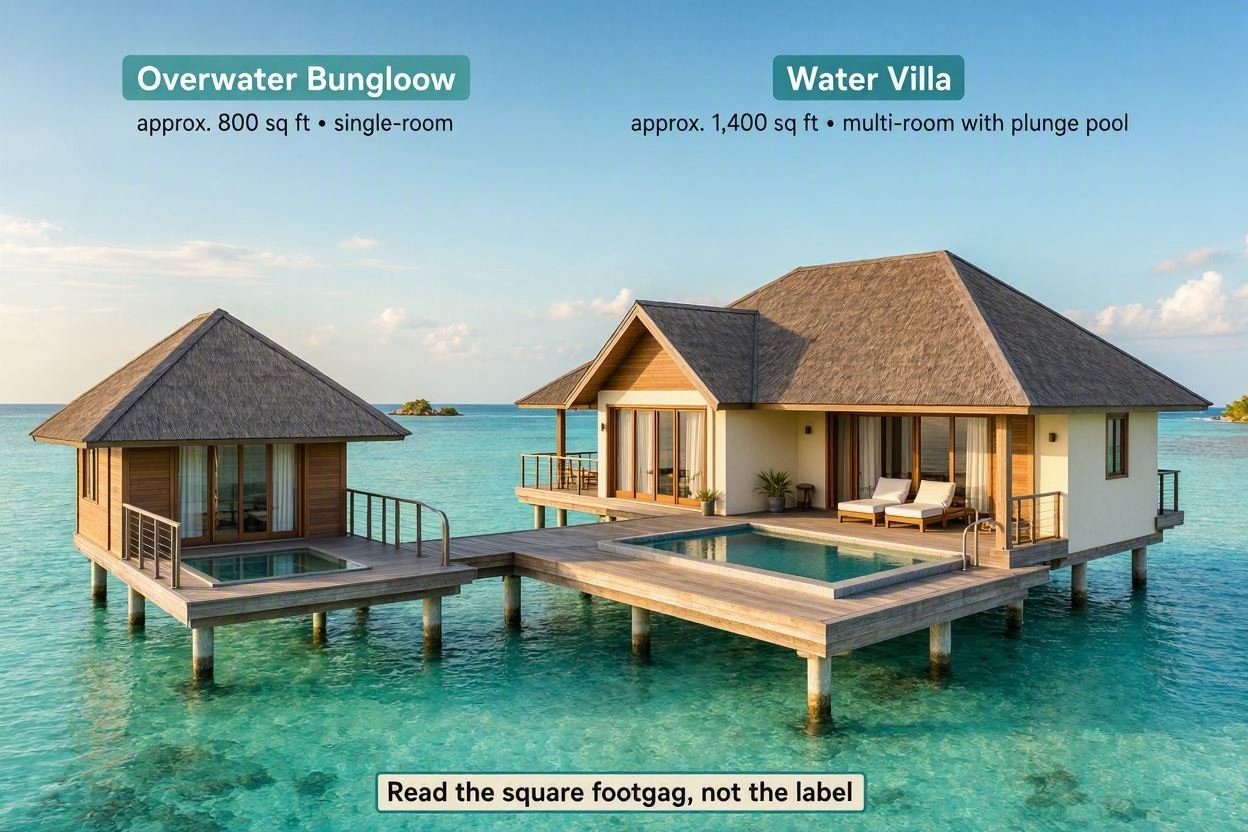
An overwater bungalow is a standalone guest room built on stilts above a lagoon or reef, connected to the main resort by a raised wooden walkway. Guests step directly from their private deck into the water below. Many units even include glass floor panels that let couples watch tropical fish without leaving the bed.
The concept is most closely associated with Bora Bora and French Polynesia, where the first stilted rooms appeared in the 1960s. From there the design spread to resorts across the Maldives, Fiji, and the Caribbean. One wrinkle worth knowing before you start comparing properties: the term sometimes overlaps with “water villa,” a phrase resorts use for larger, multi-room versions of the same structure. More on that below.
Overwater Bungalow vs. Water Villa: What’s the Difference?
An overwater bungalow and a water villa describe the same basic structure in most marketing, though “water villa” more often signals a larger, multi-room unit with a private pool. Resorts use the two terms inconsistently. The same Maldives property might list a “Water Bungalow” at 800 square feet and a “Water Villa” at 1,400 square feet with a dedicated plunge pool and a second bedroom. Read the square footage and amenity list, not just the room name.
| Feature | Overwater Bungalow | Water Villa |
| Typical size | 600–900 sq ft | 1,000–2,000+ sq ft |
| Layout | One room, one bathroom | Often a second bedroom or separate living area |
| Private pool | Sometimes, usually a paid upgrade | Common at the standard rate |
| Typical guest count | 2 guests | 2–4 guests |
| Best for | Shorter stays or tighter budgets | Extra space or a multi-night splurge |
| Nightly rate range | $600–$1,800 | $1,200–$3,500+ |
How Much Does an Overwater Bungalow Honeymoon Cost?
Rates typically fall between $600 and $3,500 per night, depending on destination and resort tier. These are general market ranges, not fixed prices, so confirm current rates directly with the resort or a travel agent before you plan around a number. Caribbean and Mexican properties sit at the lower end. Sandals’ overwater suites in Jamaica and Saint Lucia have historically started around $700 to $900 per night. The Maldives and Bora Bora command the premium end, where luxury brands like Four Seasons and One&Only often charge $1,500 to $3,000+ per night for a standard water villa.
Run those numbers over a week and a stay can cost anywhere from roughly $4,200 to $24,500, before flights, transfers, and meals. If that top end makes you wince, there’s a workaround several travel agencies actually recommend: split the trip. Three or four nights overwater, paired with a cheaper beachfront room for the rest of the stay, gets you the photos without the full bill.
Where Are the Best Destinations?
The Maldives, Bora Bora, Fiji, the Caribbean, and Mexico’s Riviera Maya each offer a different balance of price, distance, and atmosphere. Flight time from the United States, Australia, and Canada varies enormously between these regions, so distance often matters as much as decor.
Maldives. The destination most associated with the category, spread across roughly 100 resort islands in the Indian Ocean. Anantara Kihavah pairs overwater pool villas with an underwater restaurant. Flight time from Los Angeles runs close to 20 hours with a connection, which makes this a better fit for a longer trip than a quick getaway.
Bora Bora and French Polynesia. Carries the strongest brand recognition of any of these, having invented the category. Four Seasons Resort Bora Bora sits beneath Mount Otemanu, with villas whose private pools drop straight into the lagoon. Flight time from Los Angeles is roughly 8 hours direct, notably shorter than the Maldives route.
Fiji. A more relaxed, less formal version of the overwater experience, built around thatched-roof “bures” rather than glass-and-teak villas. Likuliku Lagoon Resort on Malolo Island is adults-only, with daily chef’s canapés and an espresso machine in every bure. Flight time from Los Angeles is roughly 11 hours nonstop, closer than the Maldives while still delivering a South Pacific setting.
The Caribbean. The shortest flight for North American couples, often just 3 to 5 hours from major U.S. hubs. Sandals Grande St. Lucian and Sandals South Coast in Jamaica offer glass-floor overwater suites at roughly a third of what a comparable Maldives villa costs. Couples prioritizing budget and travel time over ultimate exclusivity tend to land here first.
Mexico. Overwater-style suites in a lagoon setting rather than open ocean. Rosewood Mayakoba in Riviera Maya is the clearest example, with lagoon suites built above mangrove-lined water and a 4 to 5 hour flight from most U.S. gateways.
When Is the Best Time to Book?
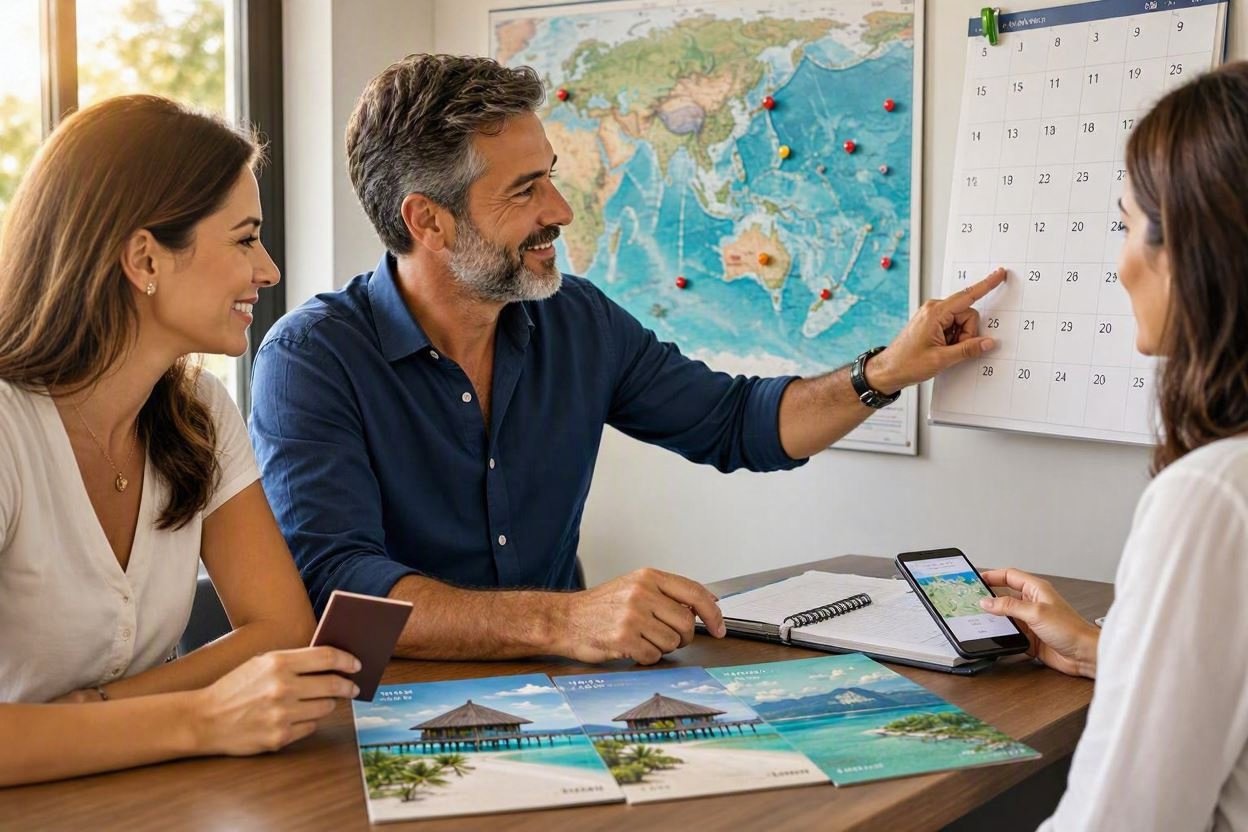
Book 9 to 12 months ahead if the Maldives or Bora Bora during peak season is the goal. Peak season in the Indian Ocean and South Pacific runs November through April, when dry weather and calm seas typically push villa rates up compared to the June through October shoulder months. Caribbean properties follow a similar pattern: December through April counts as high season, with rates easing between June and November as hurricane risk rises. Couples chasing lower prices without sacrificing weather often land on May or early June, a narrow window between the rainy season and peak crowds in both hemispheres.
What Should Couples Pack?
Reef-safe sunscreen, water shoes, a dry bag, and lightweight rain protection. That’s the short list, and it’s worth taking seriously. Reef-safe formulas matter because several Maldivian and Fijian resorts explicitly ban oxybenzone- and octinoxate-based sunscreens to protect the coral around the bungalows. Water shoes protect feet from walkway wood that gets genuinely hot by midday. A dry bag keeps phones and passports safe during the boat or seaplane transfer that most Maldives and Fiji resorts require between the airport and the property. And rain protection earns its spot too: even dry-season afternoons in the tropics can turn into a sudden 20-minute downpour.
Packing right is one thing. Deciding whether the room itself is worth the premium is the bigger question.
Are Overwater Bungalows Worth It?
For most honeymooners, yes, if direct water access and glass-floor marine views actually rank as priorities rather than nice-to-haves. The premium over a standard beachfront room typically runs 30 to 60% higher per night, and that buys real privacy: no shared beach, no neighboring balconies, often a private plunge pool included in the rate.
But not every couple gets equal value from that premium. Those who spend most of their trip on excursions, at the spa, or exploring beyond the resort see less return on it, since the bungalow sits empty for large stretches of the day. A couple booking six nights and spending four of them snorkeling or island-hopping may find a beachfront room with a day-pass to the overwater deck gets them almost the same experience for a lot less money.
What Are the Downsides?
Cost, limited suitability for young children, and the loss of a traditional beach experience. Overwater rates run consistently higher than land-based rooms at the same resort, sometimes by hundreds of dollars a night, purely for the location rather than added square footage. Several resorts also restrict or discourage overwater bookings for guests traveling with infants and toddlers, citing railing heights and direct water access as safety concerns.
Beach lovers lose something in the trade too: no sand between the toes on the way out the door, no lounge chair steps from a private room. And weather adds a final complication. Overwater units sit more exposed to wind and swell than beachfront rooms, which can make walkways slick and occasionally closed during storms.
How Do Couples Book?

Directly through the resort, through an online travel agency, or through a honeymoon-specialist travel agent. Each route trades price for service in a different way. Booking direct usually unlocks resort-specific perks, like champagne, a spa credit, or a room upgrade, that third-party sites rarely include. Online travel agencies can undercut the resort’s own rate by roughly 5 to 15%, though cancellation policies tend to run stricter and the perks disappear entirely.
A honeymoon-specialist agent, the model used by companies like Turquoise Holidays, typically adds no direct cost to the room rate since the resort pays the agent’s commission. In exchange, the agent handles seaplane transfers, dining reservations, and paperwork like the marriage certificate several resorts require for honeymoon package eligibility.
Conclusion
Choosing an overwater bungalow honeymoon comes down to three decisions: how far to fly, how much of the budget goes toward the room itself, and how many nights actually need to be spent above the water rather than beside it. A single night, timed for the arrival or the last evening of the trip, often delivers the photos and the memory without the full-week price tag.