Luxury hotel features are the amenities, service standards, and design details that separate five-star properties from standard accommodations. A hotel earns the label through consistent execution across eight areas: bedding and sleep systems, bath and skincare products, concierge service, butler service, dining, wellness, in-room technology, and sustainability. The Ritz-Carlton built its entire operating model around a published set of service standards known as the Gold Standards. Forbes Travel Guide, meanwhile, scores properties across categories like cleanliness, staff knowledge, and guest comfort, not price. Here’s a breakdown of each category, with specific examples, numbers, and comparisons pulled from real hotel brands.
What Are Luxury Hotel Features?
They’re the eight measurable categories that separate a five-star property from a standard one: bedding and sleep systems, bath and skincare amenities, concierge service, butler service, dining, spa and wellness with fitness access, in-room technology, and sustainable sourcing. Frette or Pratesi linens with a thread count of 300 or higher define the bedding category. A concierge desk staffed around the clock delivers a personalized guest experience with twice-daily turndown service. A spa program built around sleep coaching and a signature scent defines wellness. The AAA Five Diamond rating and Forbes Travel Guide’s star system score properties against these categories independently, without relying on guest reviews.
Room Comfort Features That Set Luxury Hotels Apart
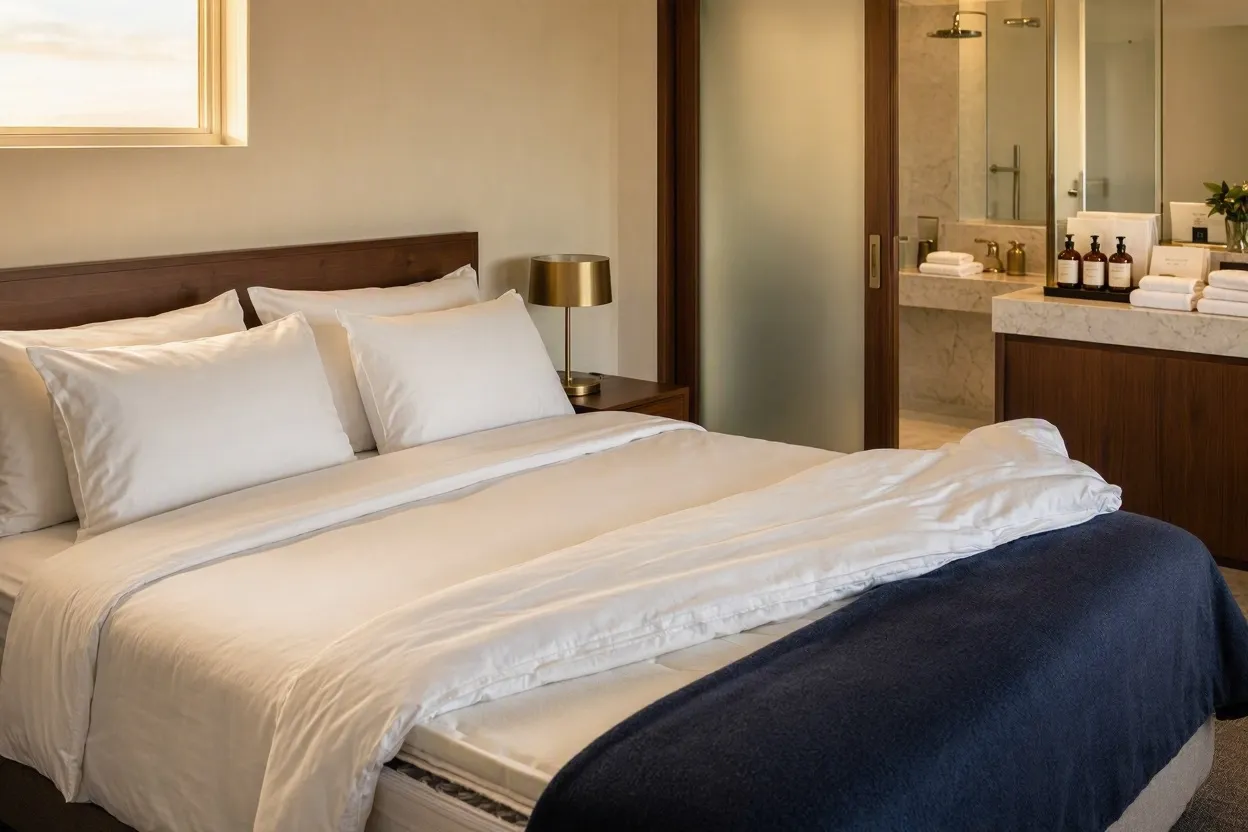
Room comfort separates luxury hotels from upscale hotels more than any other category. Guests spend more hours in the room than anywhere else on the property, so it has to work. A five-star room delivers three things at once: a mattress and pillow system suited to different sleep positions, linens that still perform after repeated laundering, and a bathroom stocked with products guests would actually buy again. Skip any one of the three, and the room feels expensive instead of luxurious.
Bedding and Sleep Systems
A luxury bedding system pairs a supportive mattress with a pillow menu, blackout curtains, and climate control the guest can adjust within seconds. Westin’s Heavenly Bed program pairs a pillow-top mattress with a duvet and five pillows per bed. A strong pillow menu keeps choices simple: soft, firm, hypoallergenic, and a body pillow cover most guest needs without a ten-minute decision at midnight. Blackout curtains that block light at the edges matter more to a jet-lagged guest than drapery style ever will, and the thermostat should respond within two to three minutes of adjustment. Egyptian cotton sheets and adjustable mattress firmness shape the sleep environment as much as thread count does. A room positioned near an elevator shaft or ice machine undercuts even a $2,000-a-night rate, no matter how good the mattress is.
Bath and Skincare Amenities
Bath and skincare amenities become luxury features when they perform well, not simply when the label looks expensive. A shampoo that strips hair or a lotion that feels greasy damages the guest’s impression of the room regardless of brand recognition. A rainfall showerhead, a soaking tub, heated floors, and a plush bathrobe and slippers set the physical stage before any product even touches the skin. Fragrance-free alternatives now count as a genuine luxury standard rather than an afterthought, since the FDA lists fragrance among the most common cosmetic allergens alongside preservatives and dyes. Five-star properties increasingly stock a sensitive-skin line beside the signature-scented one. A scratched dispenser or a half-empty bottle signals carelessness faster than any missing feature could.
Service Features That Define True Luxury
Service is what guests remember longest, because it’s the one category a hotel can’t fake with a photo. A five-star property trains staff to anticipate requests before guests make them, and it measures that anticipation through response time, not intention.
Concierge and Personalized Service
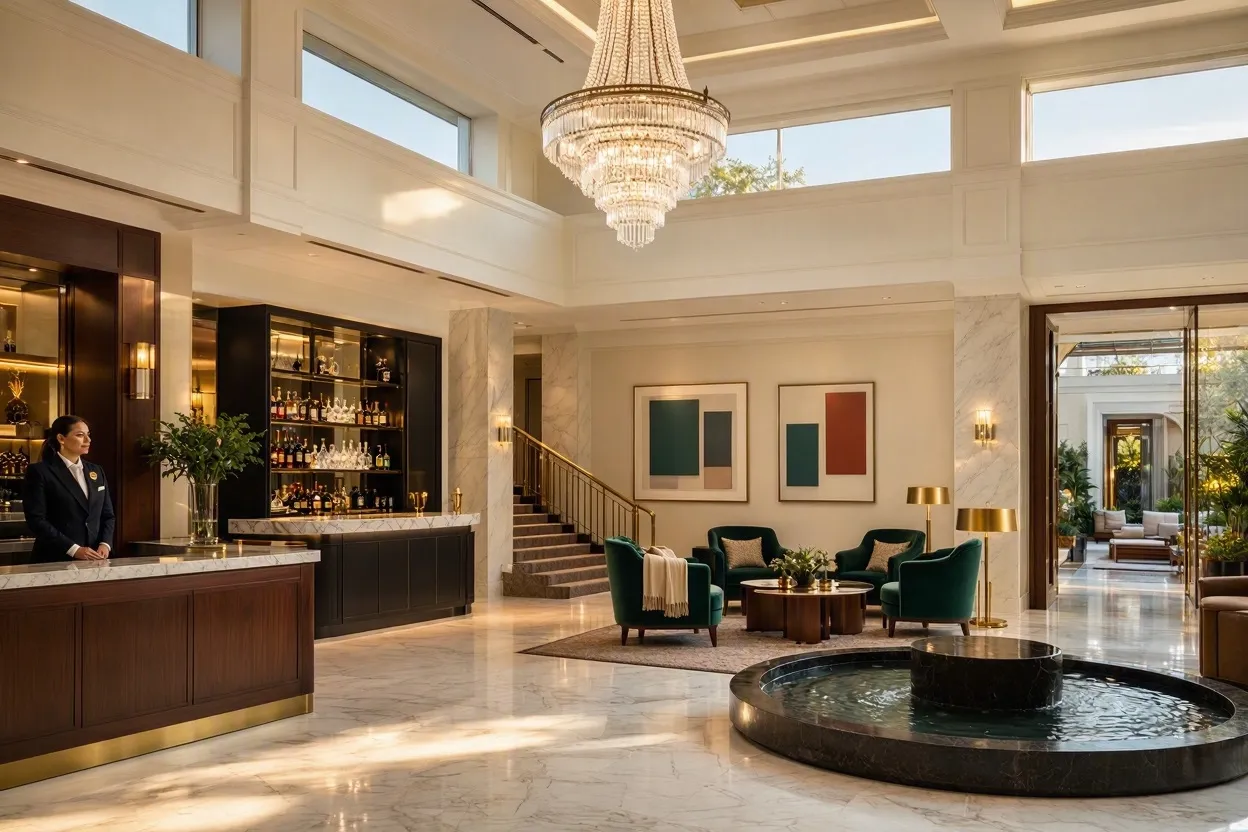
A luxury concierge desk secures reservations, arranges local experiences, and solves problems within minutes rather than hours. Take a guest asking for a table at a fully booked restaurant thirty minutes before dinner: a five-star desk either delivers the reservation or offers an equally strong alternative within ten minutes. Concierge teams at properties like The Berkeley in London build relationships with restaurants, drivers, and local vendors specifically so they can produce results other hotels can’t. The same desk typically arranges valet parking, a personal shopping appointment, and a bespoke itinerary built around what the guest actually said they wanted.
Personalization goes beyond remembering a name, though. If a guest requested a hypoallergenic pillow during a previous stay, the room should already have it before they ask again. That single detail, preparation without prompting, is the kind of moment McKinsey’s research on luxury hotel customer experience points to when it argues that experience, not the physical product, is what actually differentiates the luxury segment.
Butler Service and Private Check-In
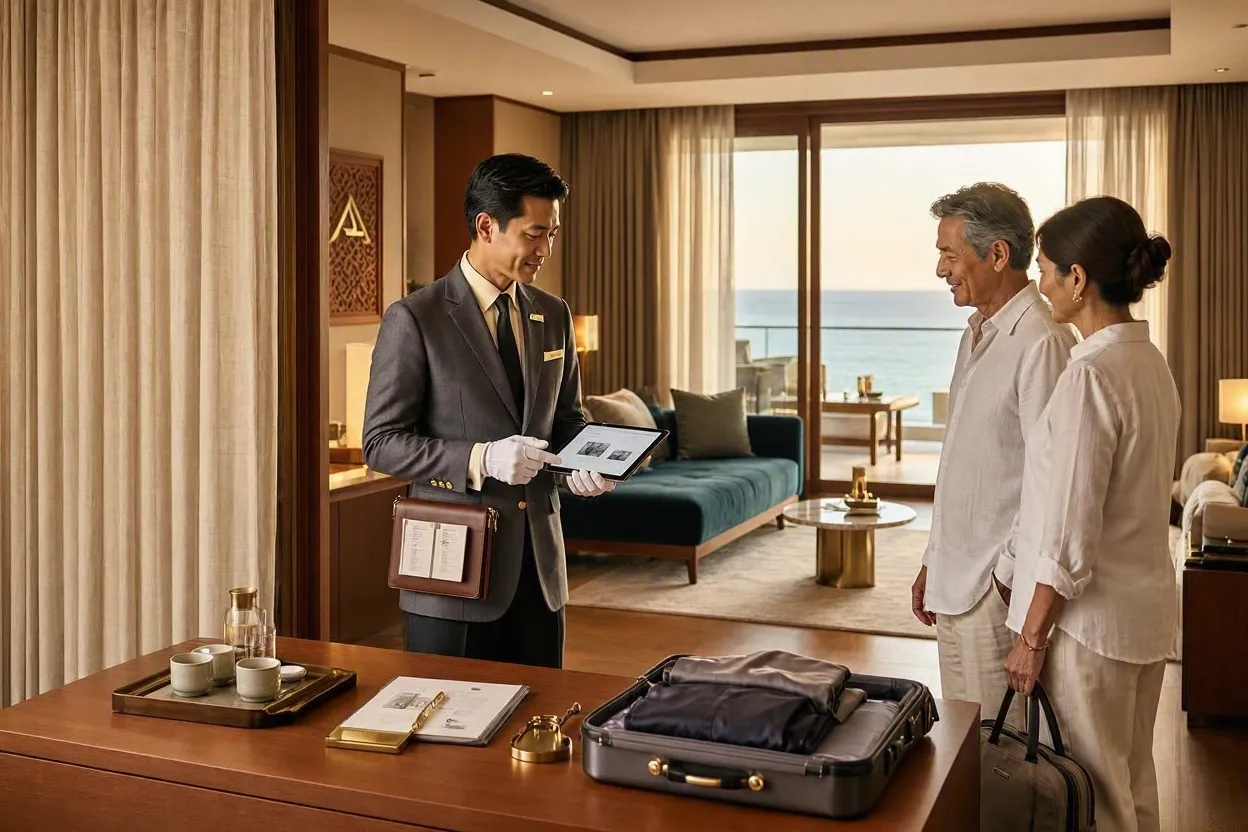
Butler service assigns one staff member to manage a guest’s entire stay, from unpacking to dinner reservations to packing before departure. Aman properties and Amanpuri-tier resorts built their reputations partly on this model: one point of contact who knows the guest’s preferences without repeated questions. Private check-in complements this by moving arrival away from a shared lobby desk into a suite, a lounge, or the guest’s actual room, cutting wait time to under five minutes in most cases.
Airport transfer is a smaller detail, but a telling one. A five-star resort in a destination like the Maldives or the Amalfi Coast often arranges a private car or boat transfer as part of the reservation, while a three-star property leaves the guest to book a taxi on their own. Returning guests often get VIP recognition tied to the hotel’s loyalty tier, which can include exclusive lounge access and a welcome gift chosen for their known preferences.
Dining Features in Luxury Hotels
A fine dining program built around chef credentials, farm-to-table sourcing, and flexible service formats separates a luxury kitchen from a restaurant that just happens to be attached to the lobby. A Michelin-starred or James Beard-recognized chef on property signals a kitchen operating at a verified standard, but the details matter more day to day: fresh, seasonal ingredients, a sommelier who can pair wine without a script, a chef’s table experience for guests who want to watch preparation, and room service that arrives hot, not lukewarm, within 30 to 45 minutes.
In-room dining is where a lot of hotels fall short of their own restaurant standard. A five-star kitchen maintains the same plating and temperature for 24-hour room service as it does for the dining room, which takes insulated carts and staff trained specifically for delivery timing. Afternoon tea, once a niche offering limited to historic properties, has become a broader luxury signal. The Saint Paul Hotel, for example, runs a seasonal afternoon tea menu that actually changes with the season instead of staying fixed year-round.
Wellness and Spa Features
A luxury spa needs more than a massage room and a sauna to count as a real wellness feature. Think hydrotherapy pools, a steam room, aromatherapy treatments, and recovery-focused therapies, not just relaxation. Six Senses built its brand identity around this distinction, pairing spa treatments with sleep coaching and nutrition guidance instead of offering massage as a standalone service. More than one in four travelers now say they’d book a spa or wellness treatment specifically to improve sleep quality while traveling, according to Hilton’s 2025 travel trends research.
Soundproofing belongs in this category too, even though it’s rarely listed as a spa feature. A treatment room next to a service corridor undermines the whole wellness experience, no matter how skilled the therapist is. A dedicated fitness center with modern strength equipment and space for stretching rounds out the category, since wellness travelers expect movement options beyond the spa itself. The strongest wellness programs also extend into the guest room: herbal tea, a stretching guide, and a pillow spray at turndown do more for recovery than a single 60-minute massage booked once during a multi-night stay.
In-Room Technology Features
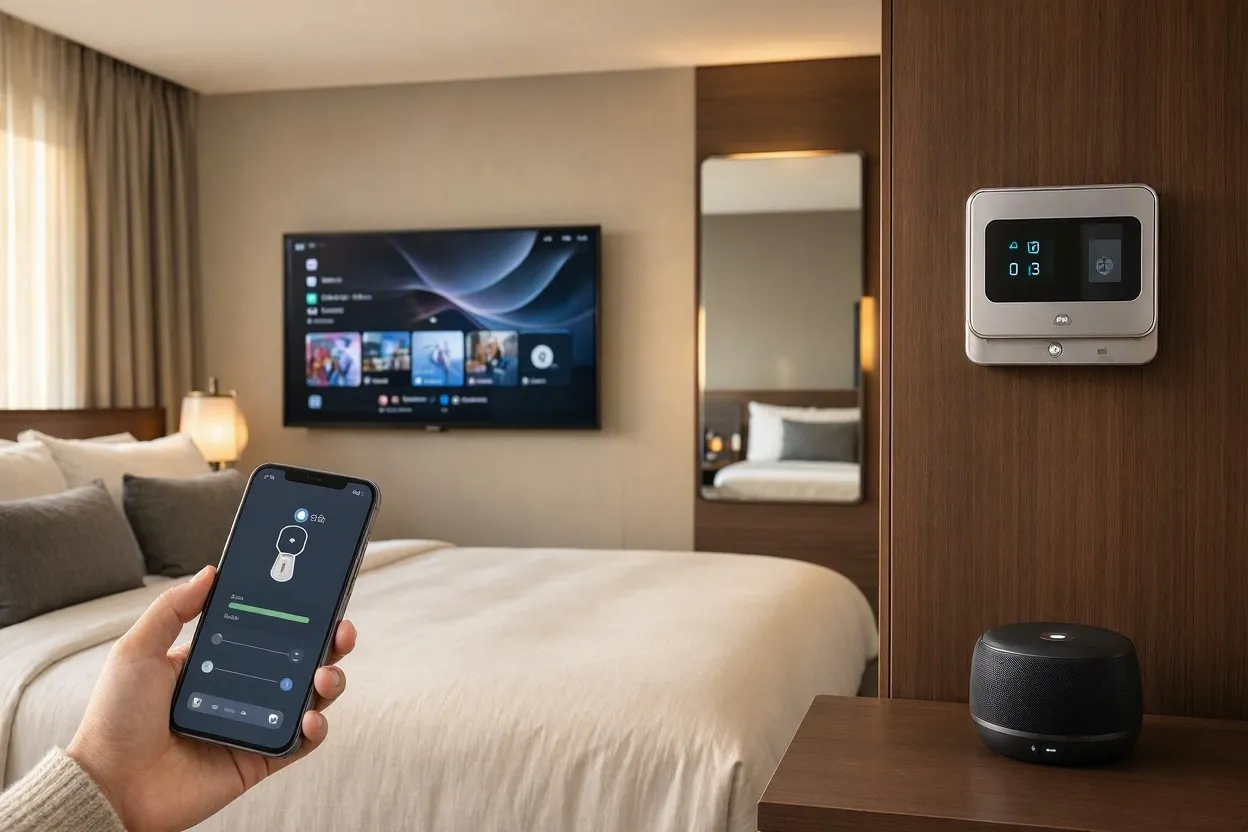
Smart room technology becomes a luxury feature when it removes effort, not when it just adds features guests never touch. Hilton’s Connected Room adjusts temperature and lighting from a mobile device, Marriott’s mobile key extends digital check-in past arrival, and voice-activated controls, a smart mirror, and app-based requests round out a genuinely useful room. A smart TV with streaming access now counts as a baseline expectation. J.D. Power’s 2025 North America Hotel Guest Satisfaction Index found that 40% of guests call it a “need to have” amenity, up from 21% in 2019. High-speed connectivity with USB-C ports on both sides of the bed matters just as much as the screen itself.
Sustainable Luxury Features
Sustainable luxury features cut waste and environmental impact without lowering the guest’s sense of comfort or quality. Six Senses runs a zero-waste program that replaces single-use plastic bottles with refillable amenities in glass or ceramic dispensers. Booking.com’s 2026 Travel & Sustainability Report found that 85% of travelers now consider sustainable travel important, with more than 100 million room nights booked in 2025 at properties carrying third-party sustainability certification. Responsible sourcing shows up in locally sourced minibar products, a welcome amenity made by a regional producer, a carbon-neutral stay option at checkout, and formal eco-certification: details a guest can actually verify instead of just taking on faith.
How Luxury Hotel Features Differ by Traveler Type
Luxury hotel features shift depending on why someone is traveling, so the same five-star property ends up serving a business traveler, a wellness traveler, a family, and a romantic couple in pretty different ways.
| Traveler Type | Priority | Example Amenities |
| Business traveler | Reliable workspace and fast connectivity | Desk setup, garment steamer, buffer-free Wi-Fi for video calls |
| Wellness traveler | Recovery over indulgence | Herbal tea, a yoga mat with floor space, a spa menu built around recovery |
| Family | Space and child-friendly comfort | Connecting rooms, child-friendly bath products, a pool area with a shallow section |
| Romantic traveler | Privacy and mood | Mood lighting, a bath ritual, privacy from adjoining rooms |
The strongest luxury hotels don’t try to serve every traveler type identically. Instead, they build flexible service so the same room shifts from a work-focused setup on Monday to a spa-focused one on Friday, without losing what each guest type expects.
How to Evaluate Luxury Hotel Features Before Booking
Check three sources before booking: a third-party rating system, recent guest reviews that mention specific details, and the hotel’s own amenities page for named brands and numbers. Forbes Travel Guide and AAA Five Diamond both publish their criteria publicly, so you can compare a hotel’s marketing claims against an independent standard. Reviews mentioning specific details (“the thermostat took ten minutes to respond,” or “the concierge got us a table at a fully booked restaurant in fifteen minutes”) carry more weight than star ratings alone, since they describe outcomes instead of impressions.
A hotel’s own website should name brands, not just categories. “Premium linens” tells you nothing. “300-thread-count Frette linens” does. If a property won’t specify the mattress brand, the thread count, or the spa’s treatment menu, that reluctance is itself worth noting.
Conclusion
Luxury hotel features come down to specific, checkable details rather than marketing adjectives: a named linen brand and thread count, a concierge response time measured in minutes, a spa program built around recovery instead of a single massage, and sustainability practices that hold up under a five-star standard rather than replacing it. Check Forbes Travel Guide or AAA Five Diamond criteria against a hotel’s own claims, read reviews that mention concrete outcomes, and you’ll spot the difference between a property that delivers luxury and one that only describes it.