
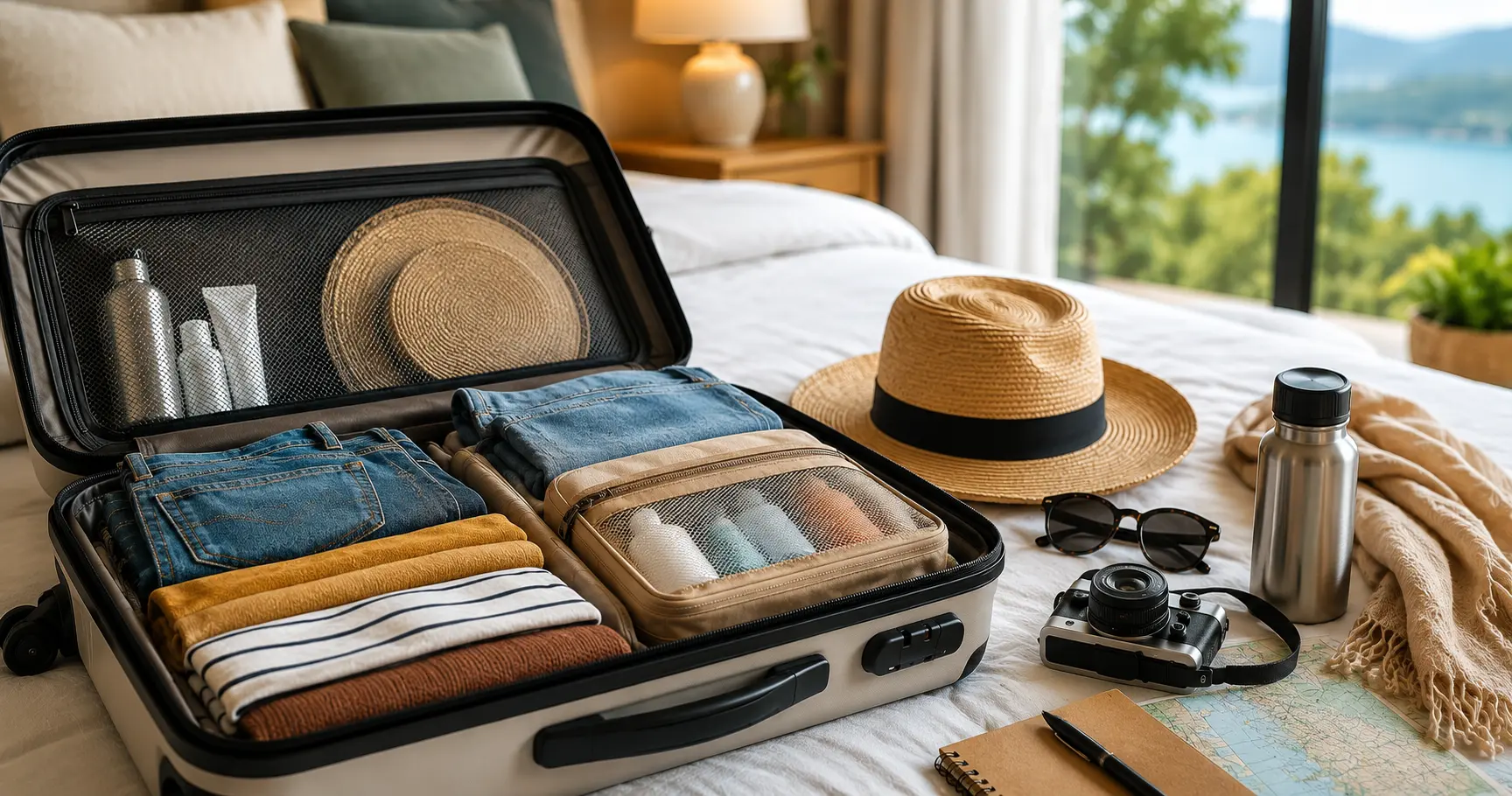
Picture the version of this trip that goes wrong: you’re standing at a check-in counter in Lisbon, watching an agent frown at your passport’s expiration date, while your gate boards without you. Or you’re three days into a rental in the Scottish Highlands and realize the hair dryer you packed just blew the fuse on a 230-volt outlet. A disorganized suitcase costs more than a forgotten toothbrush, and most of that cost shows up exactly where you can’t afford it: at the airport, at the border, in a foreign pharmacy at 9 p.m. looking for something you should have packed.
This guide walks through what actually goes wrong on real trips, whether that’s a long weekend in Charleston, a two-week loop through Portugal and Spain, or a month working remotely out of a co-working space in San José. It covers the six categories that matter most (documents, clothing, toiletries, electronics, security, and home prep) with real quantities instead of vague guesses, plus the stuff most packing guides skip entirely: digital nomad essentials, sustainable gear, and pet travel paperwork for anyone bringing a dog through UK customs.
What Should Be on Your Holiday Checklist?
Six categories: travel documents, clothing, toiletries and medication, electronics, carry-on essentials, and home-security prep before you leave. Miss any one of these and something predictable goes wrong. Perfect outfits don’t matter if your passport expired last month. A fully charged phone won’t help if you show up to a foreign ER with no printed insurance card.
Trip type shifts how much weight each category carries, not which categories matter. A business trip to Chicago needs less clothing planning and more document precision: visa status, meeting materials, a backup outfit in case the dress code catches you off guard. A two-week trip through northern Italy flips that ratio entirely, with heavier clothing rotation and real research into what each stop along the way requires. The lists below work for both, with notes on where trip type changes things.
What Travel Documents Do You Need for a Holiday Checklist?
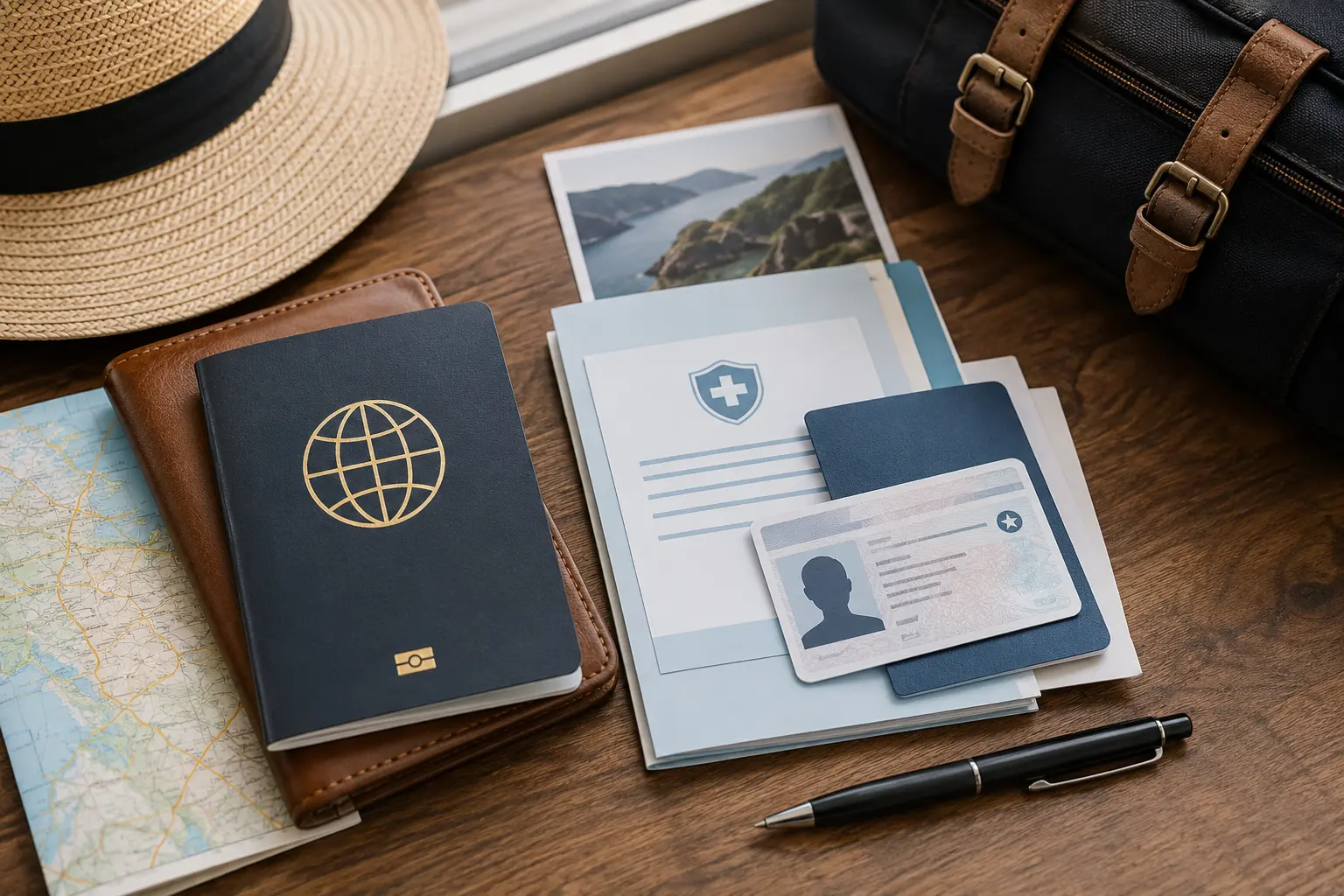
International trips need a valid passport, any required visa, a driver’s license or state ID, health insurance documentation, and copies of everything kept separate from the originals. Domestic U.S. trips skip the passport and visa but still need a government ID and an insurance card.
Passport validity trips people up more than anything else on this list. Most of Europe, from France to Croatia, requires a passport valid six months past your return date, not just valid through the trip itself. A passport expiring in March 2027 can still get you denied boarding for a September 2026 flight to Italy if the airline enforces that buffer strictly, and plenty do. Renewal through the U.S. Department of State can take several weeks once you hit peak season, so don’t wait until the last month before a big trip.
It’s also worth enrolling in the Smart Traveller Enrolment Program (STEP), a free State Department service that sends security alerts, weather warnings, and embassy contact info for wherever you’re headed. It takes under five minutes and helps the nearest embassy find you if something goes wrong, whether that’s a wildfire outside Athens or a transit strike in Paris.
Planning to drive abroad? You’ll need an International Driving Permit alongside your U.S. license, since plenty of countries, Spain and Japan among them, don’t recognize a U.S. license on its own. AAA issues these for around $20, and it usually takes a few days by mail or can be done same-day in person.
Document checklist:
- Passport (valid 6+ months past return date)
- Visa, if the destination requires one
- Driver’s license or state ID
- International Driving Permit, if renting a car abroad
- Health insurance card and travel insurance policy number
- Printed copies of passport, visa, and insurance, stored separately from originals
- Digital photos of all documents saved to a phone or cloud folder
- STEP enrollment confirmation
- Boarding passes, saved both as a mobile wallet pass and a printed backup
Most domestic flights run entirely on digital boarding passes now. International connections through smaller regional airports, the kind you land at outside Palermo or Split, sometimes still want a paper copy at security, so bring both and skip the guesswork.
How Many Clothes Should You Pack for a Holiday?
One outfit per day for trips under five days. Past that, cut it to roughly 60% of the trip length, since laundry access fills the gap. A four-day trip needs four outfits. A ten-day trip through Southeast Asia needs about six, not ten, assuming you’ve got a laundromat or hotel laundry service somewhere along the route.
Underwear and socks break this rule. Pack one pair per day no matter how long the trip runs, plus two spares, because these are cheap to over-pack and miserable to run out of. Nine-day trip? Bring eleven pairs.
Outerwear scales with climate, not day count. A packable rain jacket and one mid-layer sweater will cover most three-season trips, whether that’s a fall weekend in the Cotswolds or a spring visit to Kyoto. Winter travel to somewhere like Denver or Reykjavík needs an actual insulated coat rated for the low you’re expecting, and check that rating in both Fahrenheit and Celsius before you leave. A jacket rated to 32°F won’t do much against a Reykjavík wind at 10°F.
Clothing checklist by category:
- Tops: rotate 2–3 versatile colors that mix and match
- Bottoms: 1 pair per 2–3 days, plus 1 dressier option
- Outerwear: matched to destination low temperature
- Sleepwear: 2 sets regardless of trip length
- Footwear: no more than 3 pairs, one walking, one dress, one activity-specific
- Swimwear: 2 suits if beach or pool access is part of the itinerary
Rolling clothes instead of folding them saves roughly 20% of suitcase space in most side-by-side comparisons. And put the heavy stuff (boots, a camera body, anything dense) at the bottom, near the wheels. Keeps the bag from tipping over the second you set it down on cobblestones.
What Toiletries Belong on a Holiday Checklist?
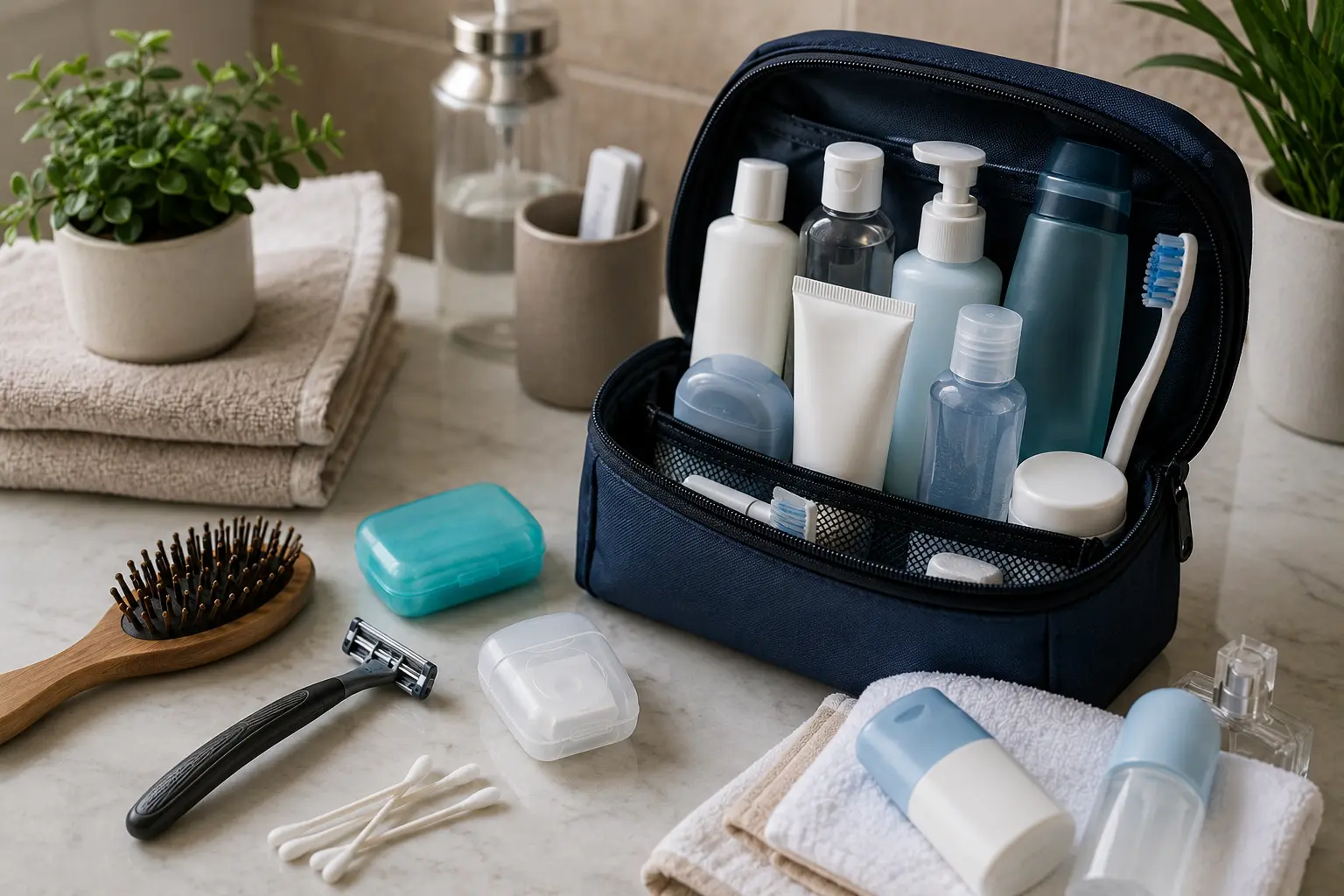
Travel-sized toiletries under 3.4 ounces per container, all packed into a single clear quart-sized bag, per the TSA’s 3-1-1 rule. You get one bag per traveler through carry-on security, and there’s no cap on how many containers you cram in there as long as each one stays under that 3.4-ounce line.
Prescription meds are exempt from the size limit but should stay in their original labeled containers. Customs officials in some countries, Japan and the UAE both have strict rules here, will flag unlabeled pills no matter how few you’re carrying. If you’re on daily prescriptions, keep a printed list of names and dosages separate from the bottles themselves in case your bag gets lost somewhere between connections.
Toiletries checklist:
- Toothbrush, toothpaste, floss
- Deodorant, travel-sized
- Shampoo, conditioner, body wash, 3.4 oz containers or smaller
- Sunscreen, SPF 30 or higher
- Insect repellent, if traveling to a region with mosquito-borne illness risk
- First aid kit: adhesive bandages, antiseptic wipes, pain reliever
- Hand sanitizer, travel size
- Prescription medications in original containers, plus a printed dosage list
- Contact lenses and solution, or backup glasses
If you’re staying in one place for a few weeks, say a rented apartment in Lisbon’s Alfama district, buying full-size toiletries there instead of hauling them from home saves both suitcase space and a TSA headache.
What Electronics Should You Pack for a Holiday?
A phone charger, a portable power bank, and for international trips, a plug adapter matched to the outlet type and voltage where you’re headed. The U.S. runs on 120-volt outlets with Type A/B plugs. Most of Europe runs 230 volts with Type C/E/F plugs, which means a basic adapter solves the shape problem but not the voltage one for anything without a built-in converter.
Laptops and most phone and camera chargers handle dual voltage automatically these days (check the fine print on the brick to be sure), but hair dryers and straighteners often don’t. Plug a 120-volt-only hair dryer into a 230-volt outlet in a hotel room outside Vienna with no converter and you’ll likely fry it, or trip the circuit trying.
Electronics checklist:
- Phone and charging cable
- Portable power bank, 10,000 mAh or higher for multi-day trips
- Plug adapter matched to destination outlet type
- Voltage converter, if using single-voltage appliances abroad
- Laptop or tablet and charger, for remote work or entertainment
- Camera, memory card, and charger
- Noise-canceling headphones
- E-reader, for long flights without device weight limits
Boarding passes and hotel confirmations live on your phone now, which makes power bank capacity matter more than it used to. A dead phone at a foreign airport means no boarding pass, no hotel address, no translation app when you need to ask for directions in a language you don’t speak. A 10,000 mAh bank will get most phones through two or three full recharges before it needs one itself.
What Goes in Your Carry-On Bag?
Anything you can’t afford to lose: passport, medication, one change of clothes, chargers, valuables. Everything else can ride in checked luggage. Airlines lose or delay something like 6 to 8 bags per 1,000 passengers, so keeping the essentials on your person removes that risk entirely.
That backup outfit matters more on long international flights, the kind that route you through a connection in Doha or Amsterdam, where a delayed bag can leave you in the same clothes for two or three days before the airline tracks it down.
Carry-on checklist:
- Passport, visa, boarding pass (printed and digital)
- Prescription medications and dosage list
- One full change of clothes
- Phone, laptop, chargers, power bank
- Travel pillow, eye mask, earplugs
- Empty water bottle, refilled after security
- Snacks
- Valuables: jewelry, cash, backup credit card
How Do You Choose the Right Luggage for a Holiday?
Match the bag to the trip. A carry-on under 22 x 14 x 9 inches works for anything under a week, a quick city break in Prague or a work trip to Denver. Rolling luggage suits paved-city trips. A backpack or duffel handles uneven terrain better than wheels ever will. Airlines vary a bit on exact carry-on dimensions, so check your specific carrier before you’re stuck repacking at the gate.
Four-wheel spinners spread weight evenly and roll beside you without straining your wrist, which helps on long airport walks through somewhere sprawling like Heathrow or O’Hare. Two-wheel bags cost less and survive rough pavement better, since there’s simply less that can break. But if you’re hiking into a hostel down a dirt road in rural Peru, you want a backpack, not a spinner that can’t handle stairs.
Keep checked bags under 50 pounds. Go over that and most U.S. carriers will charge $100 or more.
What Should Families Pack Differently on a Holiday Checklist?
Kid-specific comfort items, extra clothing buffers, and shared access to documents. A solo traveler can improvise around a missed item. A parent with a toddler mid-meltdown at 30,000 feet somewhere over the Atlantic cannot.
Pack one extra outfit per child beyond the normal rotation. Spills, motion sickness, and blowouts happen more in transit than they do once you’ve landed in Orlando or wherever the trip actually starts. And the comfort object, whatever stuffed animal or blanket your kid can’t sleep without, goes in the carry-on. Losing that mid-trip is a bigger crisis than losing an actual suitcase.
Family-specific additions:
- 1 extra clothing change per child, beyond standard rotation
- Comfort object (stuffed animal, blanket) in carry-on
- Entertainment: tablet loaded with offline shows, coloring books, playing cards
- Snacks sized for kids, packed in carry-on
- Copies of each child’s ID or passport, held by both parents separately
- Custody documentation, if one parent is traveling without the other
A shared calendar app lets both parents track packing progress in real time, which cuts down on the “did you pack that yet” texts that eat up departure morning.
How Do You Prepare Your Home Before a Holiday?

Lock every entry point, stop your mail, unplug what you don’t need running, and get someone to check on the place. A house sitting empty for two weeks with mail piling up on the porch is basically a sign that says nobody’s home.
USPS offers a free hold-mail request online, up to 30 days out, which stops delivery until whatever date you set. And a set of $20-30 smart plugs can stagger your lights on and off, which reads as occupied far more convincingly than one lamp left burning the whole time you’re gone in Bali.
Home prep checklist:
- Lock all doors and windows
- Stop mail and package delivery, or arrange pickup
- Unplug non-essential electronics and appliances
- Set smart lights or timers to simulate occupancy
- Store valuables in a locked safe, away from window sightlines
- Give a spare key and emergency contact to a trusted neighbor
- Adjust thermostat to an energy-saving setting
What Security Items Should Be on a Holiday Checklist?
A TSA-approved luggage lock, an RFID-blocking wallet, and a hidden pouch for cash and cards. RFID skimming, where someone scans your card’s chip through fabric at close range, is rare compared to other kinds of theft, but the blocking sleeves cost under $10 and cost you nothing in convenience either.
A money belt worn under your clothes keeps your passport and emergency cash out of reach in crowded spots like the platforms at Termini in Rome or the open markets in Marrakech. And if you’re walking unfamiliar streets after dark somewhere without much lighting, a bit of reflective gear genuinely helps.
Security checklist:
- TSA-approved luggage lock
- RFID-blocking wallet or passport sleeve
- Hidden money belt or neck pouch
- Doorstop alarm, for hotel room security
- Photocopy of passport stored separately from the original
- Emergency contact list, printed and saved digitally
How Do You Pack for a Digital Nomad Holiday?
Add a portable Wi-Fi hotspot, a universal power strip, noise-canceling headphones, and proof that you’re actually allowed to work in the country you’re visiting. Regular vacation packing assumes you have zero work obligations. Remote work travel, the kind that has you setting up a laptop in a co-working space in Chiang Mai or a café in Lisbon, assumes the opposite: a stable connection and a real workspace matter as much as your passport does.
Portugal, Spain, and Costa Rica all issue dedicated digital nomad visas now, which are different from tourist visas and usually require proof of income above some threshold. Spain’s program, for instance, wants around €2,500 a month documented. Working remotely on a standard tourist visa technically breaks the entry terms in a lot of these countries, even when your paycheck comes from a U.S. employer.
Digital nomad additions:
- Portable Wi-Fi hotspot or destination-specific SIM card
- Universal power strip, to charge multiple devices from one outlet
- Noise-canceling headphones, for co-working spaces or noisy cafés
- Laptop stand and portable keyboard, for ergonomic setups
- Proof of remote employment or digital nomad visa documentation
- Backup battery for the laptop, since not all workspaces guarantee outlet access
What Sustainable Packing Items Belong on a Holiday Checklist?

Swap single-use plastics for a reusable water bottle, solid toiletry bars, and a foldable tote. Solid shampoo and soap bars skip the 3.4-ounce liquid limit entirely, which makes security screening a little faster too.
A filtered water bottle lets you drink tap water safely somewhere you otherwise wouldn’t trust it, whether that’s a guesthouse outside Chiang Mai or a hostel in Marrakech, cutting way down on plastic waste over a multi-day trip. Packing cubes made from recycled polyester work exactly the same as the virgin-plastic kind. Brands like Eagle Creek now build whole product lines around recycled materials, so you’re not sacrificing quality for the swap.
Sustainable additions:
- Reusable water bottle, filtered if visiting a region with unreliable tap water
- Solid toiletry bars: shampoo, conditioner, soap
- Foldable reusable tote bag
- Reef-safe sunscreen, required by law in destinations like Hawaii and parts of Mexico
- Packing cubes made from recycled materials
Should You Bring Pet Travel Documents on a Holiday Checklist?
Yes. Pet travel needs its own health certificate, proof of vaccination, and destination-specific import paperwork, kept separate from your own documents. Airlines and countries treat this as its own process, not something you tack onto regular travel papers.
USDA APHIS requires a health certificate issued within 10 days of travel for most international pet transport. Some countries, the UK and Australia among them, also want microchipping and rabies titer testing done months ahead of time. Show up in the UK with a dog and no advance paperwork and you’re looking at mandatory quarantine, which can run several weeks and cost well over $1,000.
Pet travel checklist:
- Health certificate, issued within 10 days of travel (USDA APHIS)
- Proof of current rabies vaccination
- Microchip documentation, if required by the destination
- Airline-specific pet carrier requirements
- Destination country import permit, if applicable
Printable Holiday Checklist by Trip Type
Adjust the starting template by trip type: weekend, international, family, remote-work. Here’s a condensed version worth printing or saving as a PDF.
| Trip Type | Core Additions |
| Weekend (2–3 days) | Carry-on only, 1 outfit per day, minimal toiletries |
| International (7+ days) | Passport, visa, STEP enrollment, plug adapter, IDP if driving |
| Family with kids | Comfort object, extra outfit per child, custody docs if applicable |
| Digital nomad | Hotspot, power strip, remote-work visa proof |
| Pet travel | Health certificate, vaccination proof, import permit |
Print this table next to the category checklists above and you’ve got a physical reference on the kitchen counter instead of a mental list you’ll half-remember at 6 a.m. before a flight.
Conclusion
Six categories cause most travel failures: documents, clothing, toiletries, electronics, carry-on contents, and home security. The passport’s six-month rule strands people at check-in more often than anything else on this list. A forgotten power bank leaves you with a dead phone and no boarding pass in sight, whether you’re landing in Reykjavík, Lisbon, or Chiang Mai. Build the list by category, adjust it for trip type, whether that’s a digital nomad visa, a pet health certificate, or a kid’s favorite stuffed animal, and packing turns into a five-minute review instead of a source of dread.