
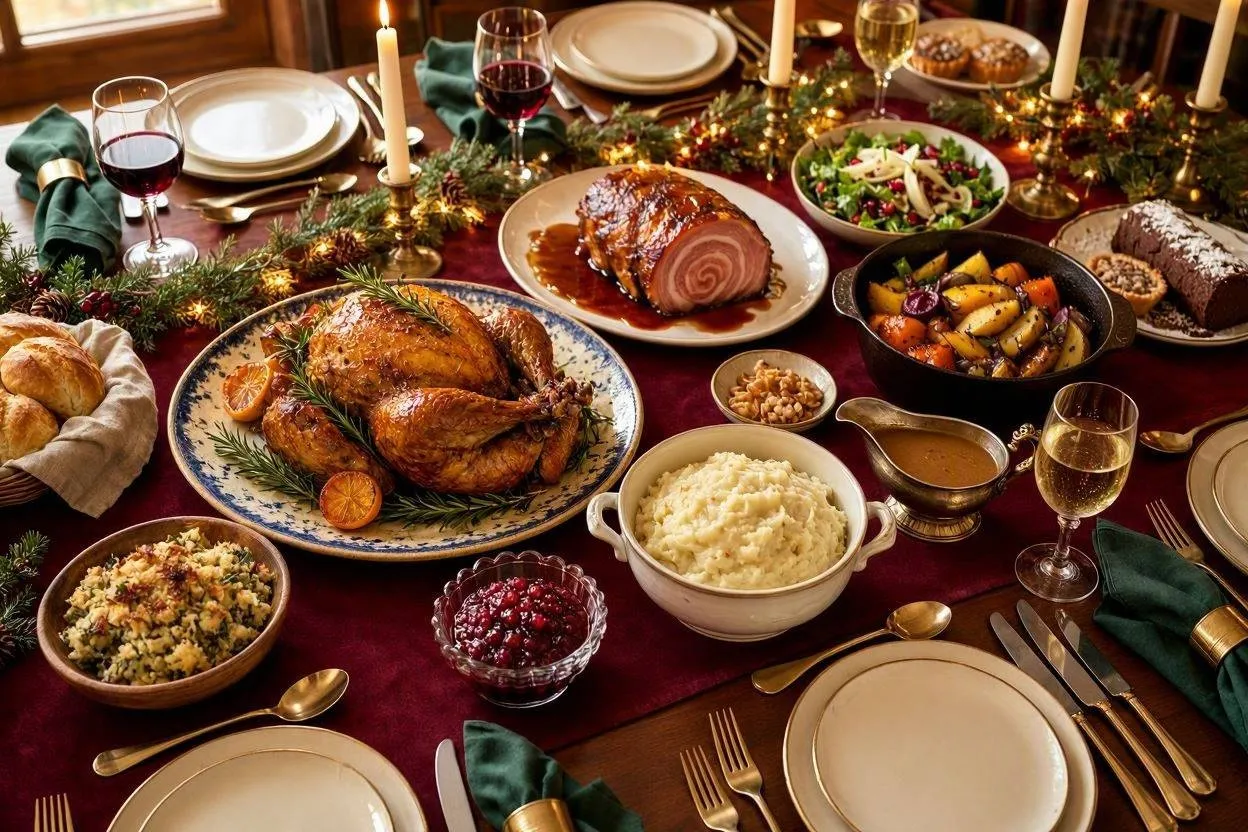
A good holiday dinner starts with a clear plan, not a stack of recipe tabs. This guide sorts holiday dinner ideas by occasion, effort level, and dietary need, so a host can pick a menu in minutes instead of scrolling through five different roundups. Every recipe category below includes specific quantities, cook times, and temperatures the details that separate a workable plan from a Pinterest board.
What Are the Best Holiday Dinner Ideas for a Crowd?
The best holiday dinner ideas for a crowd center on one protein that scales, two make-ahead sides, and a dessert that doesn’t need oven space on the day itself. A bone-in prime rib feeds 8 to 10 guests at roughly 0.75 lb (0.34 kg) per person and needs only one oven slot for 3 to 4 hours. Beef tenderloin works for smaller groups of 6 to 8 and cooks in under an hour. Roast turkey remains the default for groups over 10, largely because a 14-lb (6.4 kg) bird yields enough meat for both dinner and next-day sandwiches.
Large gatherings fail more often from oven-timing conflicts than from bad recipes. A 25-lb (11.3 kg) turkey and a 9×13-inch (23×33 cm) sweet potato casserole can’t both occupy a standard oven at 350°F (177°C) for the final hour. Hosts serving 12 or more guests should choose one oven-dependent main and shift every side dish to a slow cooker, stovetop, or make-ahead cold preparation.
How Do You Plan a Holiday Dinner Menu Without Stress?
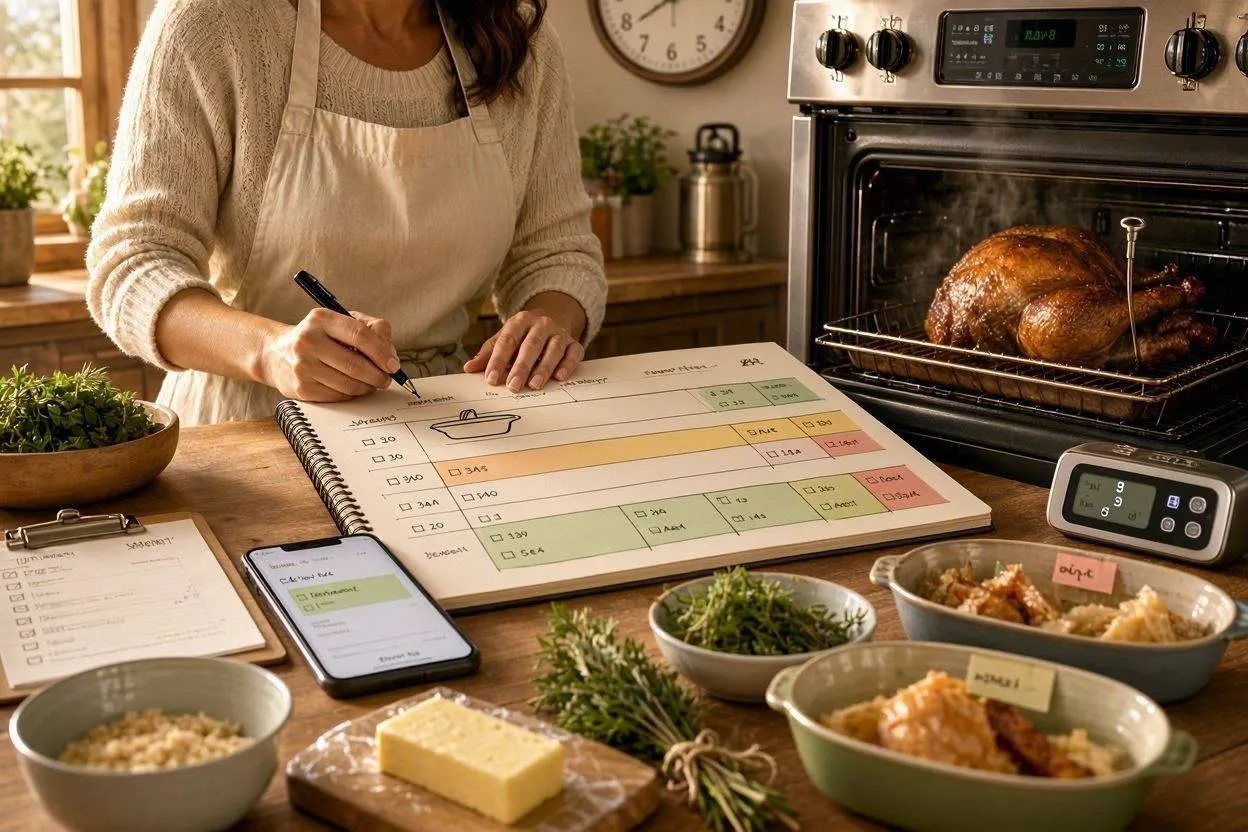
Plan a holiday dinner menu by working backward from serving time in 30-minute blocks, starting with whatever takes the longest to cook. A 12-lb (5.4 kg) turkey needs about 3 hours at 325°F (163°C), plus 30 minutes of resting time before carving. That single fact should anchor every other timing decision on the schedule.
Three steps keep the process manageable:
- List every dish and its total active time, not just cook time.
- Group dishes by equipment: oven, stovetop, slow cooker, and no-cook to spot conflicts early.
- Assign each dish a “make now,” “make day-of,” or “reheat only” label before shopping.
A host serving dinner at 5:00 p.m. with a 3-hour turkey should have the bird in the oven by 1:00 p.m., factoring in the 30-minute rest. Side dishes that only need reheating, like mashed potatoes or green bean casserole, go in during the last 20 minutes while the turkey rests. This approach removes the guesswork that turns holiday cooking into a scramble.
What Are Easy Holiday Dinner Ideas for Christmas Eve?
Easy Christmas Eve dinner ideas favor one-pot meals and 30-minute mains over multi-course spreads, since most households are still finishing gift wrapping or attending evening events. Slow cooker chicken and gravy, ready in 4 hours on low, requires 10 minutes of prep and no monitoring. Chicken marsala with cream sauce comes together in 30 minutes and pairs with a bagged salad for a complete meal.
Sheet-pan dinners solve the cleanup problem specifically. A single sheet pan holding sausage, bell peppers, and sugar snap peas roasts at 425°F (218°C) for 20 to 25 minutes and dirties one pan instead of four. Soup-based options, Italian sausage soup with tortellini or a six-can chicken tortilla soup, hold well on the stove for hours if guests arrive at staggered times.
For households that skip cooking altogether on December 24, a grilled cheese sandwich upgraded with brie, cranberry sauce, and rosemary turns a 10-minute meal into something that still feels like a holiday. Low effort doesn’t require low flavor if the ingredients are chosen well.
What Are Impressive Holiday Dinner Ideas for Christmas Day?
Impressive Christmas Day dinner ideas rely on a single centerpiece roast rather than a long list of separate dishes competing for attention. Standing rib roast, cooked at 450°F (232°C) for 20 minutes and then finished at 325°F (163°C) until the internal temperature reads 130°F (54°C) for medium-rare, produces a dramatic presentation with minimal hands-on work. Beef tenderloin with mushroom cream sauce hits the same visual mark in about 45 minutes total.
Duck legs braised in red wine offer an alternative for hosts who want to move away from turkey without sacrificing formality. The braise takes 90 minutes at 325°F (163°C) and needs almost no attention during cooking. A rack of pork loin with apricots and mustard serves 6 to 8 guests and roasts in 55 to 65 minutes at 375°F (191°C), reaching a safe internal temperature of 145°F (63°C).
Presentation matters as much as flavor for a centerpiece dish. A whole roast, carved tableside, communicates effort in a way that a casserole never will even when the casserole took longer to prepare.
Can You Prepare a Holiday Dinner in Advance?
Yes, most holiday dinner components can be fully or partially prepared 1 to 3 days ahead, with only proteins and anything requiring a crisp texture reserved for day-of-cooking. Mashed potatoes hold well in the refrigerator for 2 days and reheat in a slow cooker on low for 2 hours. Casseroles like Brussels sprouts with cheese and bacon can be assembled the night before, covered, and baked straight from the refrigerator with 10 extra minutes added to the bake time.
Braises and pot roasts actually improve with a rest period. A Mississippi pot roast tastes better on day two, once the fat has had time to redistribute through the meat overnight. Soups and stews follow the same pattern and reheat cleanly on the stovetop over medium-low heat.
What doesn’t hold well: green salads, anything breaded and meant to stay crisp, and delicate sauces that break when reheated. Those three categories belong on the day-of list regardless of how organized the rest of the menu is.
What Are Budget-Friendly Holiday Dinner Ideas?
Budget-friendly holiday dinner ideas swap expensive centerpiece cuts for slow-cooked, less-trimmed proteins that deliver the same amount of flavor per dollar. Chuck roast, priced well below tenderloin in most US grocery stores, becomes tender and rich after 6 to 8 hours in a slow cooker at low heat. A whole chicken costs roughly one-third the price per pound of a beef tenderloin and still serves 4 to 6 people when roasted at 425°F (218°C) for 60 to 75 minutes.
Pasta bakes stretch a holiday budget further than any protein-forward main. A tortellini bake using four ingredients tortellini, pesto, cream, and parmesan feeds 6 people for under $15 total in most regions and takes 30 minutes from stovetop to table. Bean-based mains, like a cheesy white bean and tomato bake, cost even less while still reading as a legitimate holiday dish rather than a consolation option.
Buying a larger cut and portioning leftovers into a second meal cuts the effective cost per serving further. A 4-lb (1.8 kg) chuck roast that costs $24 yields dinner for 6 plus lunch for 4 the following day, bringing the real per-meal cost down by nearly half.
What Are Gluten-Free and Vegetarian Holiday Dinner Ideas?
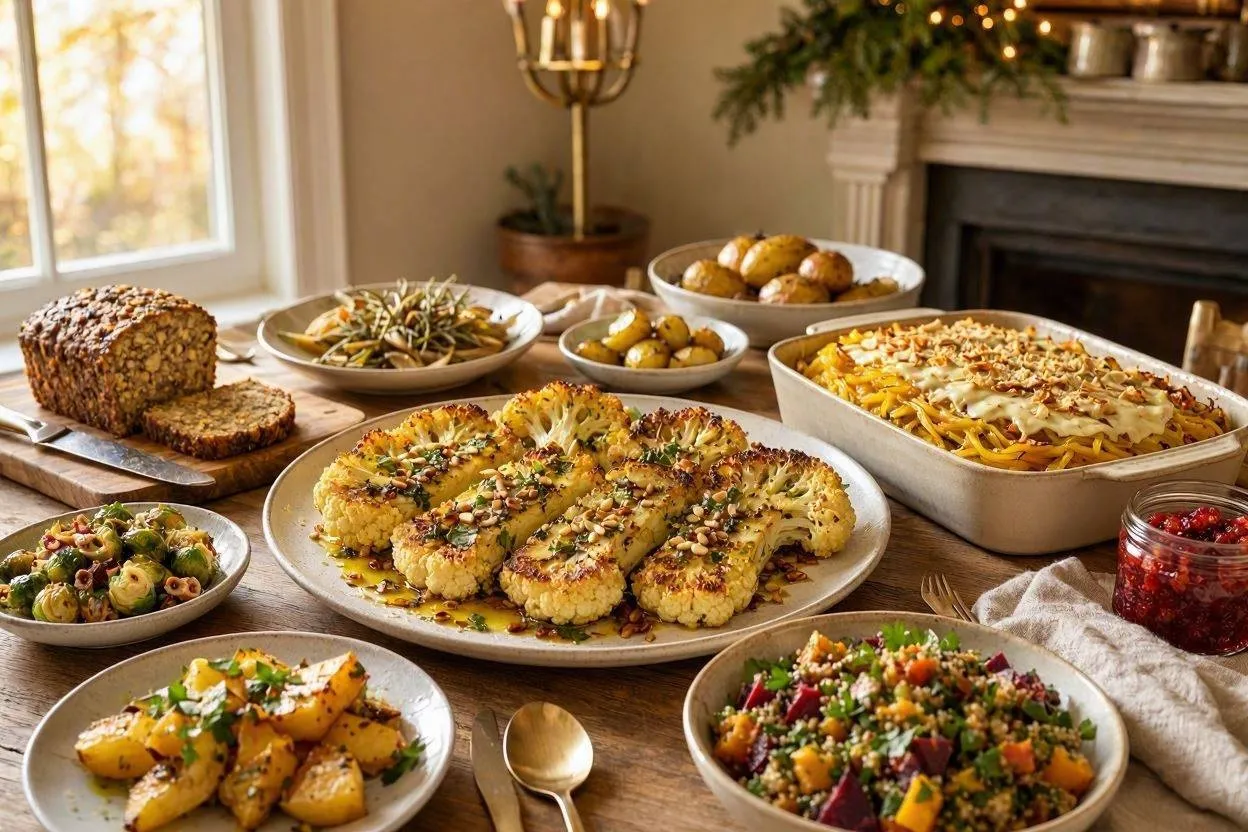
Gluten-free and vegetarian holiday dinner ideas center on naturally grain-free proteins and vegetables that hold up as a main course rather than a side. Roasted cauliflower steaks, cut into 1-inch (2.5 cm) planks and roasted at 425°F (218°C) for 25 to 30 minutes, work as a vegetarian centerpiece with enough visual weight for a holiday table. Spaghetti squash lasagna replaces pasta sheets with roasted squash strands, making the dish gluten-free by default while still delivering the layered, cheesy structure guests expect from lasagna.
For gluten-free proteins, a whole roasted turkey, glazed ham, or beef tenderloin requires no substitution at all; the risk sits in the sides and sauces, not the meat. Standard gravy thickened with flour, stuffing made with bread, and some cream sauces built on a roux all need adjustment. Cornstarch or arrowroot substitutes 1-to-1 for flour in most gravy recipes without changing the texture noticeably.
Labeling each dish on the table even with a small handwritten card prevents cross-contamination concerns better than assuming guests will ask. That single step matters more for a mixed-diet gathering than any specific recipe choice.
What Side Dishes Pair Best With Holiday Dinner Mains?
Side dishes pair best with holiday dinner mains when they contrast in texture and temperature rather than repeating the main course’s richness. A butter-heavy prime rib benefits from a bright, acidic side like a winter salad with maple candied walnuts and a vinaigrette, which cuts through the fat instead of adding to it. Roasted vegetables like rosemary potatoes, honey-glazed carrots, or Brussels sprouts with balsamic bring caramelized flavor without competing with a rich sauce already on the plate.
Bread rounds out nearly any main course, and a pull-apart garlic butter bread wreath serves as both a side and a centerpiece for the table itself. Cranberry sauce, whether canned or made from scratch with 12 oz (340 g) of fresh cranberries, ½ cup (100 g) sugar, and orange zest, provides the acidity that a turkey or ham dinner otherwise lacks.
Three sides per main dish is typically enough for a formal holiday dinner: one starch, one green vegetable, and one bread or salad. Adding a fourth or fifth side rarely improves the meal; it mostly adds dishes to wash.
How Do You Keep Holiday Dinner Food Safe?
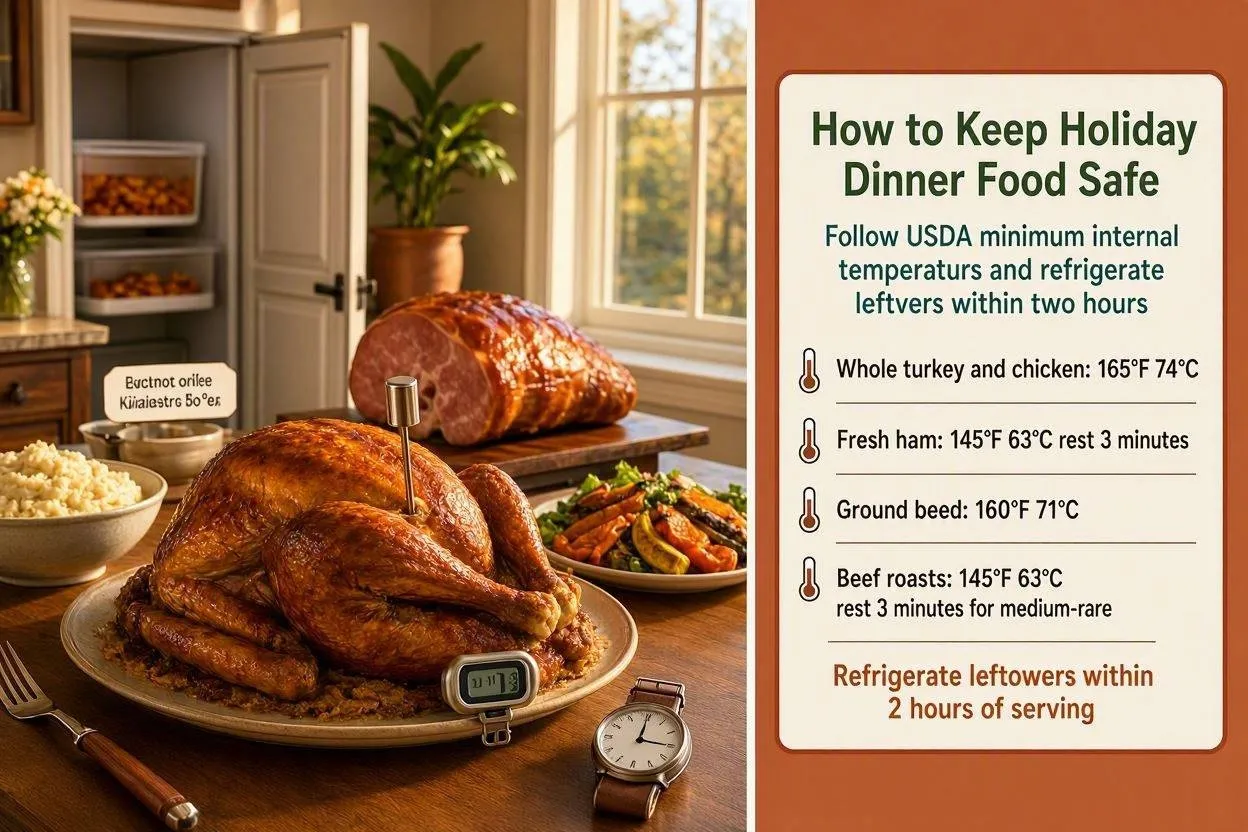
Keep holiday dinner food safe by cooking each protein to its specific minimum internal temperature and refrigerating leftovers within 2 hours of serving. The US Department of Agriculture (USDA) sets these minimum internal temperatures: whole turkey and chicken at 165°F (74°C), fresh ham at 145°F (63°C) with a 3-minute rest, ground beef at 160°F (71°C), and beef roasts at 145°F (63°C) with a 3-minute rest for medium-rare results at the higher end of that range.
A food thermometer inserted into the thickest part of the meat, avoiding bone, gives an accurate reading color alone is not a reliable indicator of doneness. Turkey left at room temperature for more than 2 hours enters the temperature danger zone between 40°F (4°C) and 140°F (60°C), where bacteria multiply the fastest. That 2-hour window drops to 1 hour if the room temperature exceeds 90°F (32°C), which matters less in December but still applies to any overheated kitchen near the oven.
Leftovers stored within that window stay safe in the refrigerator for 3 to 4 days, or in the freezer for up to 4 months without significant quality loss. Reheating leftovers to 165°F (74°C) before serving again eliminates any bacteria that developed during storage, regardless of how the food was originally cooked.
Conclusion
A working holiday dinner menu comes down to three decisions made early: one scalable protein, two or three sides that can be reheated rather than freshly cooked, and a clear hour-by-hour schedule built backward from serving time. Hosts who lock in those three choices a week ahead spend the day of the event carving and plating instead of troubleshooting oven space. The USDA’s minimum internal temperatures 165°F (74°C) for poultry, 145°F (63°C) for beef and pork apply regardless of which of these holiday dinner ideas ends up on the table.