
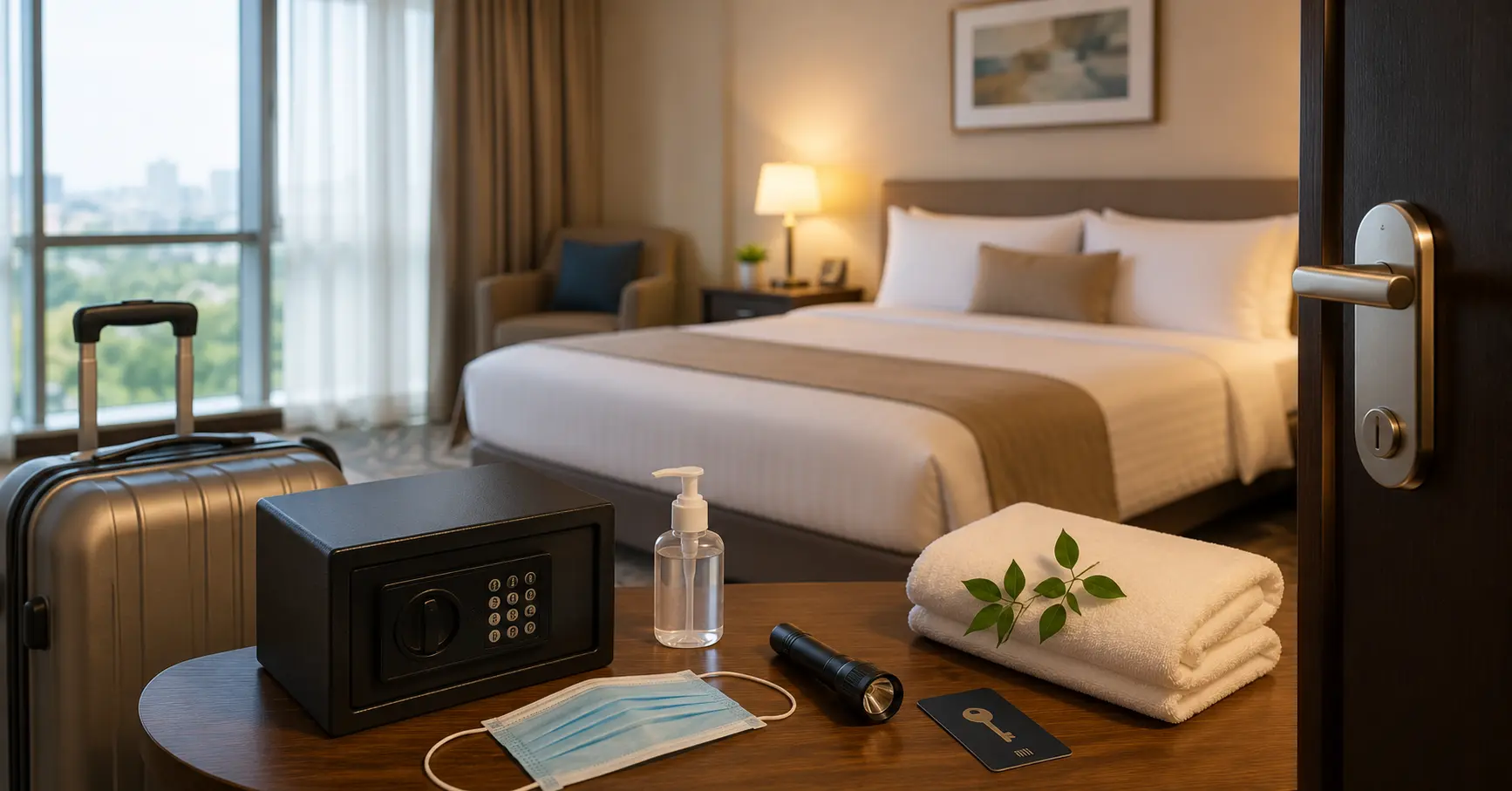
Hotel safety comes down to three checkpoints: what you check before booking, what you check at check-in, and what you check before you fall asleep. Skip any one of these, and you’re relying on luck instead of preparation.
Most guest safety incidents don’t happen because someone wandered into danger. They happen because a step got skipped, a room number was said out loud at the front desk, a window was left unchecked, or a Wi-Fi login was done without a second thought. A 2024 case at a UK Travelodge made this clear: a stranger convinced staff he was a guest’s boyfriend, got a key, and walked straight into her room.
This guide breaks down each stage with specific actions. No vague reassurance, just what to check and when to check it.
How Do You Choose a Safe Hotel Before You Book?
Choose a hotel by checking its neighbourhood crime data, calling ahead to confirm security features, and booking directly with the property rather than through a third party. Skipping this stage means you’re troubleshooting security problems after you’ve already checked in, which limits your options.
Research the neighbourhood and crime data.
Look up local crime statistics for the area surrounding a hotel before booking, not just the hotel’s own review score. Many U.S. cities publish police incident data online, searchable by zip code or neighbourhood name. A property can have excellent in-house security and still sit in a high-crime block. Cross-reference recent guest reviews for mentions of lighting, staff responsiveness, and neighbourhood safety, since these details rarely show up in a five-star average.
Confirm Security Features by Phone
Call the hotel directly before booking if you need specific safety features confirmed, such as working elevators, ramps, or accessible entry points. Ask whether guest floors require key card access from the elevator. Ask whether the lobby has 24-hour staffing. Properties with round-the-clock front desk coverage and controlled elevator access consistently show up as a baseline safety standard across independent security assessments and government travel guidance alike.
Book Directly and Confirm in Advance
Book your room in advance and confirm the reservation with the property directly, especially in a new city. Guests face the highest risk in the first hours after arrival, before they’ve learnt the layout or the neighbourhood. Keep a backup hotel option ready in case the first property doesn’t match its listing or feels unsafe on arrival this takes five minutes and removes a major stress point later.
What Should You Check When You Arrive at Your Room?
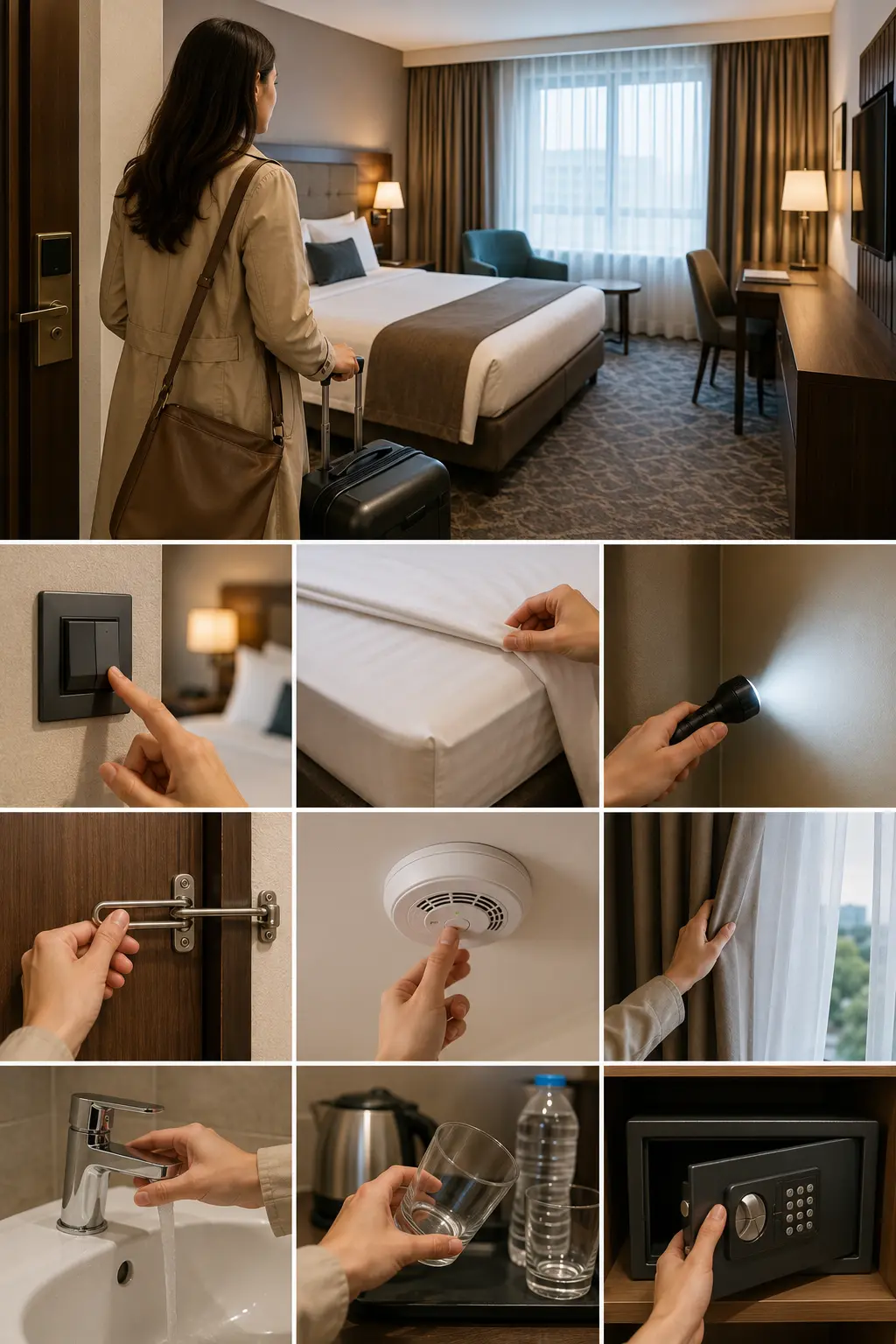
Check the room for intruders and hidden devices, test every lock and window, and locate your nearest emergency exit within the first five minutes of arrival. This sequence takes less time than unpacking a suitcase.
Search the Room for Intruders and Hidden Cameras
Prop the door open with your suitcase and check under the bed, inside closets, and behind curtains before settling in. This sounds excessive until you consider how many hotel incident reports involve someone hiding inside a room before the guest arrives. Scan mirrors, smoke detectors, alarm clocks, and picture frames for small lenses or blinking lights. A hidden camera detector app can help, though a slow visual scan with your phone’s flashlight catches most consumer-grade devices. If you find something suspicious, photograph it, cover it with tape or a cloth, and report it to the front desk immediately.
Test Locks, Windows, and Carbon Monoxide Detectors
Confirm that the door locks properly from inside and outside, that the deadbolt and security chain both function, and that windows close and latch fully. Check for a carbon monoxide detector in the room. If none is present, ask the front desk for a portable unit or bring your own—carbon monoxide poisoning remains a documented, if underreported, cause of hotel guest injury in the United States. Bathroom doors need locks too; guests often skip this check entirely.
Locate the Emergency Exit
Walk to your nearest emergency exit as soon as you check in, not after an alarm sounds. Count the doors between your room and the exit so you can find it by touch if a hallway fills with smoke. Review the evacuation diagram posted on the back of your door. The National Fire Protection Association’s Life Safety Code (NFPA 101) sets the baseline exit and signage standards most U.S. hotels follow, though enforcement varies by state and property age.
How Do You Secure Your Room Overnight?
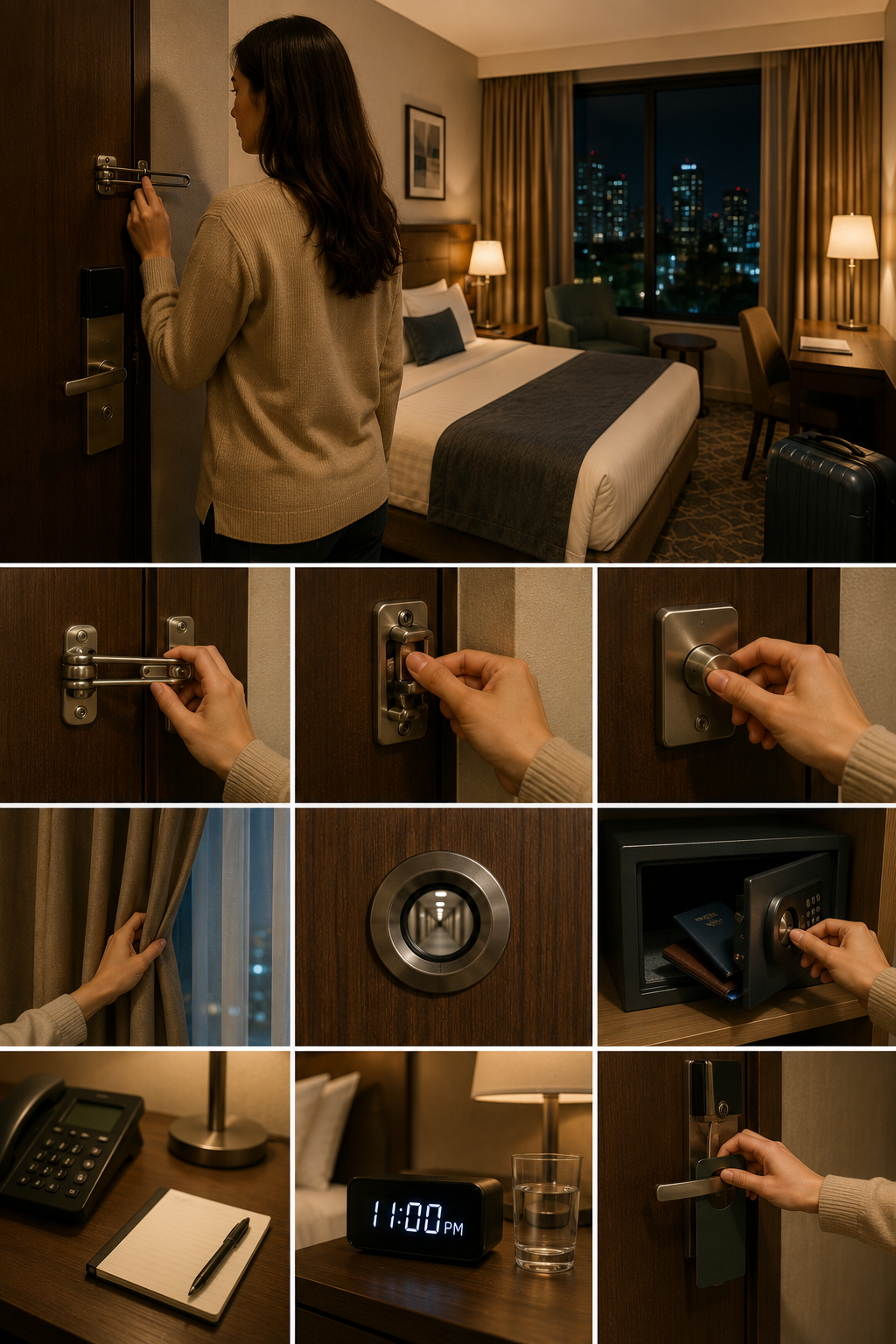
Reinforce the door with a portable lock or wedge, separate your key card from anything showing your room number, and use the do-not-disturb sign to control who knocks. None of these steps require special equipment beyond what fits in a carry-on.
Use a Portable Door Lock or door wedge.
A portable door lock or an alarmed door wedge adds a physical barrier beyond the hotel’s own hardware, which matters because master keys and key-card overrides exist for staff and, occasionally, for people who shouldn’t have them. These devices cost under $15 and weigh a few ounces. Choose one with an audible alarm if you want a warning, not just resistance, if someone attempts entry while you’re asleep.
Keep Your Key Card Separate From the Room Number
Remove your key card from its paper sleeve if the room number is written on it, then store the two separately. If a front desk clerk states your room number out loud during check-in, ask for a different room. Strangers overhearing a room assignment represents one of the more common, low-effort ways someone tracks a specific guest through a hotel.
Hang the Do Not Disturb Sign
Hang the “do not disturb” sign whenever you’re in the room, even during daytime hours. Housekeeping and staff will note it and skip the room, which means any knock or key attempt afterward isn’t coming from hotel personnel. Verify identity through the door before opening it, regardless — a sign discourages routine visits, not a determined intruder.
How Do You Protect Your Belongings and Personal Data?
Lock valuables in the room safe, split your cash across two locations, and avoid entering financial or personal accounts over hotel Wi-Fi without a VPN (virtual private network). Physical theft and data theft both start with the same mistake: assuming a hotel room is inherently private.
Use the Safe and split your cash.
Store your passport, spare cash, and electronics in the in-room safe and set a combination that isn’t your birth year or room number. Split your cash between your wallet and a hidden compartment in your luggage instead of carrying it all in one place. Budget properties without in-room safes call for a portable travel safe that attaches to a fixed object in the room.
Protect Devices on Hotel Wi-Fi
Avoid banking, shopping, or logging into sensitive accounts over hotel Wi-Fi unless you’re running a VPN. Hotel networks rarely encrypt traffic between guests on the same network, which means another device on that network can potentially intercept unsecured data. Password-protect your phone and laptop, and turn on location tracking so a lost device can be found remotely.
Watch for Smart Lock and Bluetooth Vulnerabilities
Bluetooth-enabled smart locks and keyless entry systems have expanded across U.S. hotel chains, and researchers have documented vulnerabilities in older Bluetooth lock firmware that allowed unauthorised unlocking under specific conditions. Ask whether your hotel’s smart lock system has received recent firmware updates if this concerns you, and don’t rely on a smart lock alone — pair it with a physical door wedge or portable lock. An RFID-blocking key card sleeve also prevents a card’s data from being skimmed in a crowded lobby or elevator.
How Do You Stay Safe Around Staff and Public Areas?
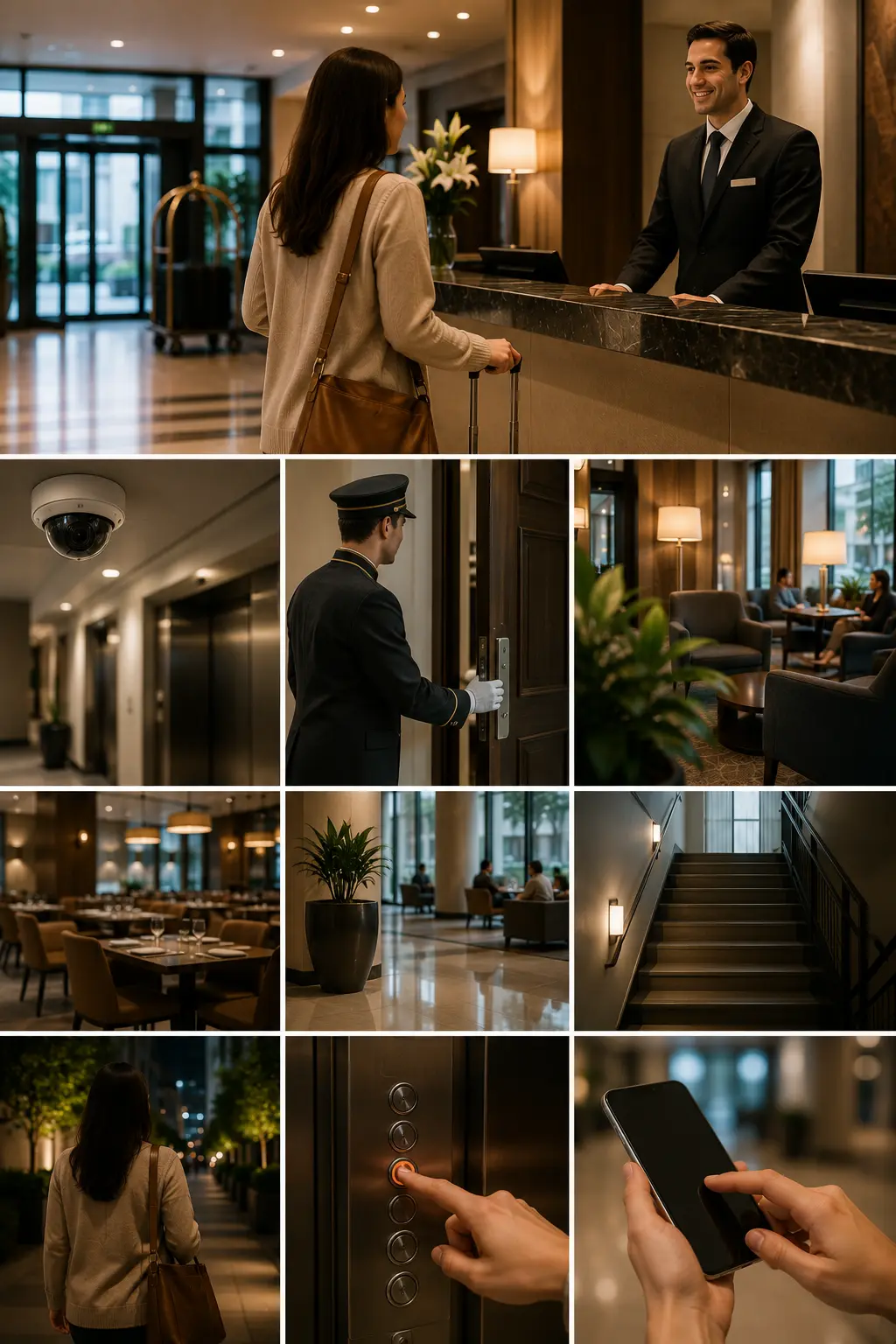
Verify identity before opening your door to anyone, and never say your room number out loud in a lobby, restaurant, or elevator. Public spaces inside a hotel remain public, regardless of how exclusive the property feels.
Verify Identity Before Opening the Door
Call the front desk to confirm any unexpected visitor before opening the door, including someone claiming to be maintenance, housekeeping, or a delivery service. Use the peephole first. Staff members carry identification and won’t object to a guest confirming their visit by phone—a genuine employee expects this step, not resists it.
Avoid Sharing Your Room Number Aloud
Keep your room number off any surface visible to strangers, including luggage tags and hotel-branded key sleeves. Meet new acquaintances in the lobby rather than in your room. Bags left unattended in restaurants or lounges disappear faster than most guests expect, so keep them within reach even in areas that feel secure.
What Should You Do During Checkout?
Review your bill line by line, check every drawer and the safe for forgotten items, and confirm secure storage arrangements if you’re leaving luggage at the property after checkout. Check-out gets skipped in most hotel safety advice, yet it’s where guests lose items and miss billing errors most often.
Double-check the safe specifically, since forgotten passports and jewelry inside in-room safes account for a large share of items guests never recover. If storing luggage post-checkout, confirm the hotel has a locked storage room rather than an open closet behind the desk, and tag bags with your name and phone number.
Which Government and Industry Resources Cover Hotel Safety?
The U.S. Department of State’s Smart Traveller Enrolment Program (STEP), the National Fire Protection Association’s Life Safety Code, and the American Hotel & Lodging Association’s 5-Star Promise all provide guest-facing or property-facing safety standards worth knowing. STEP sends security alerts from the nearest U.S. embassy while you travel abroad. NFPA 101 governs exit signage and fire safety design in most American hotels. The 5-Star Promise commits participating properties to staff safety training, including programs to help employees recognise signs of human trafficking a standard most guests never hear about, though it shapes how front-line staff respond to unusual situations.
Conclusion
Hotel safety comes down to a short sequence repeated at every stage of a stay: research before booking, inspect on arrival, secure the room overnight, and check twice before leaving. None of these steps require special training or expensive gear. A five-minute room scan and a $15 door wedge cover most of the risk a typical traveller faces. The properties and standards behind the scenes, from NFPA fire codes to the AHLA’s staff training programs, exist to reduce the risk.