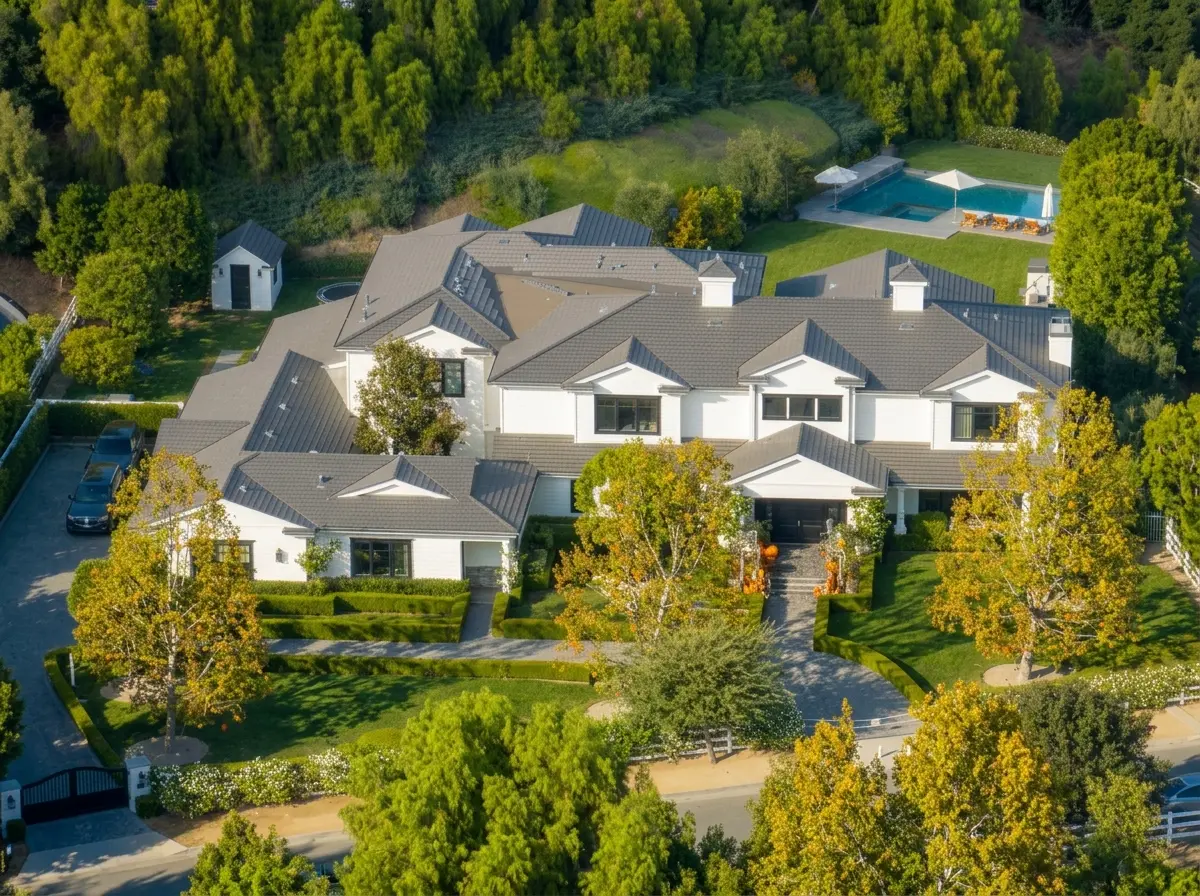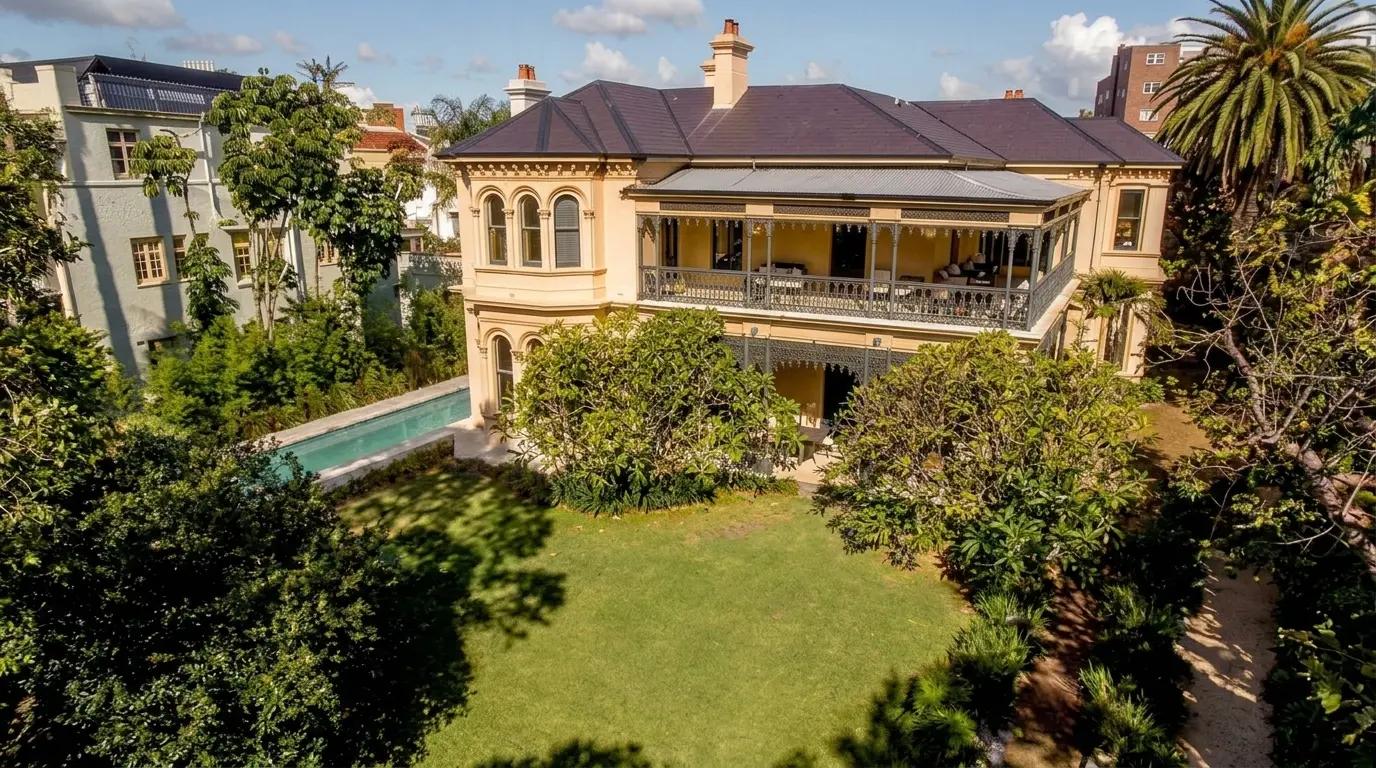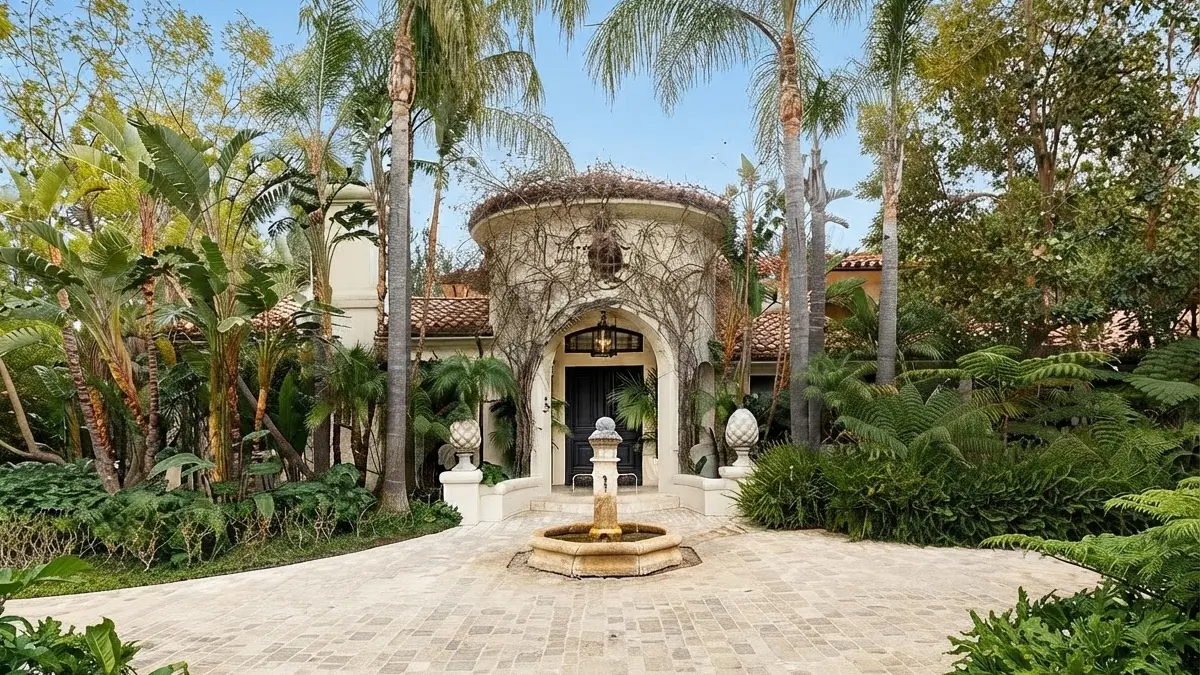
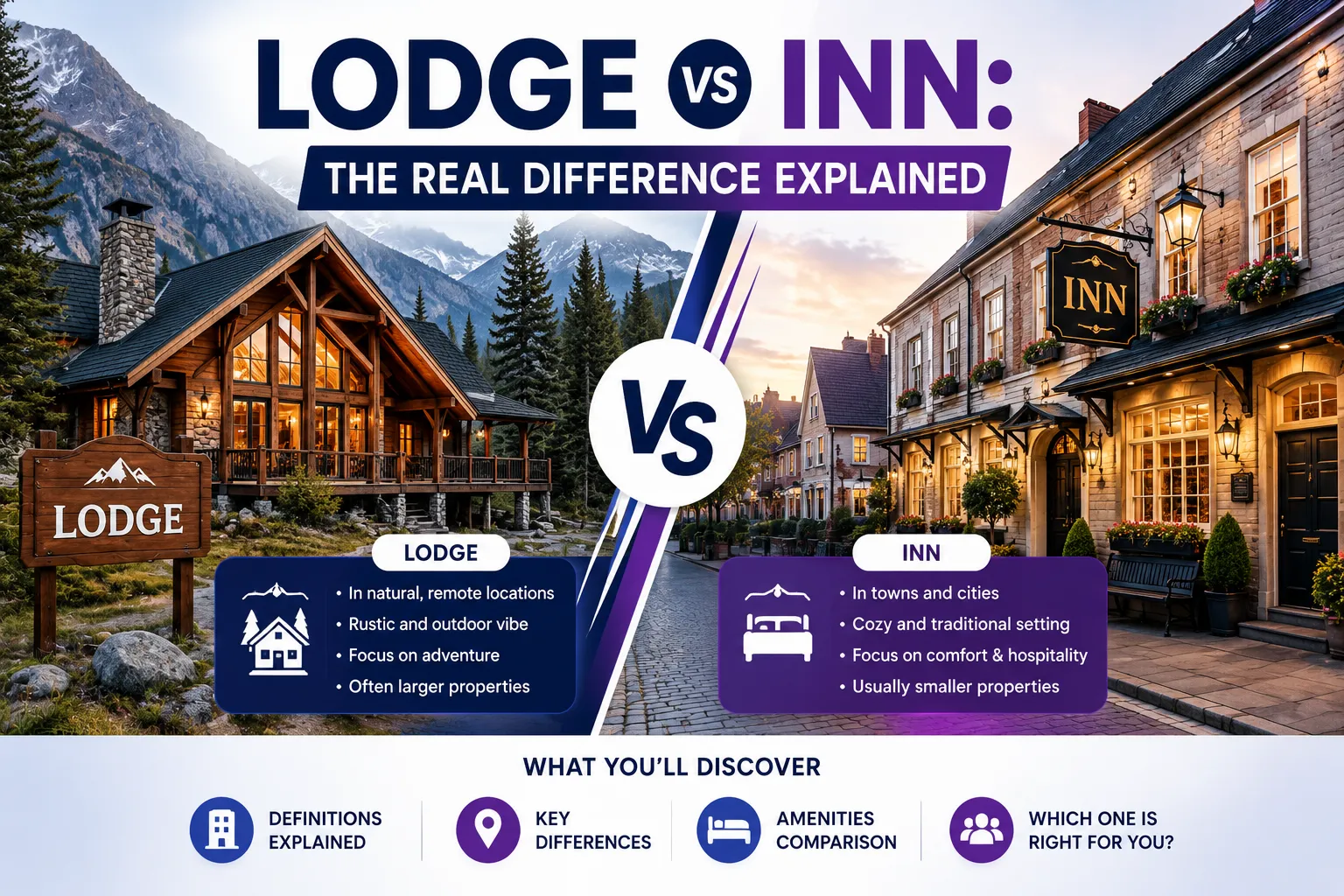
A lodge is a small, rustic property built around a natural setting, mountains, lakes, forests, or ski terrain, while an inn is a small, often family-run establishment that combines lodging with meals, typically in a town, village, or countryside location. Both terms describe modest, personal-scale accommodation, but the setting, the services, and the guest experience separate one from the other in ways that matter when booking a trip in the United States.
Travel platforms, state tourism boards, and individual property owners do not apply these labels under a single national standard. A property owner chooses “lodge” or “inn” based on branding, history, and location rather than a fixed legal definition. Understanding the practical distinctions still helps travelers set accurate expectations for price, privacy, and activities before they book.
Search interest around “lodge vs. inn” spikes twice a year in the USA: once in late fall, when travelers plan ski trips and holiday getaways, and once in early spring, when couples and families book countryside weekends before peak summer rates take hold. That seasonal pattern reflects the two property types themselves: lodges tied to winter and outdoor sports, and inns tied to relaxed, year-round leisure travel.
Where the Words Come From
The word “lodge” traces back to the Old English term “logge,” used as early as the 1200s to describe a temporary shelter connected to woodland surroundings. Hunting parties and forest workers used lodges as functional shelter long before the word applied to paid accommodation, and that woodland association carries through to how the term gets used across the United States today.
“Inn” carries an older commercial history. Roman travelers relied on roadside inns while conducting trade along early road networks, and the tradition continued through medieval Europe and into colonial America, where stagecoach routes depended on inns spaced a day’s ride apart. Guests at those early inns ate, slept, and stabled horses under one roof, a structure that modern inns still echo through combined lodging and meal service, minus the stable.
What Is a Lodge?
A lodge is a small to mid-sized property situated in or near a natural landscape, built to give guests direct access to outdoor activities such as hiking, skiing, hunting, or fishing. Construction typically favors wood, stone, and exposed timber, and the design reflects the surrounding terrain rather than a standardized hotel template.
Lodges commonly operate around one central building where guests gather for meals, drinks, and conversation, with individual cabins or wings branching outward. A mountain lodge in Colorado might sit within walking distance of a ski lift; a fishing lodge in Montana might sit on a riverbank with no other buildings visible for miles. This isolation is part of the appeal, not an inconvenience.
Service at a lodge tends to center on the outdoor experience rather than round-the-clock hospitality. Staff often include guides, instructors, or naturalists alongside the usual front desk and housekeeping roles. Wi-Fi availability varies widely: some lodges promote high-speed internet as an amenity, while others advertise its absence as a selling point for guests seeking a break from connectivity.
Lodge guests typically stay longer than the average hotel guest, with three- to five-night stays common during peak ski or hunting season. Package pricing at lodges often bundles the room rate with guided activities, equipment rental, and some or all meals, which makes a lodge’s nightly rate harder to compare directly against a standard hotel rate. A guest booking a Wyoming fishing lodge, for example, might pay one package price that covers a private cabin, three meals daily, and a licensed fishing guide for two days, a structure rarely offered by an inn or hotel.
Wildlife and land access shape lodge operations more than they shape any other property type covered in this article. A lodge bordering a national forest or wildlife refuge must follow state and federal land-use rules that affect everything from guided-tour group sizes to construction limits on new buildings, and owners frequently list these restrictions as part of what preserves the setting guests come to experience.
What Is an Inn?
An inn is a small, independently owned or family-run property that provides both lodging and meals, usually with fewer than 30 rooms. The tradition traces back centuries to roadside stops where travelers and their horses rested overnight, and the modern inn keeps that hospitality-first character even though horses no longer factor into the stay.
Inns appear in small towns, historic districts, and countryside settings across the United States far more often than in major cities. The building itself frequently predates the business—a converted farmhouse, a 19th-century townhouse, or a former stagecoach stop, which gives many inns a historic charm that newer construction cannot replicate.
Breakfast, and sometimes dinner, comes standard at most inns, prepared on-site rather than outsourced to a separate restaurant brand. Guests interact directly with the owner or a small staff, and that personal attention, remembering a returning guest’s name, and offering a local recommendation define the inn experience more than any specific amenity list.
Room decor at an inn rarely follows a repeated template the way chain hotel rooms do. Each room commonly carries its own color scheme, furniture set, and sometimes its own name rather than a number, a detail that distinguishes inn branding from both hotels and lodges. The Fearrington House Inn, for one example, designs each guest room individually to reflect the property’s historic roots rather than applying one standardized layout across the building.
Inn ownership structures skew heavily toward small business operators rather than corporate chains, though branded exceptions exist. Hilton Garden Inn uses “inn” in its name to suggest a relaxed, warmer tone than a full-service Hilton hotel, even though the properties themselves operate under standardized corporate management rather than independent ownership. Travelers should treat the word “inn” in a chain hotel brand name as a marketing choice rather than a guarantee of the small, family-run experience associated with independent inns.
Lodge vs Inn: Key Differences at a Glance
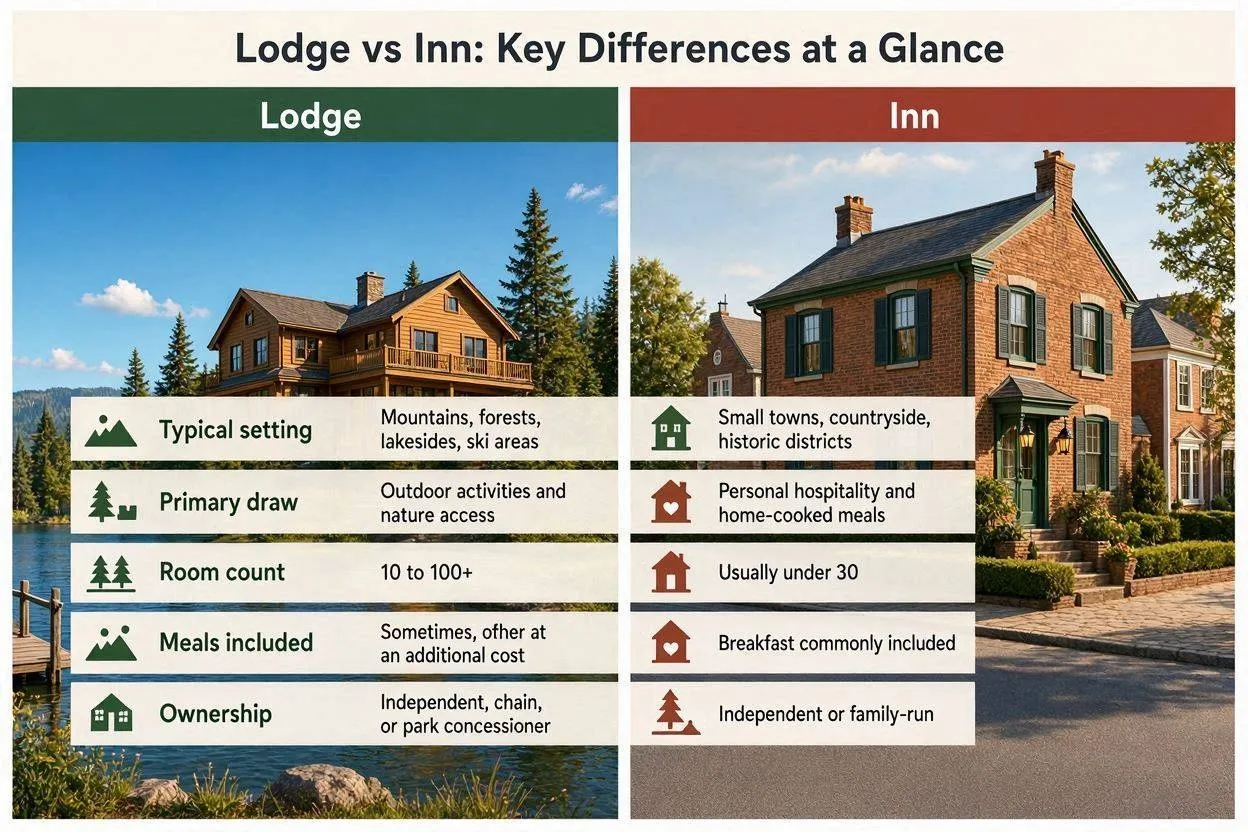
| Feature | Lodge | Inn |
|---|---|---|
| Typical setting | Mountains, forests, lakesides, ski areas | Small towns, countryside, historic districts |
| Primary draw | Outdoor activities and nature access | Personal hospitality and home-cooked meals |
| Room count | 10 to 100+, depending on scale | Usually under 30 |
| Meals included | Sometimes, often at an additional cost | Breakfast commonly included |
| Ownership | Independent, chain, or park concessioner | Independent or family-run |
| Operating season | Frequently seasonal | Usually year-round |
| Architecture | Wood, stone, exposed beams | Historic buildings, converted homes |
| Price range (2026, per night) | $120 to $600+ | $90 to $400 |
Location and Setting
Lodges sit in or adjacent to natural landscapes: national forests, mountain ranges, lakeshores, and coastal reserves rank among the most common locations. The distance from a city center runs from a short drive to several hours, and the drive itself often becomes part of the trip.
Inns sit closer to civilization without losing a rural or small-town feel. A New England inn might occupy a corner lot in a village founded in the 1700s; a Southern inn might sit on a former plantation road lined with oak trees. Highway-adjacent inns exist as well, though scenic routes and historic districts remain the more common address.
Regional patterns emerge across the United States for both property types. Mountain lodges cluster in Colorado, Montana, and Vermont, where ski terrain and national forest land create natural demand. Coastal and lakeside lodges appear throughout the Pacific Northwest and the Great Lakes region. Inns concentrate more heavily in New England, the Mid-Atlantic, and the South, where colonial-era and 19th-century architecture supplies the historic buildings that inn owners restore and operate today.
Size, Room Count, and Architecture
Lodges range from a dozen rooms to well over a hundred, depending on whether the property functions as a boutique retreat or a larger resort-style operation near a national park. Layout usually spreads across multiple buildings or cabins connected by a central lodge hall, giving guests both privacy and a communal gathering space.
Inns stay compact by design, with room counts rarely exceeding 30 and many operating with 10 to 20 rooms total. The Rabbit Hill Inn in Vermont runs 19 rooms; the Fearrington House Inn in North Carolina keeps its guest count small enough to maintain individually designed rooms rather than standardized layouts. Construction materials for inns lean toward preserved or renovated historic structures, clapboard siding, original hardwood floors, and restored fireplaces rather than the log-and-stone aesthetic common to lodges.
Amenities and Services
Lodge amenities orient around the outdoors: guided hikes, equipment rentals, fire pits, ski-in/ski-out access, and wildlife-viewing programs appear on lodge amenity lists far more often than spas or business centers. Dining varies by property — some lodges run full restaurants, others offer a single communal meal service, and a smaller group skips food service entirely in favor of nearby town options.
Inn amenities center on comfort and personal touch: fireplaces in common rooms, small gardens, communal breakfast tables, and curated local recommendations from the owner. Room service rarely exists at an inn, and guests instead eat together in a shared dining space, which encourages conversation among travelers who might otherwise never interact.
Price Range Across the USA
Lodge rates in 2026 span from roughly 120 USD (110 EUR) per night at a modest regional property to 600 USD (550 EUR) or more per night at a high-end destination lodge near a national park or ski resort. Seasonal demand drives much of this range — a ski lodge charges peak rates in January and February, then drops significantly during the off-season.
Inn rates run somewhat lower on average, from about 90 USD (83 EUR) to 400 USD (368 EUR) per night, with the Inn at Serenbe in Georgia averaging around 375 USD (345 EUR) as an example of the higher end of that bracket. Weekend and holiday pricing at inns climbs faster than weekday pricing, since romantic getaways and small celebrations make up a large share of inn bookings.
Seasonal Operation
Lodges close for part of the year more often than inns do. A ski lodge in Vermont might operate from November through April and shut down completely during the summer; a hunting lodge might open only during specific game seasons set by state wildlife agencies. Travelers should confirm operating dates directly with the property before booking, since seasonal closures rarely appear prominently on third-party booking sites.
Inns typically run year-round, adjusting only their pricing and package offerings by season rather than closing entirely. A countryside inn might promote foliage packages in October and quieter winter getaway rates in January, but the doors stay open in both cases.
How Booking Platforms Classify Lodges and Inns
Booking.com, Expedia, and Airbnb each apply their own property-type filters, and the labels do not always match how an owner markets the building. A property listed as “Lodge” on one platform might appear under “Hotel” or “Guesthouse” on another, since these companies assign categories based on internal algorithms and self-reported owner input rather than a shared industry standard.
Airbnb treats “lodge” primarily as a filterable property type tied to rural or nature-adjacent listings, while “inn” rarely appears as a distinct Airbnb category and instead gets folded into “boutique hotel” or “bed and breakfast” listings. Travelers searching by property type should treat these filters as a starting point rather than a guarantee and should read the individual listing description to confirm what the stay actually includes.
Licensing and Tax Classification in the USA
State and local governments regulate lodges and inns through lodging tax and business licensing rules that vary by jurisdiction, not through a national “lodge” or “inn” certification. A property collects and remits transient occupancy tax — sometimes called hotel tax or bed tax — regardless of whether it markets itself as a lodge, inn, hotel, or short-term rental, and the applicable rate depends on the county or city where the property sits.
Some states apply additional zoning rules to properties operating in residential or protected land areas, which affects lodges built near national forests or wilderness preserves more often than inns in commercial or mixed-use town centers. Accessibility compliance under the Americans with Disabilities Act (ADA) applies to both property types as places of public accommodation, though older inn buildings converted from historic homes sometimes carry exemptions or modification allowances that newer lodge construction does not.
National Park Lodges: A Distinct American Category
The National Park Service (NPS) operates or authorizes concessioner-run lodges inside federally protected land, a category with no equivalent among inns. The Old Faithful Inn in Yellowstone and the Ahwahnee in Yosemite both carry “inn” in their names, yet both function operationally as large-scale lodges built from local timber and stone, positioned for direct access to trails and geothermal or geological landmarks, and operated under strict federal preservation guidelines.
These properties book out months in advance during peak season, since availability inside park boundaries stays limited by federal land-use restrictions rather than ordinary market demand. Travelers planning a national park trip should reserve NPS concessioner lodging as early as 12 months ahead for the most popular parks, including Yellowstone, Yosemite, and Grand Canyon.
Common Booking Mistakes to Avoid
Guests booking a lodge sometimes assume all meals are included, then arrive to find a la carte dining or a single communal dinner service instead of full board. Confirming the meal plan before arrival prevents an unexpected grocery run in a remote location where the nearest store might sit an hour away.
Guests booking an inn sometimes assume 24-hour front-desk staffing, then find a small owner-operated property where check-in closes by 9 or 10 p.m. and late arrivals require advance notice by phone or email. Reading the property’s check-in policy carefully avoids arriving at a locked door after a long drive.
A third common mistake involves confusing a branded “inn” or “lodge” hotel chain property with the independent, small-scale version of each category. A Hampton Inn or a Travelodge operates as a standardized hotel despite the name, with amenities and service levels closer to a mid-range chain hotel than to a family-run countryside inn or a wilderness fishing lodge. Checking guest photos, room counts, and on-site amenities listed in the property description clarifies which category a specific listing actually falls into before booking.
Which One Fits Your Trip?
Choose a lodge for trips centered on outdoor activity, skiing, hiking, hunting, or wildlife viewing, where proximity to trails or terrain matters more than urban convenience. Choose an inn for trips centered on relaxation, romance, or historic charm, where a home-cooked breakfast and a quiet small-town setting matter more than adventure programming.
Business travelers and guests needing consistent, 24-hour service in an urban setting will find neither option ideal, since both lodges and inns prioritize a smaller, more personal scale over the standardized infrastructure a full-service hotel provides. Couples celebrating an anniversary, families planning a national park visit, and solo travelers seeking a quiet retreat represent the guests best served by these two property types.
Conclusion
A lodge and an inn both deliver smaller-scale, personal hospitality, yet the setting and purpose of each stay differ enough to change what a traveler should expect at check-in. Lodges put outdoor access first; inns put home-style hospitality and historic character first. Confirming seasonal operating dates, checking the platform’s property-type filter against the listing description, and reviewing state lodging tax disclosures before booking will prevent the most common surprises tied to either property type in 2026.