Booking a resort stay without understanding the room categories usually ends in one of two ways: you overpay for space you never use, or you underpay for a room that can’t actually fit your group. Resort brands love their labels: ‘deluxe’, ‘junior suite’, ‘swim-up’, and ‘presidential’, and half of them mean something different at every property.
This guide breaks down every major resort room type by size, view, occupancy, and price tier, so you can match the label to what you actually need instead of guessing.
What Are the Main Resort Room Types?
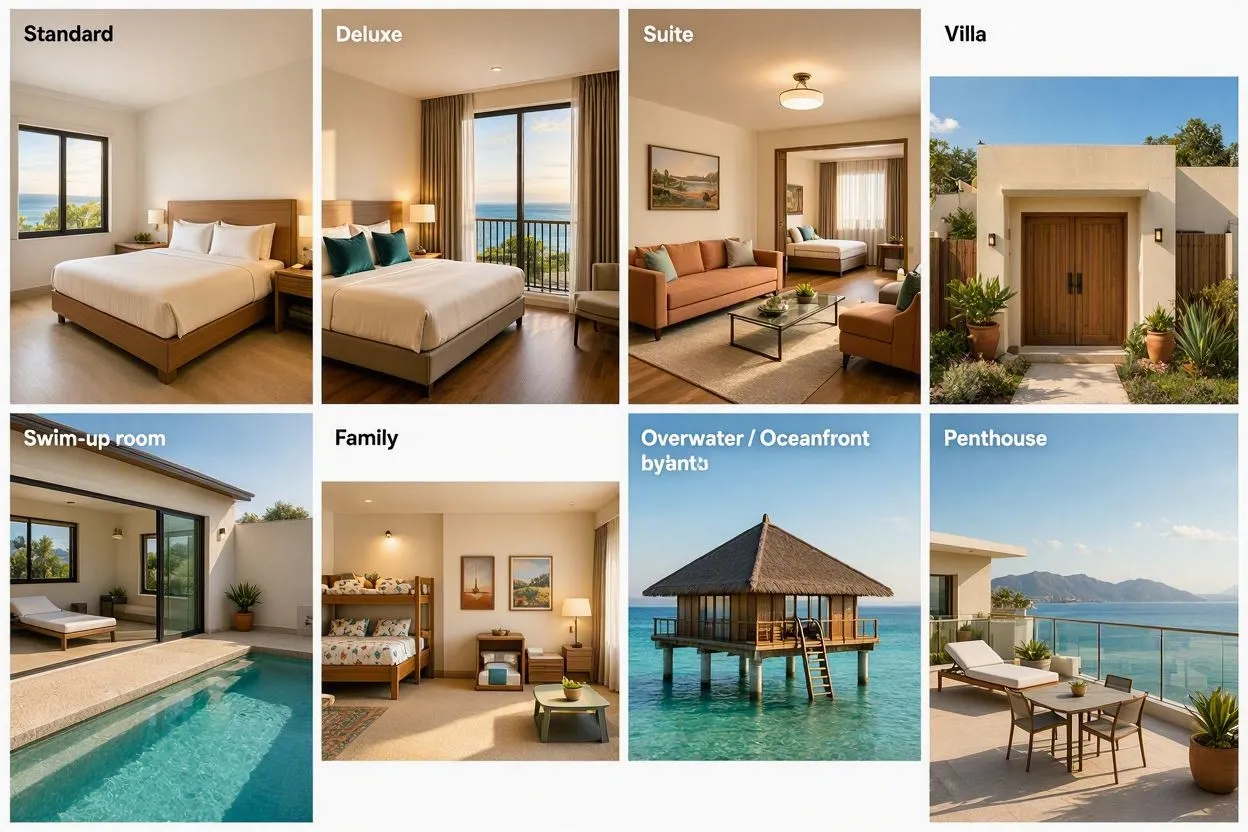
Resorts group their room types into eight core categories: standard, deluxe, suite, villa, swim-up, overwater/oceanfront, family, and penthouse. Some properties treat connecting rooms and accessible rooms as sub-categories rather than standalone tiers. A beach resort in Mexico might show six of these eight on a single property page. A mountain lodge might only offer three. Once you know the eight base categories, translating any brand’s naming quirks gets a lot easier.
Resort Room Types at a Glance
The table below lines up all eight core room types by size, typical occupancy, and price tier, so you can scan for the right fit before reading further. Square footage varies by property, but the relative order between categories holds steady across most resort brands.
| Room Type | Typical Size | Typical Occupancy | Price Tier (relative) |
| Standard | 250–350 sq ft (23–33 sq m) | 2 guests | Entry-level |
| Deluxe | 300–450 sq ft (28–42 sq m) | 2–3 guests | Entry-level + 15–25% |
| Junior Suite | 500–650 sq ft (46–60 sq m) | 2–3 guests | Mid-tier |
| One-Bedroom Suite | 650–1,000 sq ft (60–93 sq m) | 2–4 guests | Mid to upper-tier |
| Swim-Up Suite | 400–600 sq ft (37–56 sq m) | 2–4 guests | Mid to upper-tier |
| Villa | 600–3,000+ sq ft (56–279+ sq m) | 2–8 guests | Upper-tier |
| Family Suite | 700–1,200 sq ft (65–111 sq m) | 4–6 guests | Upper-tier |
| Penthouse / Presidential | 1,500–2,500+ sq ft (139–232+ sq m) | 4–8 guests | Top-tier |
Standard and Deluxe Rooms
A standard room is the entry-level accommodation at most resorts, typically 250 to 350 square feet, with one king or two queen beds and no guaranteed view. Deluxe rooms sit one tier up, adding 50 to 100 square feet and a partial or garden view, but keeping the same basic layout otherwise. A couple celebrating an anniversary might upgrade from standard to deluxe purely to lock in a balcony, even though the square footage barely budges. Neither tier usually comes with a separate living area or a private plunge pool.
Suites: Junior, One-Bedroom, Two-Bedroom, and Presidential
A resort suite adds a separate living space to the sleeping area, and sizing runs from roughly 500 square feet for a junior suite up to 2,000-plus square feet for a presidential suite. Junior suites blend the bedroom and sitting area into one open room. One-bedroom and two-bedroom suites use a wall or door to fully separate them. Presidential suites sit at the top and often throw in a private terrace, dining room, and dedicated check-in. Properties like Signature by Pinnacle 180 in Puerto Vallarta list suites by exact unit number and view angle (Ocean Front, Ocean Front Corner, Left or Right Side Ocean View), which lets guests compare specific rooms instead of relying on a vague category description.
Villas and Bungalows
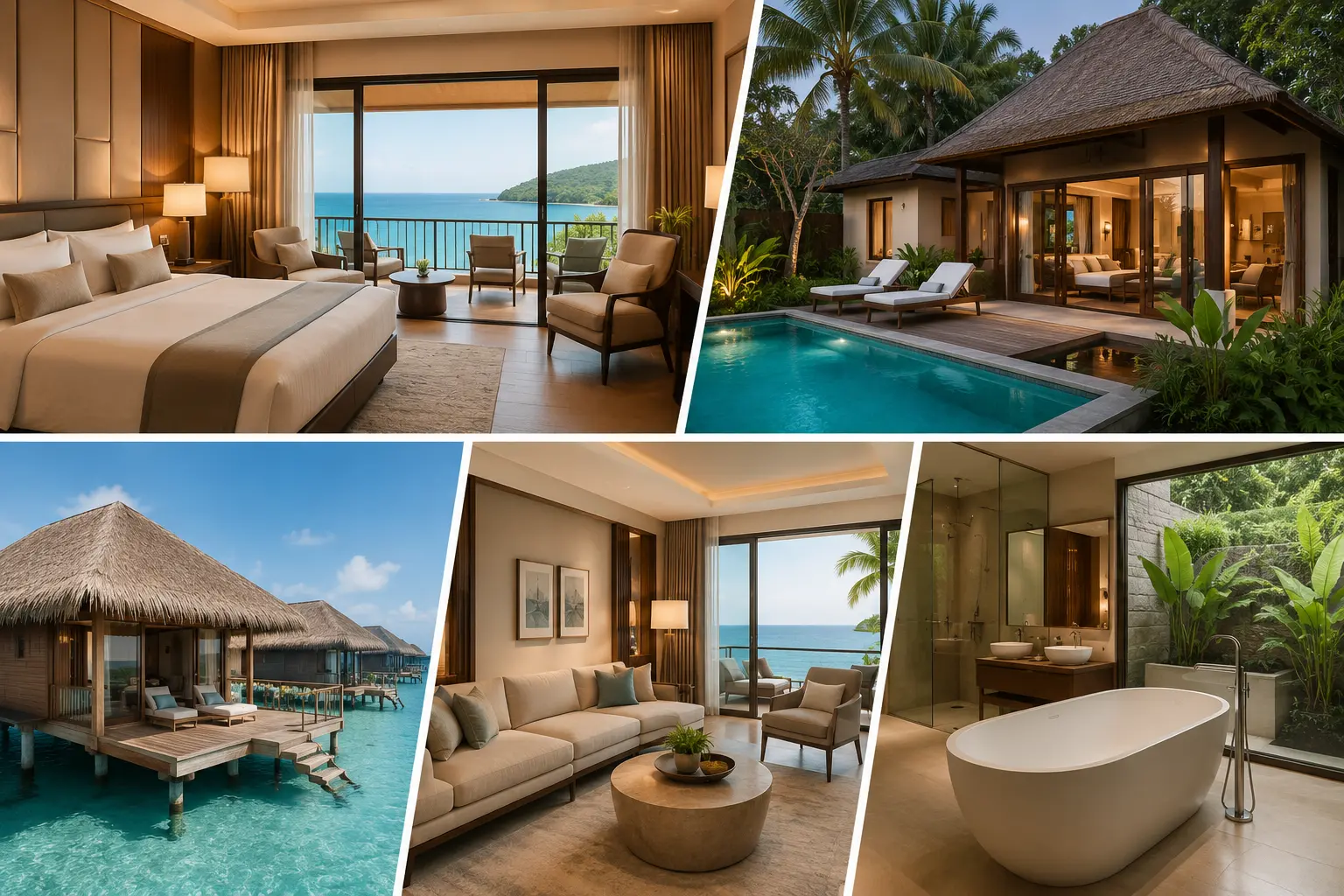
A resort villa is a detached or semi-detached unit, separate from the main building, ranging from 600 to over 3,000 square feet, depending on how many bedrooms it has. Villas commonly include a private entrance, and many add a plunge pool or outdoor shower that suites don’t get. A family booking a trip to Boracay might choose a villa in the 22 to 40 square metre range specifically for the privacy of a standalone structure. Bungalows follow the same detached-unit idea but sit closer to standard-room sizing, usually without the extra living space a villa has.
Swim-Up Suites
A swim-up suite is a ground-floor room with a private or semi-private terrace that opens straight into a shared resort pool. This one’s common across Caribbean and Mexican beach resorts and rarely shows up at urban or mountain properties. Guests step off a small terrace ledge directly into the water, no lobby or shared pool deck required. Resort marketing pages usually list swim-up suites separately from standard suites because the pool access, not the square footage, is really the whole pitch.
Overwater and Oceanfront Rooms
An overwater room sits on stilts above a lagoon or a reef. An oceanfront room sits on land with a direct, unobstructed sea view and nothing built between you and the water. Overwater rooms dominate Maldives and South Pacific resort marketing and typically include a glass floor panel or a direct water entry ladder. Oceanfront rooms cost less on average but deliver a similar visual payoff for guests who don’t need to swim off their own porch. The Ritz-Carlton Maldives, for example, lists both overwater and beach villas on the same booking page, so guests can weigh the water-access premium directly against the land-based option.
Connecting and Adjoining Rooms
Connecting rooms share an interior door between two separate rooms. Adjoining rooms sit next to each other without that interior connection. Families or groups travelling together often book connecting rooms specifically to keep two units linked without stepping into a hallway. This room type barely gets mentioned in resort marketing copy, despite being one of the most-searched configurations among families planning multi-generational trips. Front desk staff can usually confirm connecting-room availability by request, even when the booking engine doesn’t list it as a filter.
Accessible Rooms
Most full-service resorts offer ADA-compliant rooms with widened doorways, roll-in showers, and grab bars, though availability varies by property and room count. A 300-room resort might designate only 6 to 10 as fully accessible, which is exactly why booking early matters more for this category than any other. Accessible rooms rarely get their own marketing page, so travellers often end up calling the property directly or filtering by “accessible” on a major booking platform to confirm what’s actually included.
Family Suites
A family suite separates sleeping areas for parents and kids, usually through a second bedroom, a sofa-bed nook, or a connecting-door setup, and sleeps four to six guests. Pinnacle Boracay’s Family Suite, for instance, targets groups of four to five, which sets it apart from a standard two-bedroom suite built for couples sharing space. Resorts marketing to families increasingly bundle a kids’ club pass or early check-in with this room type, since the room alone doesn’t solve every logistics headache a multi-generational group runs into.
Penthouse Suites
A penthouse suite occupies the top floor of a resort building and combines the largest square footage on the property with panoramic views on two or more sides. Many penthouse suites add a private rooftop terrace, a dipping pool, or a dedicated elevator key, none of which show up in lower suite tiers. Signature by Pinnacle 180’s Presidential 3-Bedroom Penthouse, for example, includes a private dipping pool and sleeps six across three king beds, built more for multi-couple travel than for a single family. Butler service, where a resort offers it at all, almost always starts at the penthouse tier rather than trickling down.
How Resort Room Types Vary by Destination
Beach resorts push swim-up suites and overwater rooms. Mountain resorts lean on fireplace-equipped villas and lodge rooms. City resorts sell skyline-view suites over water or garden access. A ski resort in Colorado won’t list an overwater category at all, since the room type only makes sense where a lagoon or reef actually exists nearby. Urban resorts often skip villas entirely and instead differentiate suites by floor height and skyline exposure. Knowing which room types a destination realistically supports narrows your search faster than scrolling through every category on a booking site. Head to Puerto Vallarta and you’ll find ocean-front suite tiers dominating the inventory. Search Aspen instead, and mountain-view villas and ski-in suites take over.
How Resort Room Types Vary by Season
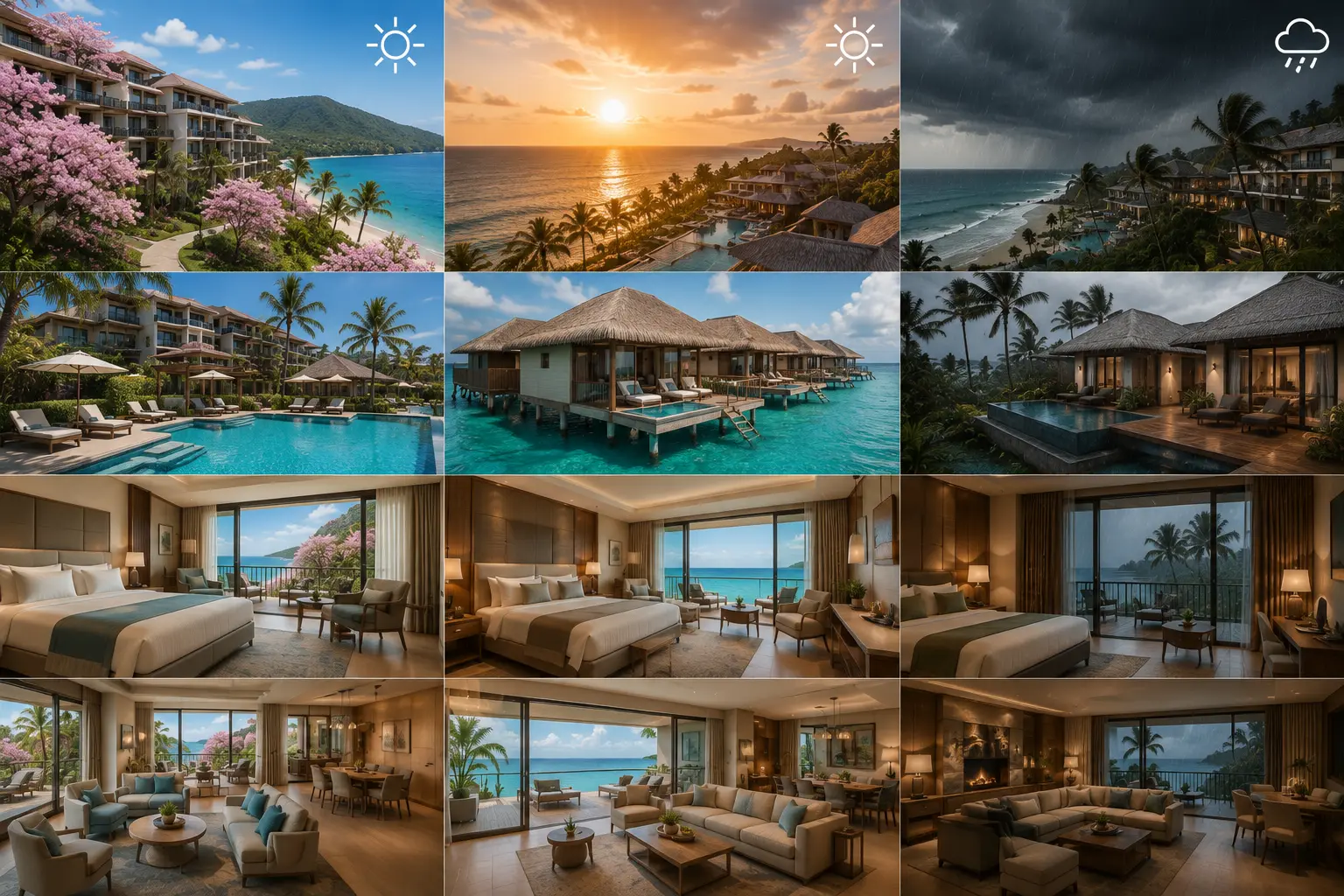
Room availability shifts with the seasons, and the highest-demand categories (swim-up suites, overwater rooms, villas) sell out first during peak booking windows. Standard and deluxe rooms typically stay available even a few weeks out, while penthouse and presidential suites often need booking three to six months ahead during holidays. A family targeting a two-bedroom suite over spring break should plan to book earlier than a couple booking the same room type in a shoulder-season month. Resorts in hurricane-prone regions also tend to drop rates on oceanfront and overwater rooms during off-peak months, which widens the price gap between tiers compared to peak season.
How to Choose the Right Resort Room Type
Budget
Set a fixed nightly range before you start browsing, since suite and villa categories can run two to four times more than a standard room at the same property. If the room is just a place to sleep between activities, book standard or deluxe. Someone spending most of the day at the beach or exploring nearby towns gets little back from paying a villa premium for a room they’ll barely see.
Location and View
Match your view priority to your room type before comparing prices, because “ocean view”, “oceanfront”, and “overwater” describe three different price tiers, not interchangeable terms. Pick oceanfront over overwater if direct water access matters less to you than square footage and cost. Guests planning to spend entire days at the beach club rarely get much use out of a glass-floor overwater room, since they’re rarely in it during daylight hours anyway.
Group Size and Occupancy
Check the listed occupancy cap before booking. A two-bedroom suite built for four won’t legally or comfortably hold six. If your group spans more than one generation, connecting rooms often beat a single larger suite. Grandparents travelling with adult children and grandchildren tend to find two connected standard rooms more practical than one oversized suite, since separate entrances give every subgroup privacy at different bedtimes.
Amenities and Butler Service
List the specific amenities your trip actually requires (a private plunge pool, a kitchenette, and in-room laundry) before comparing room types by name alone, since two “suites” at different resorts can include entirely different amenity sets. If 24-hour butler service is non-negotiable, you’re looking at the penthouse or top villa tier. Most standard and deluxe rooms never include a butler, and plenty of one-bedroom suites skip it too, so this one requirement alone can rule out several tiers fast.
Resort Room Type Terminology by Brand
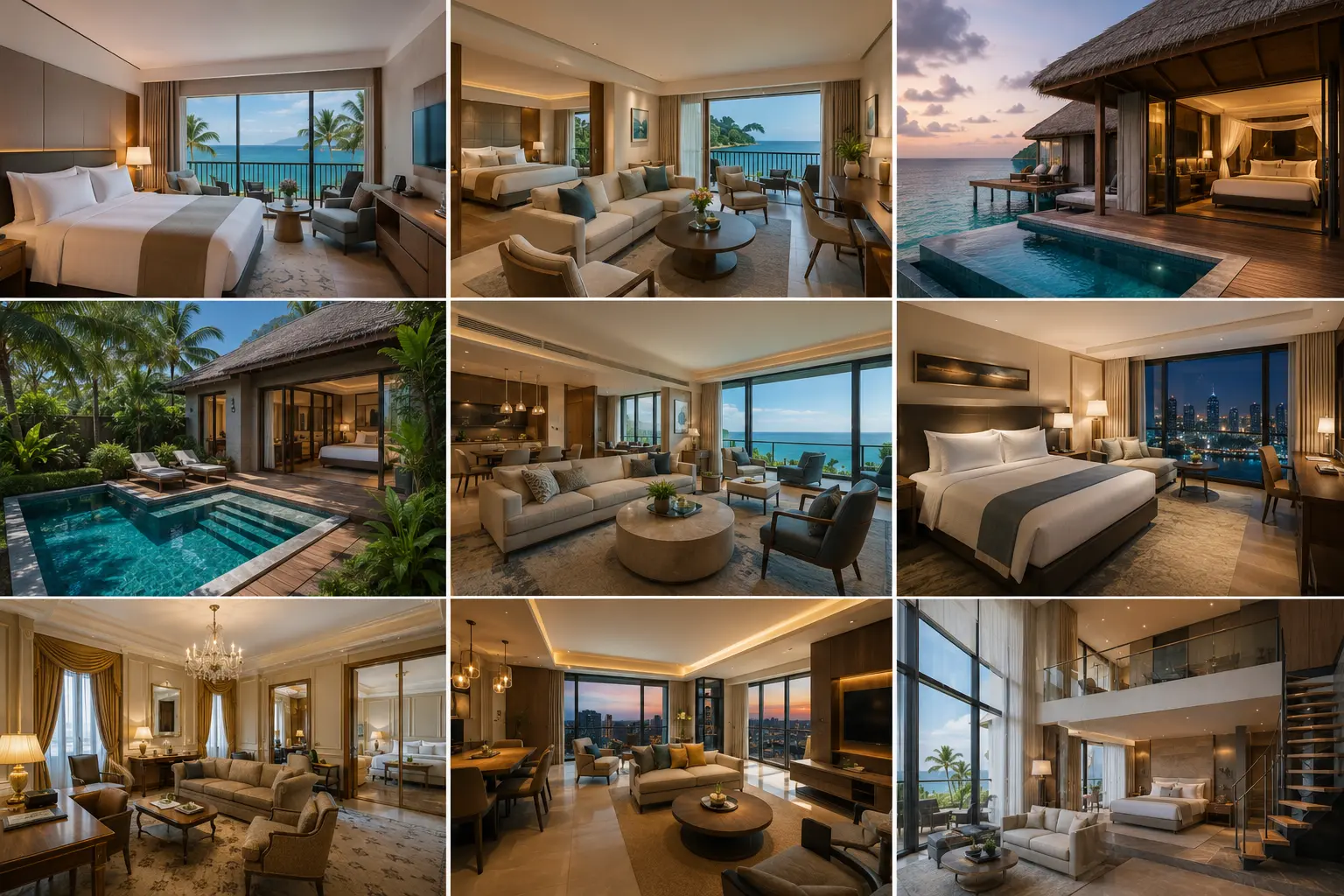
Large hotel chains and independent resorts label the same room type differently, which is exactly why comparing two properties side by side gets confusing fast. A “Deluxe Room” at one chain might match the square footage of a “Superior Room” at another, since neither term is regulated across the industry. Independent boutique resorts frequently invent their own naming, pairing a suite tier with a designer or artist name instead of a standard label like “one-bedroom”. Pinnacle Resorts in Puerto Vallarta, for instance, lists a suite category under the name “Andrew Christian” alongside standard numbered designations like Suite 605, which tells a first-time visitor almost nothing about size or view without checking the spec sheet directly. Comparing square footage, occupancy cap, and included amenities directly is the safer bet, rather than assuming a shared label means a shared room.
Global chains apply the presidential suite label inconsistently, too. Some properties reserve it for a single top-floor unit with no comparable alternative on site. Others slap the name on several suites across different floors that share the same layout. Reading the exact square footage and photo gallery for each listed suite beats trusting the category name alone, especially when you’re booking a multi-night stay sight unseen.
Resort Fees and Booking Policies to Check Before You Book
A resort fee, sometimes called a destination fee, is a mandatory nightly charge added on top of the room rate, and it applies no matter which room type or tier you book. These fees commonly run $25 to $75 per night and cover things like Wi-Fi, pool towels, and fitness centre access that used to be free. Confirm the exact resort fee with the property before booking, since third-party booking sites don’t always show it clearly at checkout. Cancellation policies vary by room type at some properties too: penthouse and presidential suites often carry stricter, non-refundable terms than standard rooms, given the higher nightly rate at stake.
Room Upgrades: When They’re Worth Paying For
Pay for an upgrade if the higher tier adds something you’ll actually use daily, like a private pool or a view you’ll photograph, rather than a feature you’ll barely notice. Front desk upgrades offered at check-in typically move guests one tier up (standard to deluxe, junior suite to one-bedroom suite) rather than jumping several categories at once. A guest checking into a standard room might get offered a deluxe upgrade for $40 to $60 more a night, which is a reasonable cost if the added balcony or partial view genuinely changes how the stay feels. Skip it if the only difference between tiers is square footage you won’t use; extra space rarely improves a trip built around beach time, tours, or dining rather than time spent in the room. Loyalty programme members often get complimentary upgrades based on tier status, so it’s worth confirming that benefit before arrival. It can save you the cost of a paid upgrade entirely.
Common Mistakes When Choosing a Resort Room Type
- Booking by price alone, without checking square footage or occupancy caps. A low nightly rate on a standard room can still leave four guests short on space.
- Assuming “suite” means the same thing across resort brands. One property’s junior suite can match another’s one-bedroom suite in size.
- Skipping the resort fee calculation before comparing final prices. A cheaper room with a high nightly resort fee can end up costing more than a pricier room with no added fee.
- Overlooking connecting-room availability for multi-generational trips. Many families default to one oversized suite when two connected standard rooms would fit better and cost less.
- Ignoring butler service and amenity differences between similarly named suites. Two “presidential suites” at different resorts can include completely different service levels.
Conclusion
Resort room types follow a consistent pattern once you know what to look for: size, view, occupancy, and amenity level all scale together from standard rooms up through penthouse suites. Compare the exact square footage, occupancy cap, and included amenities for each room you’re considering, rather than trusting the category name alone, and confirm the resort fee before you finalise your rate. The right room type is the one that matches how you’ll actually spend your trip, not the highest tier your budget allows.
FAQs