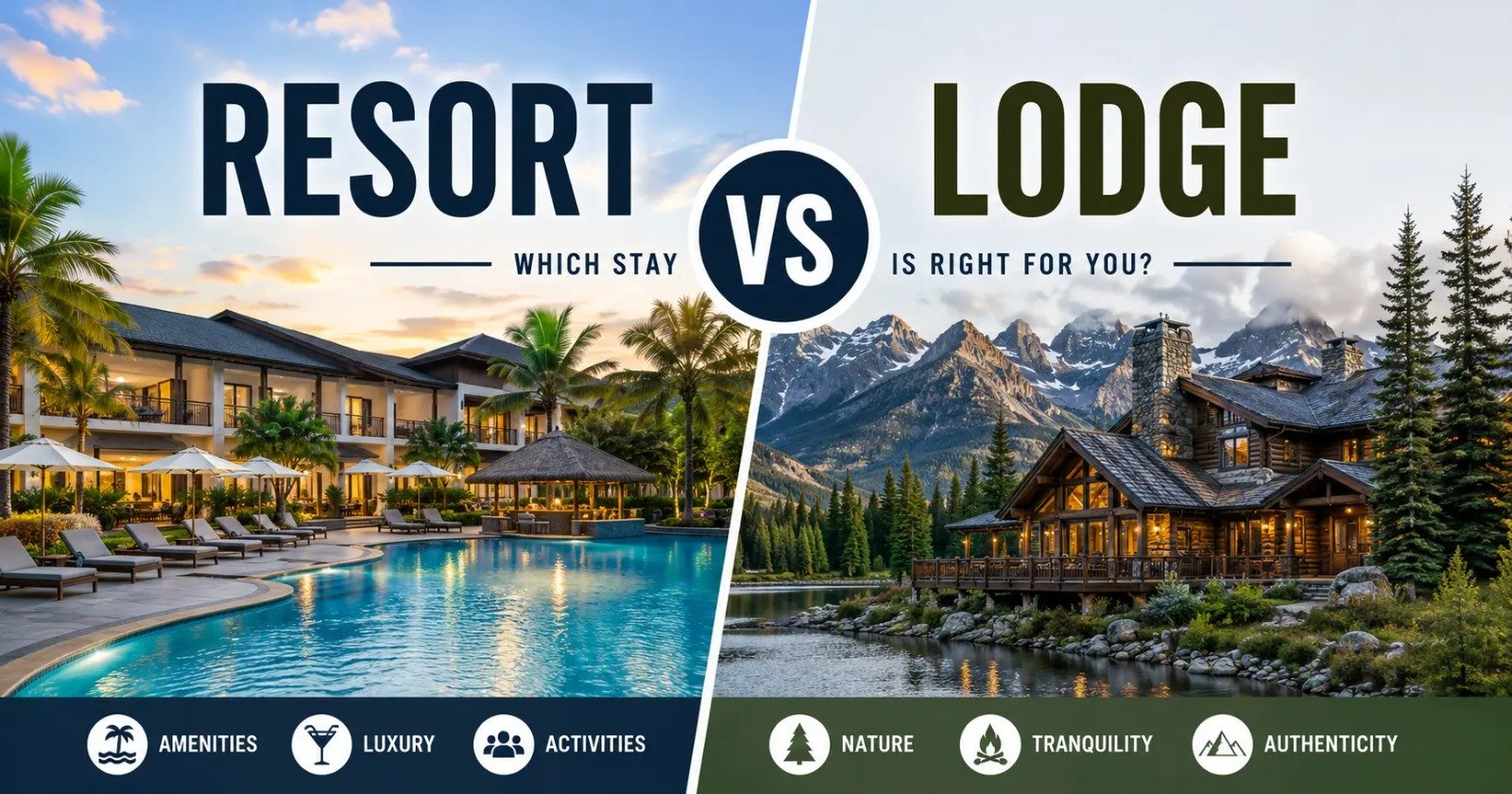
A resort packs dining, entertainment, and recreation into one self-contained property, while a lodge offers a smaller, quieter base built around a natural setting. Both terms are used loosely across the hospitality industry, so a “resort” in one location might look nothing like a “resort” somewhere else, and the same holds for lodges. This guide breaks down the real differences in location, amenities, price, and booking strategy, so choosing between the two comes down to your trip rather than a marketing label. Along the way, this guide covers real-name properties, actual price ranges, and the specific booking windows that separate a smooth reservation from a sold-out disappointment.
Resort, Lodge, Hotel, and Inn: How They All Compare
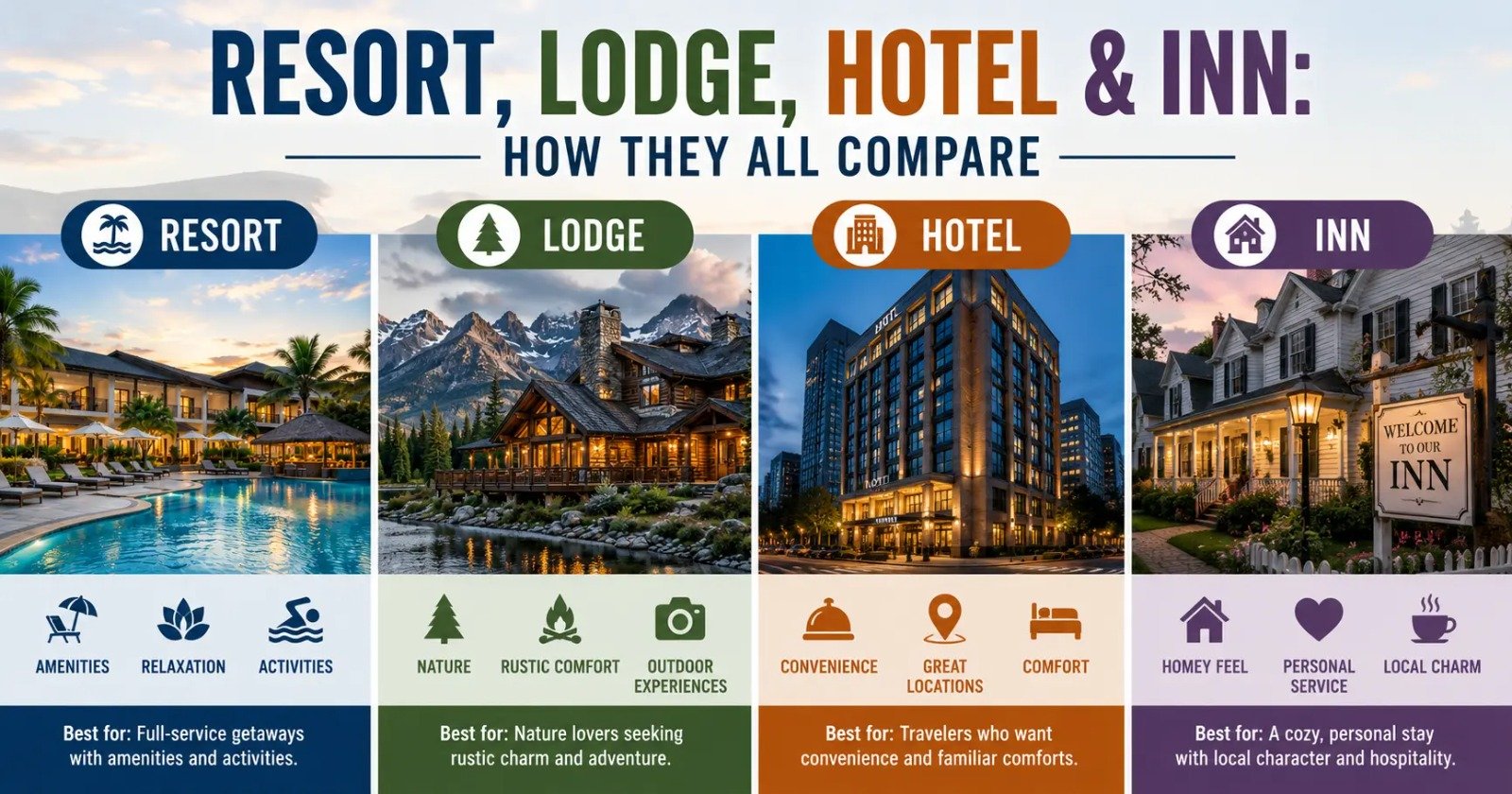
Four accommodation types are often confused, and each serves a distinct travel need. A hotel prioritizes convenience and consistency, typically located in cities, near airports, or along business corridors, with standardized rooms and predictable service across every location in a chain. Chain hotels, including major names such as Marriott and Hilton, offer this consistency at scale, while boutique hotels trade standardization for locally inspired design and a smaller room count, usually under 100. An inn offers a smaller, more personal alternative to a hotel, often family-run, frequently including breakfast, and typically found in rural or historic settings rather than a busy downtown core. The Fearrington House Inn in North Carolina illustrates this well, pairing individually designed rooms with an on-site restaurant inside a converted historic property. A motel, distinct from all three, emphasizes direct room-to-parking access and functionality over amenities associated with hotels, resorts, or lodges, and is built specifically around the needs of motorists rather than destination travelers.
| Property Type | Typical Size | Setting | Best For |
|---|---|---|---|
| Resort | Large, 100+ rooms | Beaches, mountains, cities | Groups wanting built-in entertainment |
| Lodge | Small to mid, under 100 rooms | Remote, near nature | Travelers focused on one outdoor activity |
| Hotel | Varies widely | Urban, business districts | Business travel, short stays, reliability |
| Inn | Small, often under 20 rooms | Rural or historic settings | Couples wanting a personal, intimate stay |
What Is a Resort?
A resort is a commercial property designed to cover every travel need in one location: lodging, meals, entertainment, and recreation, without requiring a guest to leave the grounds. Swimming pools, spas, fitness centers, and organized activities sit alongside multiple dining options, often bundled into a single all-inclusive rate. Resorts appear in beach destinations, mountain towns, and even cities, since the term describes a property’s function rather than a specific location type. The Coeur d’Alene Resort in Idaho illustrates this scale directly, offering eight distinct restaurants ranging from Italian dining to casual bar food within one property. The Emerald Maldives Resort and Spa pushes this concept further with overwater villas and all-inclusive luxury built around a single secluded island, showing how far the resort model can extend once budget allows.
What Is a Lodge?
A lodge is a smaller, often rustic property built around proximity to nature, commonly found near mountains, forests, or national parks. Guests choose a lodge for a quieter, more intimate stay, frequently centered on outdoor activities including hiking, fishing, or wildlife viewing rather than resort-style entertainment. Architecture leans toward exposed beams, stone fireplaces, and log-cabin design, especially in mountain and forest settings. Treehotel in Sweden shows this style at its most distinctive, placing guest rooms directly in the forest canopy for an immersive nature experience. Lodge stays also tend to run longer on average than a typical resort visit, since guests travel specifically for an activity, such as skiing or fly fishing, that benefits from multiple consecutive days rather than a quick overnight stop.
Resort vs Lodge: Key Differences at a Glance
Location and Setting
Resorts cluster in established tourist destinations, including coastal areas, mountain resort towns, and city centres, prioritising proximity to attractions and transportation. This clustering also means multiple resorts often compete within walking distance of each other, giving travellers easier price comparison and the option to switch properties if one doesn’t meet expectations. Lodges sit further from urban infrastructure by design, often positioned near a specific natural feature, such as a national park entrance or a ski slope base. This difference shapes the entire guest experience before a stay even begins, since reaching a lodge frequently becomes part of the trip itself rather than a logistical afterthought. Expect longer drive times, limited cell coverage in some areas, and fewer nearby dining alternatives when choosing a remote lodge over a resort in a developed tourist zone.
Amenities and Activities
Resort amenities emphasize variety and convenience: multiple pools, a full-service spa, organized excursions, and children’s programs designed to keep every member of a group entertained without leaving the property. Many resorts also organize evening entertainment, including live music, comedy shows, or traditional cultural performances, giving guests a full day-to-night activity schedule without any outside planning. Lodge amenities stay narrower and more purpose-built, typically including a shared lounge with a fireplace, direct trailhead access, and equipment rental for activities such as skiing or fishing. Some higher-end lodges add a small spa or a single on-site restaurant, though these extras stay limited compared to a resort’s typically much larger service menu. Neither approach is objectively better, since the right choice depends entirely on whether a traveler wants built-in entertainment or a quiet base for outdoor exploration.
Price and Booking Considerations
Resort Fees
Many resorts add a mandatory resort fee on top of the nightly room rate, typically ranging from $25 to $50 per night, covering amenities such as pool access, Wi-Fi, and fitness centre use, whether a guest uses them or not. Some high-end properties charge resort fees exceeding $75 per night, and these charges rarely appear clearly during the initial search on a booking platform, surfacing instead at checkout or upon arrival. Lodges rarely charge this additional fee, since their pricing model tends to bundle fewer add-on services into the base rate. Check the total price breakdown before booking either property type, since a resort’s advertised rate often understates the actual cost once mandatory fees get added, sometimes by $200 or more across a week-long stay.
Peak Season and Booking Lead Time
Book a beach resort 3 to 4 months ahead of peak winter season, and book a mountain lodge near a national park 4 to 6 months ahead of summer, since both categories sell out fastest during their respective high seasons. Rates at either property type typically drop 20% to 30% during shoulder season, the weeks just before or after peak demand. A beach resort’s shoulder season typically falls in late spring or early fall, while a mountain lodge’s shoulder season falls in late spring before summer trails fully open or in early fall after the first frost. Flexibility on travel dates remains the single biggest lever for reducing cost at both resorts and lodges alike.
Types of Resorts
- All-inclusive resorts: bundle meals, drinks, and activities into one upfront price, removing the need to budget for individual expenses once on-site. This model works well for travelers who want predictable total costs before departure.
- Destination resorts: built around one central attraction, such as a golf course or casino, drawing guests specifically for that feature rather than the surrounding area. Guests often stay entirely on-property for the length of the trip.
- Ecological resorts: focus on sustainability and minimal environmental impact, often located near sensitive natural areas and built with reduced water and energy use in mind.
- Adults-only resorts cater specifically to couples seeking a child-free environment, frequently marketed toward honeymoons and romantic getaways.
- Family-focused resorts: prioritise kids’ clubs, shallow pools, and multi-generational activities, designed to keep every age group occupied without constant parental supervision.
Types of Lodges
- National Park lodges: historic properties located inside or near a U.S. National Park, often built decades before the surrounding infrastructure existed and preserved for their architectural and historic value.
- Ski lodges: positioned at or near a mountain base for direct slope access, ranging from simple ski-in-ski-out cabins to luxury properties with full spa services.
- Hunting and fishing lodges: built around specific outdoor sporting activities, frequently offering guided trips and equipment storage as part of the standard package.
- Safari lodges: located within or adjacent to wildlife reserves, common outside the U.S., typically including guided game drives as a core part of the stay.
- Boutique nature lodges: smaller, design-forward properties blending rustic style with modern comfort, appealing to travelers who want nature immersion without sacrificing design quality.
How to Verify Before Booking
Read the full amenities list rather than relying on the property name, since both “resort” and “lodge” get applied inconsistently across the industry. Search for the property’s AAA Diamond Rating or Forbes Travel Guide star rating, if one exists, since these third-party evaluations reflect verified service and amenity standards rather than self-description. Call the property directly and ask about mandatory fees, since resort fees rarely appear clearly in the advertised nightly rate shown on booking platforms. Check recent guest reviews specifically for mentions of accurate photos and service consistency, since both categories include properties that oversell their actual offering.
National Park Lodges: A Unique U.S. Category
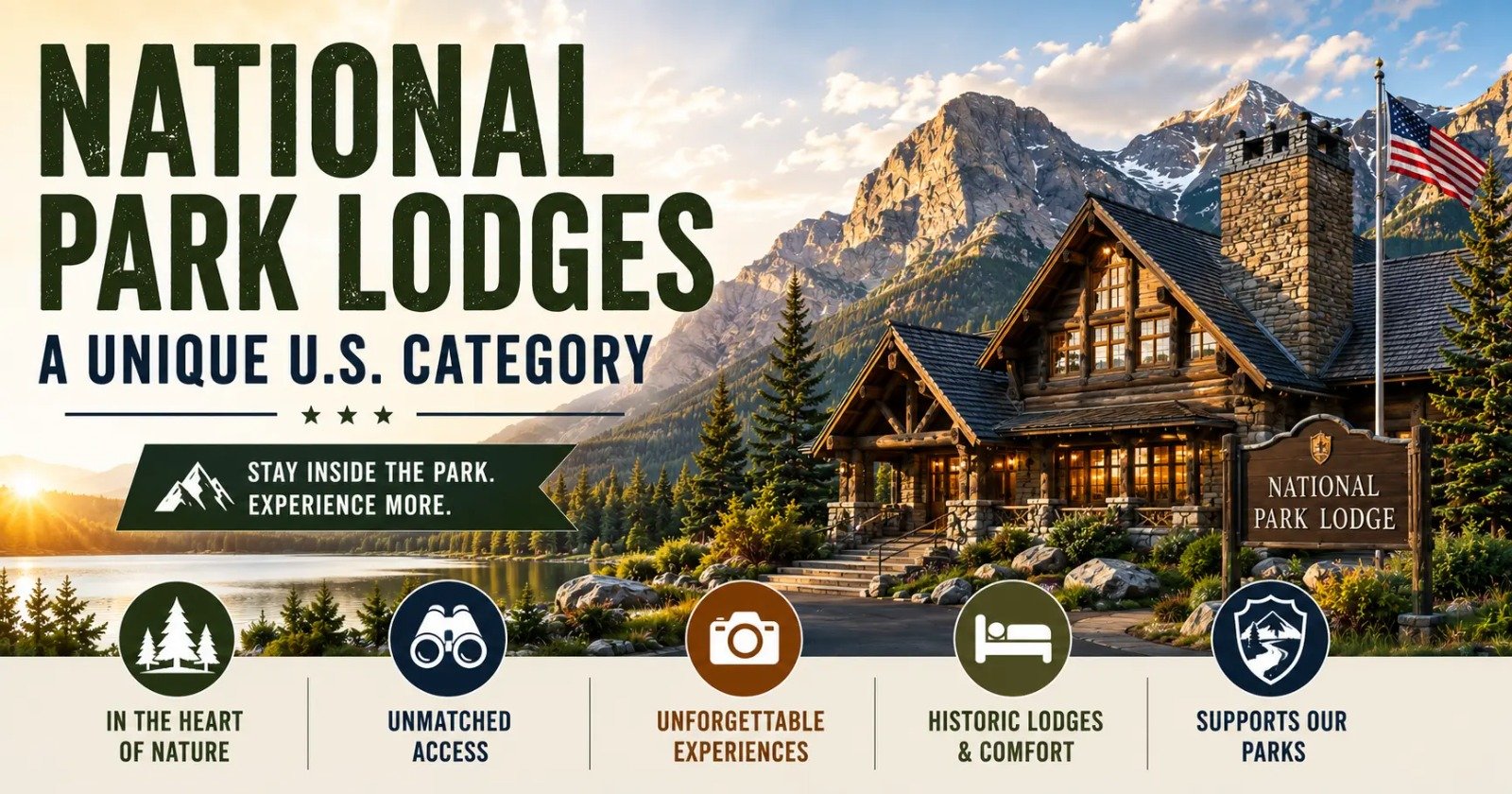
The U.S. National Park system operates some of the most recognized lodges in the country, including the Ahwahnee in Yosemite and the Old Faithful Inn in Yellowstone, both operating for over a century. Grand Canyon’s El Tovar Hotel and Glacier National Park’s Many Glacier Hotel round out the group of historic park lodges that draw visitors specifically for their architecture and setting, independent of any resort-style amenities. These properties combine historic architecture with the immersive natural setting that defines lodge accommodation generally, though they book out earlier than almost any private lodge, given limited room counts inside park boundaries. Reserve a national park lodge as early as 13 months in advance for peak summer dates, since these properties operate on a fixed reservation window unlike most private resorts and lodges. Room counts at these historic properties rarely exceed a few hundred, and many offer no more than 100 rooms total, making early booking essential rather than optional for a summer visit.
Regional U.S. Examples
Mountain regions, including Colorado and Wyoming, favor the lodge model, since ski access and wildlife viewing benefit from a smaller, activity-focused property close to the trailhead or slope base. Colorado mountain towns such as Vail and Aspen offer lodges ranging from modest ski-in-ski-out cabins to properties charging luxury-resort rates despite the lodge label. Coastal regions, including Florida and Hawaii, lean heavily toward resorts, since beach destinations attract groups wanting pools, water sports, and evening entertainment in one location. Desert Southwest destinations, including Arizona, often blend both models, pairing resort-style spas and golf with lodge-style architecture that echoes the surrounding landscape. Recognizing which model dominates a given region helps set realistic price and availability expectations before searching for a specific property, since a traveler expecting resort-style amenities in a lodge-dominated mountain town may end up disappointed by the narrower service menu most lodges in that region actually offer.
Hybrid Properties: Resort-Lodges
Some properties deliberately blend both models, offering resort-scale amenities inside lodge-style architecture. Padma Resort Ubud, nestled in the Balinese highlands and surrounded by forest, pairs five-star service and a full spa with a setting that reads far closer to a lodge than a beachfront resort. These hybrid properties tend to command premium pricing, since guests pay for both the convenience of resort infrastructure and the exclusivity of a remote, nature-focused setting. Identifying a hybrid property before booking helps set accurate expectations, since neither the “resort” nor “lodge” label alone captures what these properties actually offer.
Which One Fits Your Trip?
Choose a Resort If…
Choose a resort if the trip involves a group with mixed interests, a milestone celebration, or a preference for not planning daily activities. A resort works especially well for a first visit to an unfamiliar destination, since on-site staff and organized excursions remove much of the planning burden from the traveler. A resort also suits travelers who value predictable costs, since an all-inclusive rate bundles meals and activities into one upfront number rather than a series of daily decisions.
Choose a Lodge If…
Choose a lodge, if the trip centers on a specific outdoor activity, a quieter pace, or direct access to a national park or mountain trailhead. A lodge suits travelers who already know what they want to do each day and prefer a simple, comfortable base rather than an entertainment-focused property. A lodge also fits smaller groups or solo travelers seeking fewer distractions, since the pace of a lodge stay tends to match the rhythm of the outdoor activity that brought guests there in the first place.
Common Misconceptions
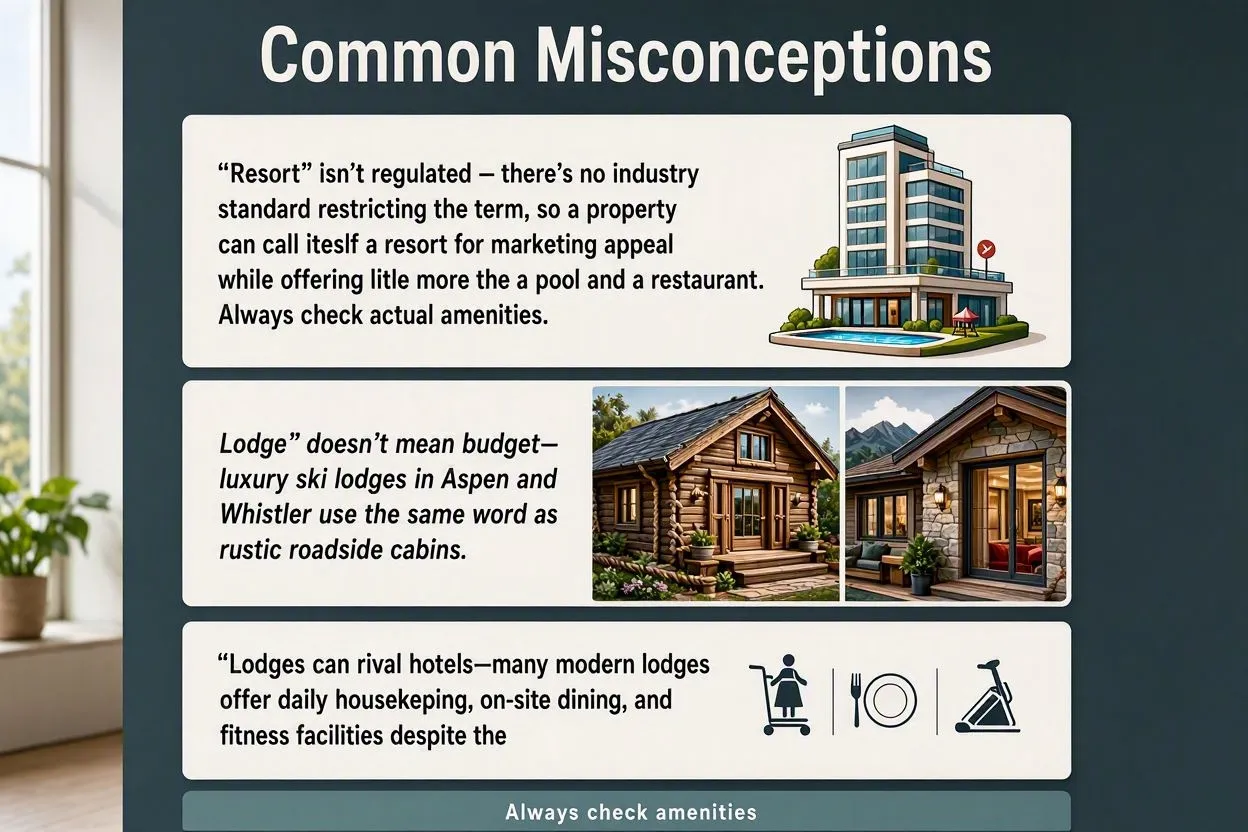
- “Resort” isn’t regulated – there’s no industry standard restricting the term, so a property can call itself a resort for marketing appeal while offering little more than a pool and a restaurant. Always check actual amenities.
- “Lodge” doesn’t mean budget—luxury ski lodges in Aspen and Whistler use the same word as rustic roadside cabins.
- Lodges can rival hotels—many modern lodges offer daily housekeeping, on-site dining, and fitness facilities despite their rustic branding.
- Trust ratings, not names – star/diamond ratings from AAA and Forbes Travel Guide assess real service and amenity standards, making them a more reliable quality signal than the property’s self-chosen label.
Conclusion
A resort and a lodge solve different travel problems: one bundles entertainment and convenience into a single destination, while the other offers a focused, nature-adjacent base for a specific activity or a quieter pace. Price alone won’t reliably distinguish the two, since luxury lodges can cost more than budget resorts and mandatory resort fees can close the gap further than the advertised rate suggests. Match the choice to the trip itself. group size, desired activities, and how much planning you want handled for you, rather than assuming either label guarantees a specific experience.