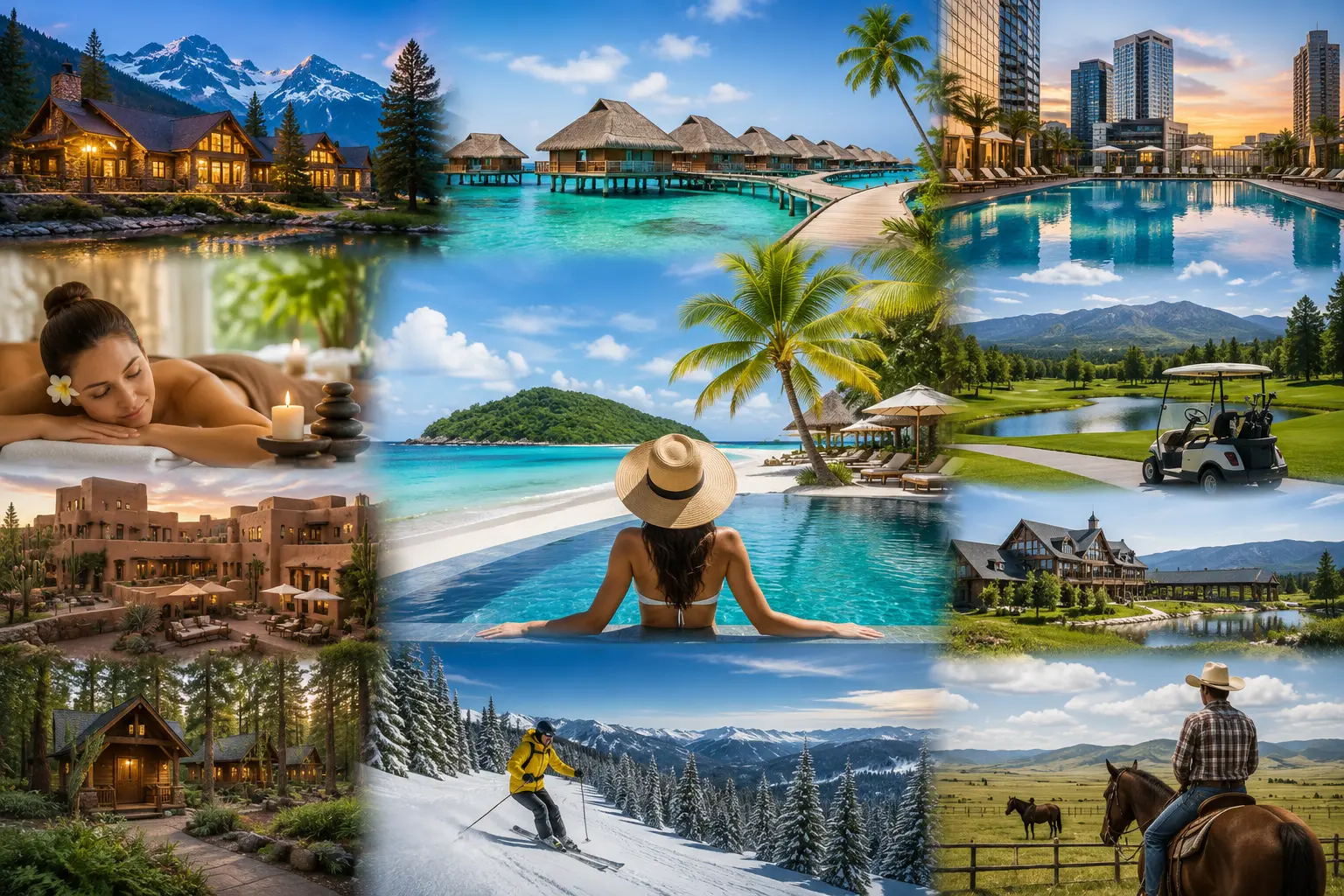
A resort is a self-contained lodging property that bundles hotel rooms, dining, and recreation into one accommodation so guests rarely need to leave the grounds. A standard hotel usually sells rooms and little else, leaving guests to find restaurants and entertainment nearby. Compare a downtown business hotel with one small gym to a beachfront resort hotel running three pools, five restaurants, and a private stretch of sand: the second property offers far more accommodation and amenities for the guest, and that extra service separates a resort from an ordinary hotel stay.
Resorts also cluster in destinations people travel to on purpose, mountains, coastlines, deserts, rather than the commercial districts hotels favor. Most resorts belong to several categories at once. A single property can be a beach resort, an all-inclusive resort, and a family resort simultaneously, since location, purpose, and guest profile aren’t mutually exclusive labels. Two properties both marketed as “luxury beach resorts” can serve entirely different trips: one built for couples chasing privacy, the other built for family reunions. This guide sorts the many types of resorts by four filters: location, purpose, guest profile, and ownership structure, plus a fifth section on categories specific to the United States market.
Types of Resorts by Location
Location drives the climate, activities, and season a resort operates in, so it’s the most practical starting point for comparison shopping.
Beach Resorts
Beach resorts sit directly on or near a coastline and build their entire guest experience around ocean access. Expect snorkeling, kayaking, parasailing, and scuba diving offered on-site or through a partner operator a short walk from the lobby. Florida’s Gulf Coast and the Outer Banks in North Carolina both host large clusters of these properties, and most run near full capacity between May and September.
Island Resorts
Island resorts occupy their own island or a remote stretch of one, cutting guests off from mainland traffic and crowds. The isolation is the selling point. A property on a private cay in the Florida Keys, for example, might only be reachable by boat or seaplane, which keeps day-trippers out and nightly rates higher than comparable mainland beach resorts.
Mountain Resorts
Mountain resorts are built at the base or on the slopes of a mountain range and lean on elevation-dependent activities like hiking, sightseeing, and snow sports. Colorado’s Rocky Mountains and California’s Sierra Nevada both support dense clusters of mountain resorts that shift their offerings twice a year, hiking and mountain biking in summer, skiing and snowmobiling in winter.
Lake Resorts
Lake resorts sit on or within walking distance of a freshwater lake and center their activity list on boating, fishing, and water skiing. The Great Lakes region and Minnesota’s lake country hold some of the highest concentrations in the country. Unlike ocean-facing properties, lake resorts don’t deal with tides or saltwater corrosion, which usually keeps maintenance costs, and nightly rates, lower.
Desert Resorts
Desert resorts sit in arid regions and build their appeal around dry heat, dramatic landscapes, and activities like hiking, hot air ballooning, and stargazing. Palm Springs and Scottsdale anchor the two largest desert resort markets in the country, and both draw heavy winter traffic from travelers escaping colder climates. Pool design matters more here than at almost any other resort type. Many desert properties run multiple pools at different temperatures specifically because daytime heat makes a single standard pool impractical for a full afternoon of use.
Types of Resorts by Purpose
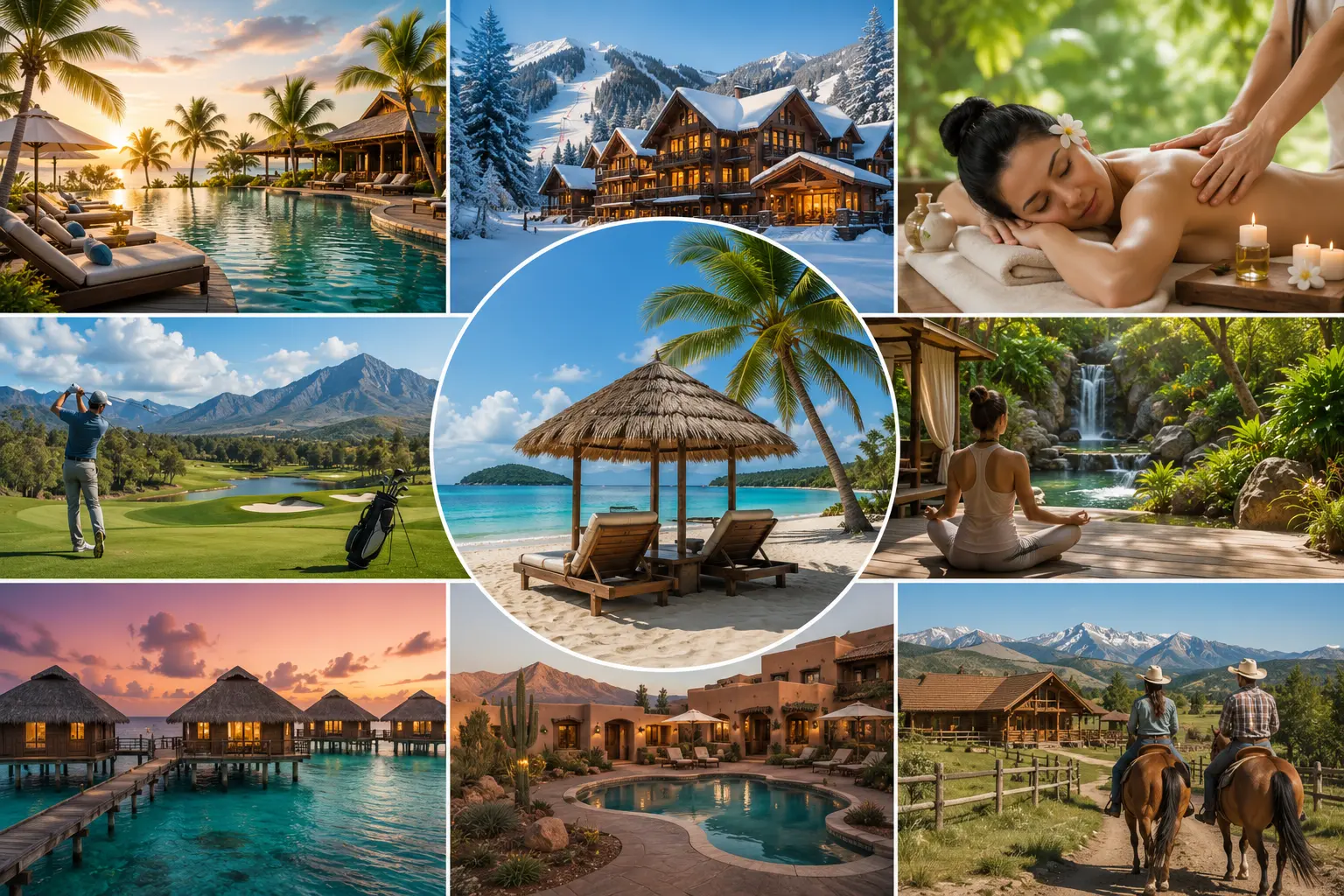
Purpose-driven resorts organise their entire property, staff, and packages around one core activity or outcome rather than a location.
All-Inclusive Resorts
An all-inclusive resort charges one upfront price that covers lodging, meals, drinks, and most on-site activities. Guests skip the itemized bill entirely. A typical package folds in three meals a day, unlimited bar service, water sports equipment, and sometimes airport transfers, which makes budgeting predictable before the trip even starts. Mexico’s Riviera Maya and Jamaica’s Montego Bay are two of the most concentrated all-inclusive markets serving U.S. travelers.
Golf Resorts
Golf resorts are built around one or more championship-caliber courses and price their packages around tee times rather than room categories. A standard package bundles greens fees, cart rental, range balls, and lodging into a single quote. Pinehurst in North Carolina and Scottsdale in Arizona both host resort clusters where the course, not the pool, is the main draw.
Spa and Wellness Resorts
Spa resorts organize the guest schedule around treatments, fitness classes, and healthy dining rather than sightseeing or nightlife. Many originated near natural hot springs or mineral water sources, a legacy still visible at properties in places like Calistoga, California. A full stay often includes daily spa credits, guided meditation, and a menu built around specific dietary goals instead of a standard buffet.
Ski Resorts
Ski resorts operate lodging alongside lift access, ski schools, and equipment rental, and most run on a seasonal calendar tied to snowfall. Vail and Aspen in Colorado shut down large portions of their lift operations by spring and shift toward hiking and mountain biking packages for summer. That seasonal swing is worth checking before booking. A resort’s peak-season pricing can run two to three times higher than its off-season rate.
Casino Resorts
Casino resorts pair gaming floors with lodging, dining, and entertainment venues, often running 24 hours a day. Las Vegas and Atlantic City built entire local economies around this model starting in the mid-20th century. Rooms at these properties are frequently priced lower than comparable non-casino hotels in the same city, since gaming revenue subsidizes the lodging side of the business.
Eco Resorts
Eco resorts design their construction, energy use, and guest activities around minimizing environmental impact. That can mean solar power, greywater recycling, or building materials sourced from the immediate area instead of shipped in. Some properties pursue third-party recognition such as LEED (Leadership in Energy and Environmental Design) certification or a Green Key rating, both of which verify sustainability claims instead of leaving them to marketing copy. Ask directly whether a resort holds a specific certification before trusting an “eco-friendly” label; the term itself carries no legal definition, and plenty of properties use it loosely.
Destination Wedding Resorts
Destination wedding resorts specialize in hosting ceremonies and receptions on-site, with dedicated planning staff, customizable packages, and photogenic backdrops built into the property design. A typical package bundles a coordinator, venue rental, catering, and room blocks for guests into one quote, which saves couples from booking each vendor separately. These resorts often sit in scenic settings, coastal cliffs, historic estates, mountain overlooks, since the backdrop does a lot of the heavy lifting for photos and guest experience alike.
Types of Resorts by Guest Profile

Some resorts categorise themselves not by what they offer but by who they’re built to serve.
Family Resorts
Family resorts design their layout, activities, and dining specifically around guests traveling with children. Kids’ clubs, shallow pools, and early dinner seatings are standard, along with staffed childcare that lets parents book a spa treatment or dinner without the kids in tow. Properties in Orlando near the theme park corridor represent one of the densest family-resort markets in the country.
Adults-Only Resorts
Adults-only resorts restrict admission to guests above a set age, typically 18 or 21, to create a quieter environment without children’s programming. This is a separate category from luxury resorts, even though the two often overlap in marketing. A property can be adults-only and mid-priced, or family-friendly and ultra-luxury; the age restriction and the price point are independent variables, not the same thing.
Pet-Friendly Resorts
Pet-friendly resorts allow dogs, cats, or both inside guest rooms, though most cap the number and size of animals permitted per stay. A typical policy allows two pets under 50 pounds each with a nightly fee attached. Always confirm the specific weight limit and fee structure before booking, since these vary widely by property.
Accessible Resorts
Accessible resorts design guest rooms, bathrooms, pools, and walkways to serve travelers with mobility needs, following the Americans with Disabilities Act (ADA) as a baseline standard. Not every resort that advertises accessibility has confirmed every feature on-site, so it’s worth calling the front desk directly to confirm specific accommodations like roll-in showers or pool lifts before booking a room.
Resort Categories Unique to the United States
A few types of resorts show up disproportionately, or exclusively, in the American travel market.
Dude Ranches
Dude ranches are working or recreational cattle ranches that host paying guests for horseback riding, cattle drives, and Western-style lodging. Montana and Wyoming hold the country’s highest concentration, many operating on land that’s been ranched for over a century. Guests typically stay a full week, since the format is built around a slower pace than a standard resort stay.
RV Resorts
RV (recreational vehicle) resorts provide full hookup sites, roughly the U.S. equivalent of a campground, for motorhomes and travel trailers, plus resort-style amenities like pools, clubhouses, and organized activities. They sit a tier above a standard campground, adding paved pads, cable hookups, and sometimes golf carts for getting around the property. Florida and Arizona see the heaviest RV resort traffic during winter, when snowbirds head south for the season.
Resort Accommodation and Booking Models
The booking model changes how guests reserve a stay and access the property, which matters more for repeat travelers than first-time visitors.
- Traditional lodging: a single hotel company or operator owns the resort outright and rents guest rooms nightly, the model behind most branded resort hotels.
- Timeshares: multiple guests each book a fixed week or point allotment at the same accommodation every year, splitting both cost and usage rights, though maintenance fees continue whether or not the guest checks in that year.
- Condominium hotels: individual owners place their units into a nightly rental pool managed by the resort operator, so travelers book a room the same way they would at any hotel.
- Destination clubs: members pay dues for shared booking access to a portfolio of resort accommodations rather than a single fixed unit, trading ownership for flexibility across multiple stays.
The booking model rarely changes what a guest experiences during a single hotel stay, but it matters for travelers weighing whether to commit to one resort long-term. Someone who books the same beach hotel every August for a decade might save money with a timeshare. A family that wants a different accommodation every year gets more value from traditional lodging or a destination club membership instead.
Resort vs. Hotel: What’s the Difference?
A resort is a hotel property that bundles lodging with extensive on-site dining, recreation, and entertainment, while a standard hotel primarily sells guest rooms and leaves travelers to find activities elsewhere. A downtown hotel near a convention center might offer a small gym and one restaurant. A resort hotel in the same city, if it existed, would typically add multiple pools, a spa, planned excursions, and several dining concepts, because the resort accommodation model depends on guests spending their whole stay on-property rather than venturing out for meals and entertainment.
Location reinforces the difference. Hotels cluster near airports, business districts, and highway exits, wherever travelers need a convenient stop. Resorts cluster near the destination itself, a coastline, a mountain range, a golf course, since the setting is part of what guests are paying for. That’s also why resort fees exist as a separate line item on many bills: the fee covers access to amenities a standard hotel simply doesn’t offer in the first place, from beach chair setup to daily activity programming.
How Seasonality Affects Resort Pricing
Resort pricing swings with the season tied to each property’s core activity, so the same room can cost two to three times more or less depending on when you book. Ski resorts charge peak rates from December through March and drop sharply once lifts close for spring. Beach resorts flip that pattern, charging the most from June through August in most of the continental United States, then cutting rates during shoulder months like April, May, September, and October. Caribbean and Gulf Coast properties add a third variable: hurricane season, which runs June 1 through November 30 each year and pushes many resorts in that region to lower rates and looser cancellation policies during the highest-risk months of August through October.
Booking during a resort’s off-season isn’t only about saving money. Golf resorts in the American Southwest, for example, become nearly unbearable during peak summer heat, so their “off-season” summer rates reflect real discomfort, not just lower demand. Check average temperatures and precipitation for the specific month you’re traveling, not just the season’s reputation, since a shoulder month at one resort type can be a peak month at another just a few hundred miles away.
How to Choose the Right Resort Type

Start with the activity you actually want to do every day, not the amenities list. A golfer who books a beach resort with one nine-hole course will end up frustrated, and a family that books an adults-only property will end up turned away at check-in. From there, narrow by season (ski resorts and beach resorts run opposite peak calendars), then by budget model (all-inclusive pricing suits travelers who want to lock in costs upfront, while traditional lodging suits those who’d rather pay only for what they use).
Group composition narrows the list further than almost any other filter. A three-generation family reunion needs different amenities than a couple’s anniversary trip, even if both groups want a beachfront property in the same city. Ask three questions before booking: who is coming, what will everyone actually do each day, and does the resort’s core purpose match that activity or just decorate around it. Comparing types of resorts side by side makes these mismatches obvious fast: a spa resort with a small, crowded pool isn’t built for a family with young kids, no matter how the photos look online.
Confirm any specific need, pet policy, accessibility feature, or age restriction, directly with the property before booking, since marketing pages don’t always match the fine print. A phone call to the front desk resolves more booking mistakes than another hour of scrolling through review sites.
Conclusion
Sorting the different types of resorts by location, purpose, guest profile, ownership structure, and country-specific categories gives you a faster way to compare properties than scrolling through amenity lists alone. A skier booking a summer trip to Vail needs different information than a couple weighing a timeshare against an all-inclusive week in the Riviera Maya. Match the resort type to the trip you’re actually planning, confirm the details that matter most to your group directly with the property, and the rest of the booking process gets a lot simpler.