
These vacation planning tips come down to one idea: sequencing. Dates first, budget second, destination shortlist third. Most travelers do it backward. They fall for a hotel on Instagram, pick a destination around it, and only later find out the flights cost far more than expected during the one week they actually had off. Getting the order right avoids that trap, and it’s the foundation everything else in this guide builds on.
Once dates and budget are set, everything downstream, lodging, activities, pacing, filters through those two constraints naturally. A family working with a fixed budget and a set spring break week is planning a fundamentally different trip than a couple with flexible dates and no upper limit. This guide walks through both, plus the general framework that applies to either.
How Far in Advance a Trip Really Needs
Domestic trips generally call for 6 to 8 weeks of lead time. International trips need closer to 3 to 5 months. The gap comes down to logistics that move at their own pace: passport processing, visa applications, and international airfare all price and process more slowly than anything domestic.
Passport renewals through the US State Department typically run 6 to 8 weeks for routine service, or 2 to 3 weeks expedited for an added fee. Those figures shift periodically, so it’s worth double-checking on travel.state.gov before planning around them. Visa processing varies even more widely: some countries clear a request in 10 business days, others take 30 or longer. Building that time into the calendar before booking anything else matters more than it seems. A delayed visa can mean cancelling flights already paid for.
Airfare runs on its own clock entirely. Domestic fares in the US tend to hit their lowest average price 1 to 3 months before departure, based on multi-year fare tracking from sites like Google Flights. International fares often price best 2 to 8 months out. Wait until the final two weeks, and the price almost always climbs. Sometimes considerably, regardless of the destination.
Setting a Realistic Budget
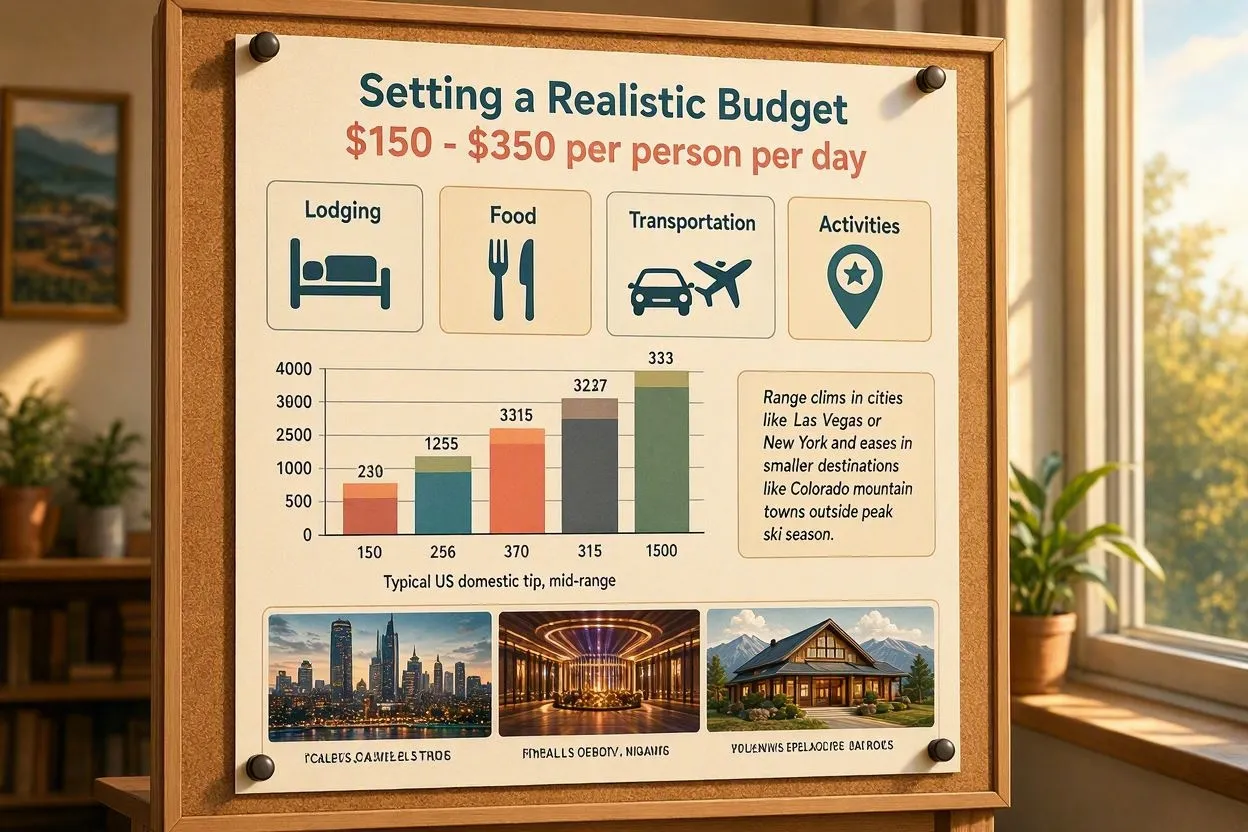
A mid-range US domestic trip, lodging, food, transportation, and activities included, typically runs somewhere between $150 and $350 per person per day. That range climbs in cities like Las Vegas or New York and eases in smaller destinations like Colorado’s mountain towns outside peak ski season. Treat it as a starting point rather than a fixed number. Actual costs shift a lot by destination and travel style.
Budgeting by Category
A useful way to think about the total is by category rather than one lump sum, a split that’s common across travel budgeting guides though hardly a hard rule:
- Lodging: roughly 35–40% of the total
- Food: roughly 20–25%
- Activities and entrance fees: roughly 15–20%
- Transportation, including local transit and rental cars: roughly 15–20%
A five-night trip for two at $250 per person per day lands around $2,500 total, flights aside, since airfare swings too much by season and route to fold into a per-day figure. A buffer of around 10% on top absorbs the unplanned dinner out, or the parking fee nobody researched ahead of time. Trips without that cushion tend to run over, and running over is what turns a relaxing vacation into a stressful one.
Hotel or Vacation Rental
Short stays favor a hotel. Longer ones favor a rental, particularly with more than two travelers along. The math and the logistics both point the same direction.
Hotels solve problems rentals simply can’t. Arriving before check-in means the front desk holds the luggage. A plumbing issue means switching rooms in minutes rather than working through an off-site property manager. Traveling solo means a staffed lobby and a 24-hour front desk add a layer of security a rental doesn’t offer. These conveniences matter most on short trips, when there’s no time to work around a problem.
Rentals earn their keep on longer stays instead. A one-bedroom with a kitchen and a washer can meaningfully cut a week’s food and laundry costs compared to eating out every meal and paying hotel laundry fees, and a group of four or more splitting a rental house usually comes out ahead of booking several separate hotel rooms. Worth checking before booking either way: a dedicated workspace if needed, high-speed internet confirmed in the reviews rather than just the listing description, and proximity to groceries and pharmacies.
Choosing a Base of Stay
A good base sits within easy reach of transit or parking, with everyday essentials (food, pharmacies, groceries) within walking distance. A “base of stay” means the single town or neighborhood used as a home point for day trips, not the whole region being explored.
A trip through Colorado’s national parks illustrates this well. Rocky Mountain National Park, Mesa Verde, Great Sand Dunes, and Black Canyon of the Gunnison sit hours apart from one another. Choosing one town as a base and driving out for day trips beats relocating lodging every night, which burns hours packing and unpacking that could otherwise go toward hiking. For travelers relying on public transit rather than a rental car, a base within a short walk of a bus or train stop matters more than it seems while booking. A distance that looks manageable on a map often feels much longer after a full day of sightseeing.
Timing Flights and Hotels
Domestic flights tend to price best 1 to 3 months out, international ones 2 to 8 months out. Tuesday and Wednesday departures also tend to run cheaper than Friday or Sunday flights on most US domestic routes.
Hotels follow a looser rhythm. A refundable rate booked 2 to 4 weeks out can sometimes match or beat a non-refundable rate locked in further ahead, since hotels adjust pricing against real-time occupancy. Locking in a flexible rate early, then watching the price closer to the trip, keeps the door open to a better deal without losing the room if the rate never drops.
Peak season inflates both flights and hotels no matter how early the booking happens. Rates in a destination like Las Vegas during a major convention or event weekend can run two to three times the normal weekday rate, so checking a destination’s event calendar before locking in dates is worth the five minutes. Shifting a trip by even a single week can make a real difference.
Building the Itinerary
Two main activities a day, one unhurried sit-down meal, and the rest left open tends to work better than a packed schedule. Overpacking a day-by-day itinerary is one of the most common reasons a vacation ends up feeling exhausting rather than restful.
One museum a day beats two or three, even for travelers who genuinely love museums. Attention for absorbing an exhibit tends to fade well before a second visit wraps up, so the extra stop rarely pays off the way it seems like it should. Pairing one museum or landmark with one outdoor or walking activity, built around a single unrushed meal instead of three hurried ones, tends to make for a better day.
A four-day trip might look something like this: arrival and a neighborhood walk on day one, a national park or major landmark paired with a scenic drive on day two, a local market and a guided tour on day three, and a flex day with no fixed plan on day four. That last day matters more than it sounds. A trip with no built-in slack tends to fall apart the moment one thing runs late, whether that’s a delayed flight or a restaurant with a forty-five-minute wait.
Documents and Insurance Worth Sorting Early
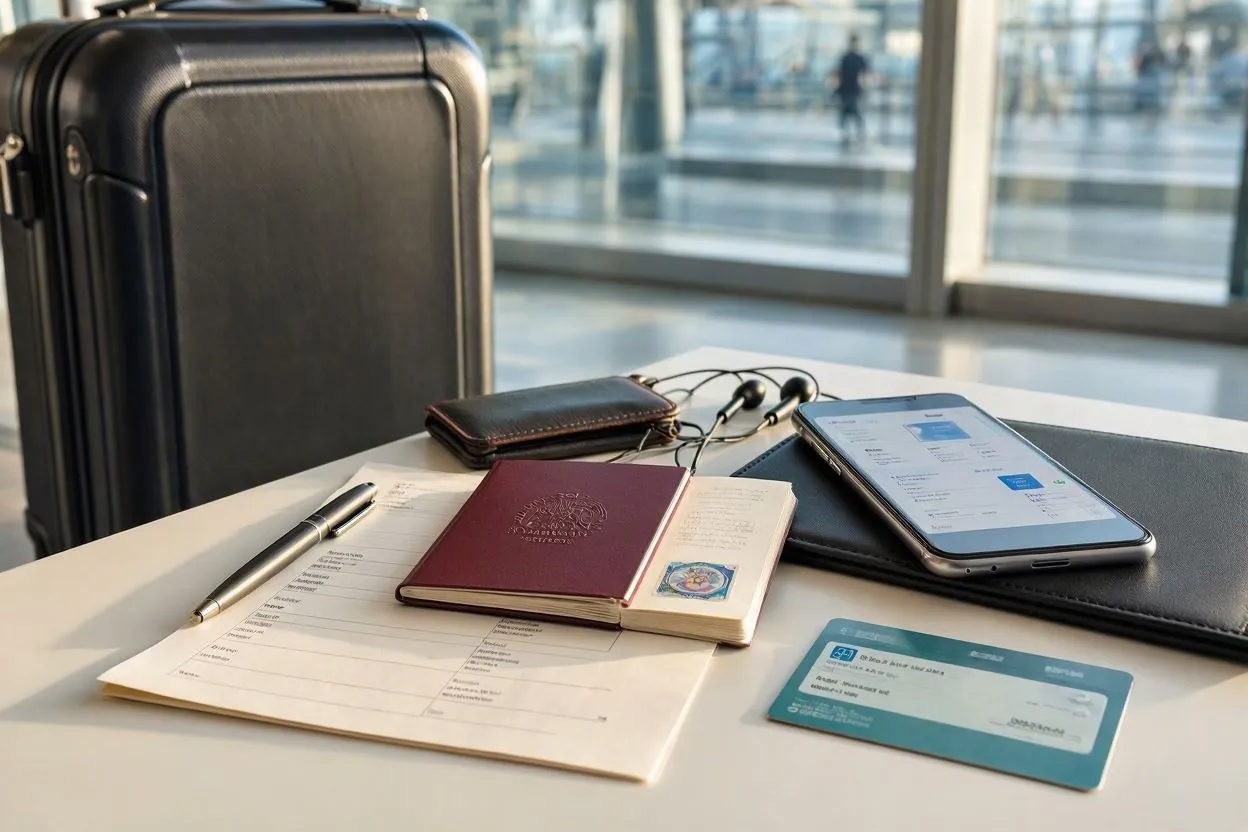
A passport valid for at least six months past the return date is essential for international travel, along with a printed and digital copy of the itinerary, ID, and any required visas. Plenty of countries deny entry if a passport expires within six months of the travel date, even for a short visit.
For US travelers heading to Canada, a valid passport covers entry by land, air, or sea. A driver’s license alone doesn’t. And domestic flights within the US now require a REAL ID-compliant driver’s license or a passport, a rule that still catches first-time flyers off guard more than any other. tsa.gov is worth a look for anyone unsure whether their ID qualifies.
Travel insurance isn’t a given for most domestic US trips, but it earns its cost for international travel or any trip carrying non-refundable bookings over $1,500. Coverage typically extends to trip cancellation, medical emergencies abroad, and lost luggage, and runs a modest percentage of total trip cost, worth a quote from a provider for an exact figure. US domestic health insurance often doesn’t extend to care received outside the country, which makes travel medical coverage a real gap rather than an upsell.
Packing Without Overthinking It
The destination’s actual forecast for the travel dates matters more than its general reputation, and laundry access is worth confirming before packing more than five days’ worth of clothing. A 10-day forecast checked the week before departure catches the shifts a general climate summary misses: an early cold snap, an unseasonal heat wave.
Packing Habits Worth Keeping
A few habits cover most of what tends to go wrong while packing:
- Laundry access changes the math. A rental with a washer means five outfits plus one mid-trip load cover a ten-day trip as well as ten full outfits would, at a fraction of the luggage weight.
- Rolling beats folding for fitting more into the same bag.
- The essentials travel in the carry-on. One change of clothes and any medication, in case a checked bag is delayed.
- So does the charger. A portable charger with at least 10,000 mAh covers a full day of heavy phone use, and lithium batteries face restrictions in checked luggage anyway.
Finding What’s Beyond the Tourist Traps
Local event calendars, a staffed tourist information center, and Meetup or Eventbrite listings for the destination and travel dates tend to surface what the guidebooks miss. Yelp and TripAdvisor work well within the US but miss large parts of the local scene elsewhere, where plenty of small businesses never bother listing on English-language platforms.
A tourist information office costs nothing to visit and exists specifically to answer planning questions, though the answers improve a lot with a specific ask. “What’s good to do here” tends to get a generic answer back. “I’m interested in local history and outdoor hiking, what would you recommend” tends to get a genuinely useful one. The same logic applies at a hotel concierge desk.
Local newspapers, community bulletin boards near transit stations, and flyers in public spaces often list exhibits, pop-up markets, and performances that never make it onto a national travel site. A small neighborhood food festival or a designated Dark Sky Park for stargazing rarely shows up on a mainstream “top things to do” list, but that’s exactly the kind of find that makes a trip feel less scripted.
Vacation Planning Tips: Mistakes to Avoid
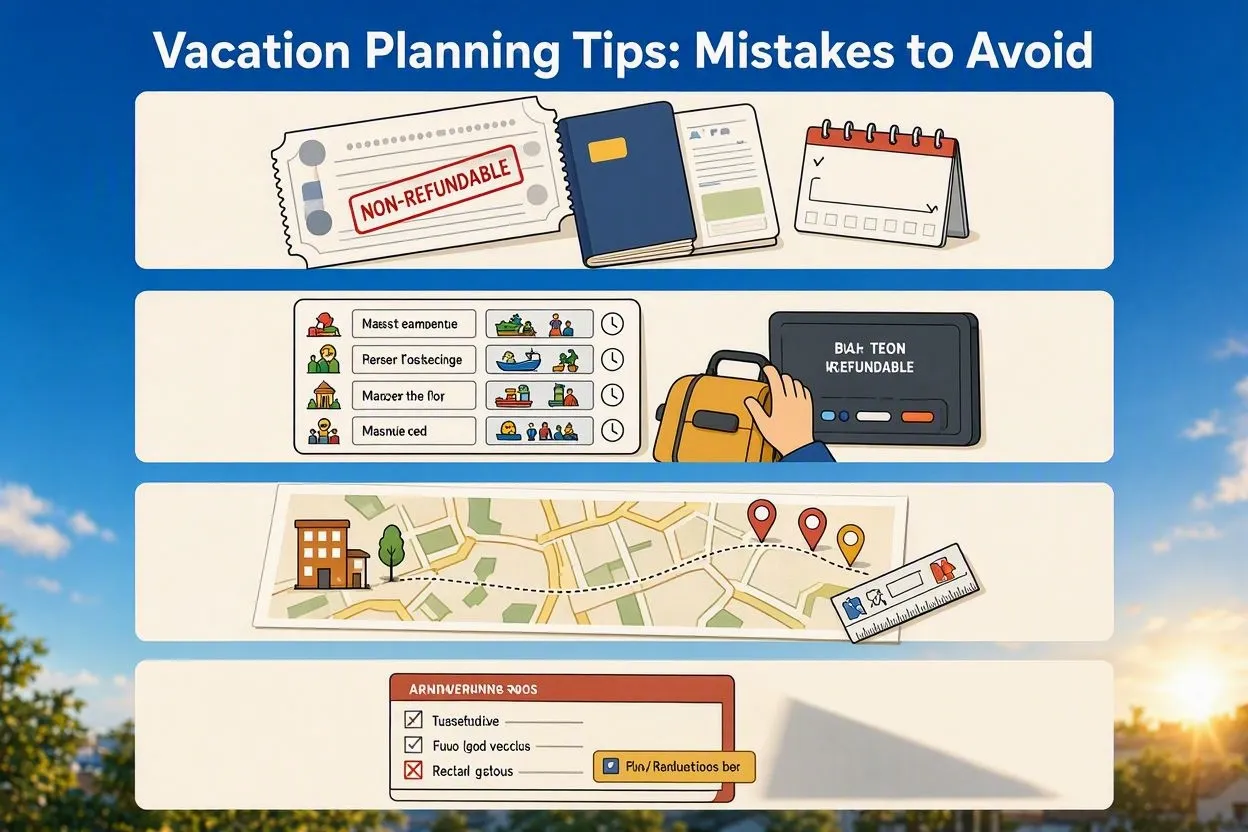
Locking in non-refundable flights before confirming passport and visa timelines, and packing more than two major activities into a single day, trace back to the same root cause: planning the exciting parts of a trip before the logistics that make those plans possible are settled.
Lodging location trips people up in a similar way. A room booked for its low price without checking its distance from the places actually worth visiting often erases the savings once rideshare costs and lost time enter the picture. A room that’s cheaper per night but sits miles from everything planned can end up costing more overall.
Food is the third common miscalculation. Travelers who budget carefully for lodging and flights often estimate food costs from memory of home grocery prices rather than researching what a meal actually costs at the destination, which commonly runs noticeably higher in tourist-heavy areas than it does back home.
The Short Version
Good vacation planning replaces guesswork with a specific number, a specific date, a specific rule to act on. Fix dates and budget first, book flights inside the window that fits the destination, choose lodging based on trip length rather than habit, and leave one day of every itinerary unscheduled. These vacation planning tips get easier to apply once those four pieces are settled. The next trip planned this way takes less time to organize and less money to execute than the last one did.