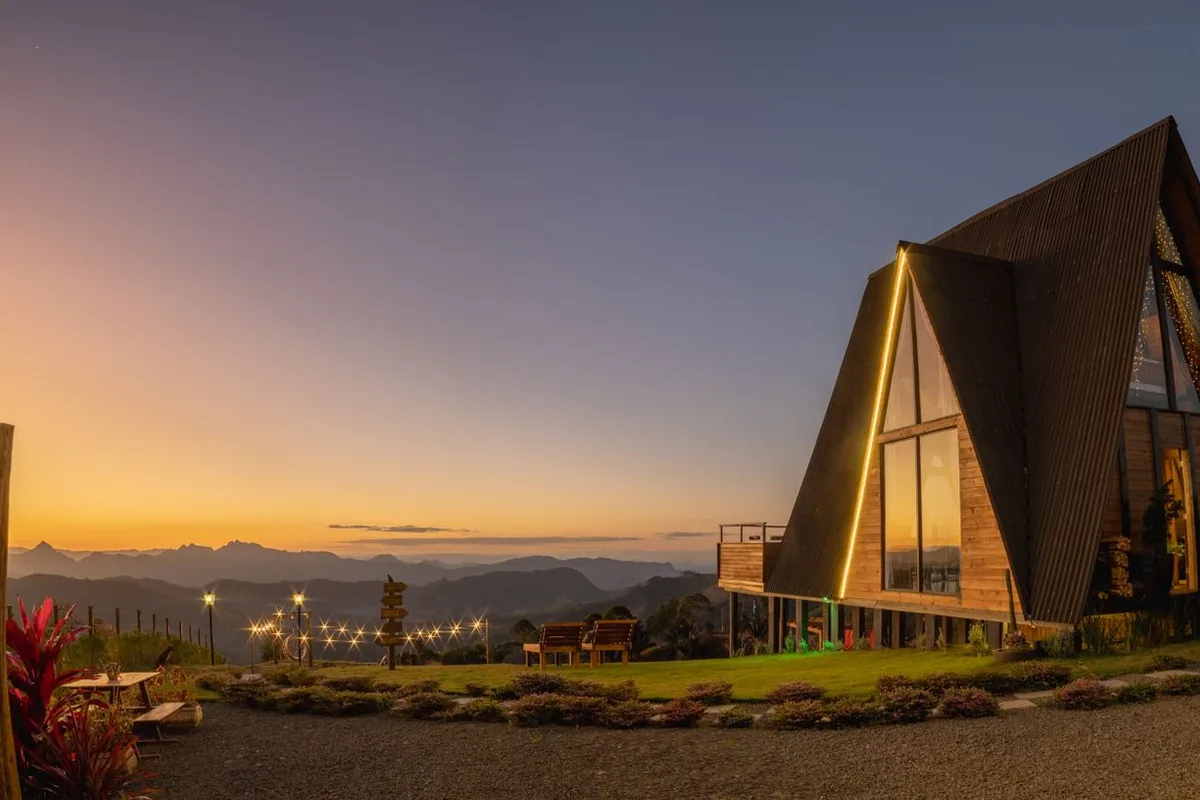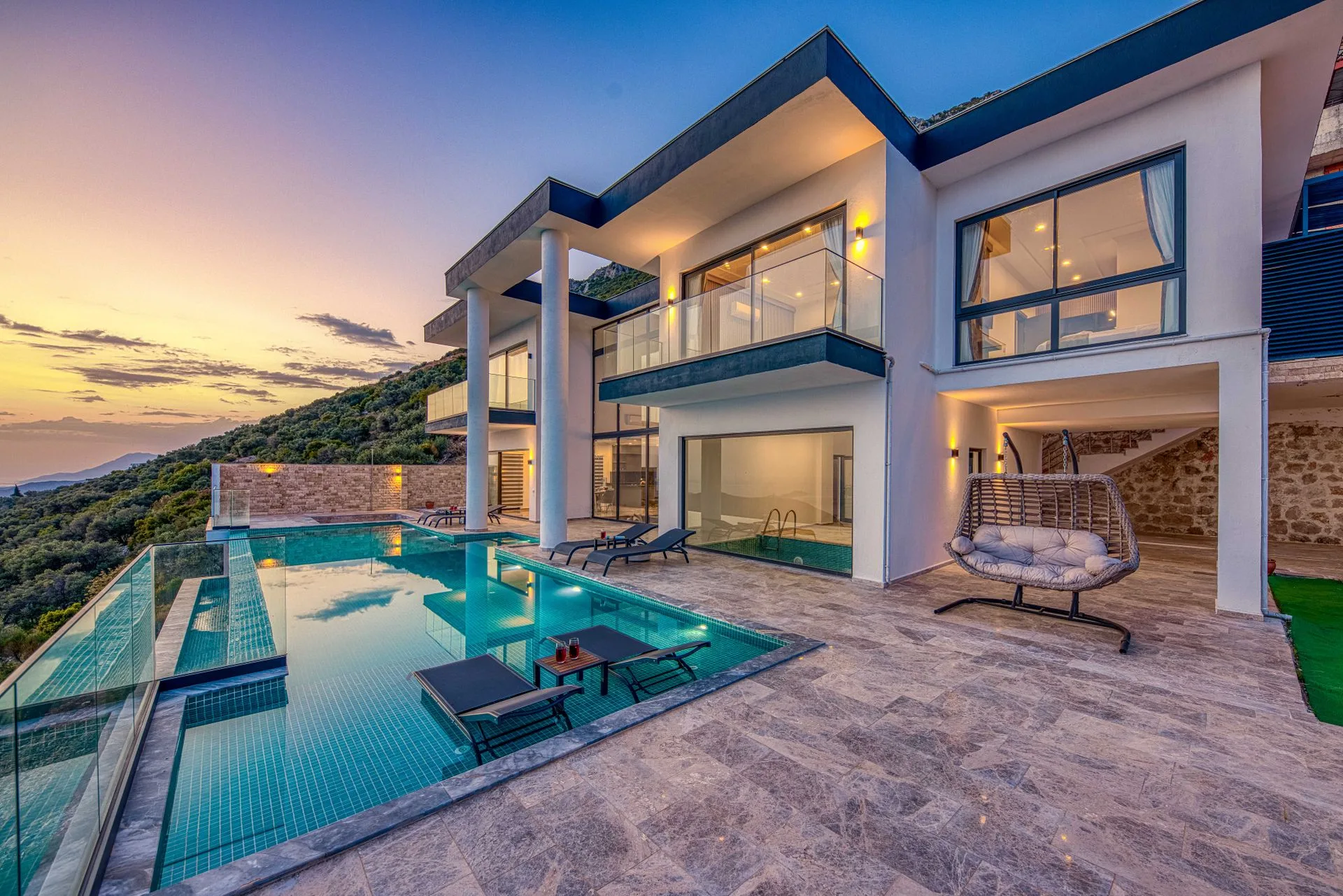
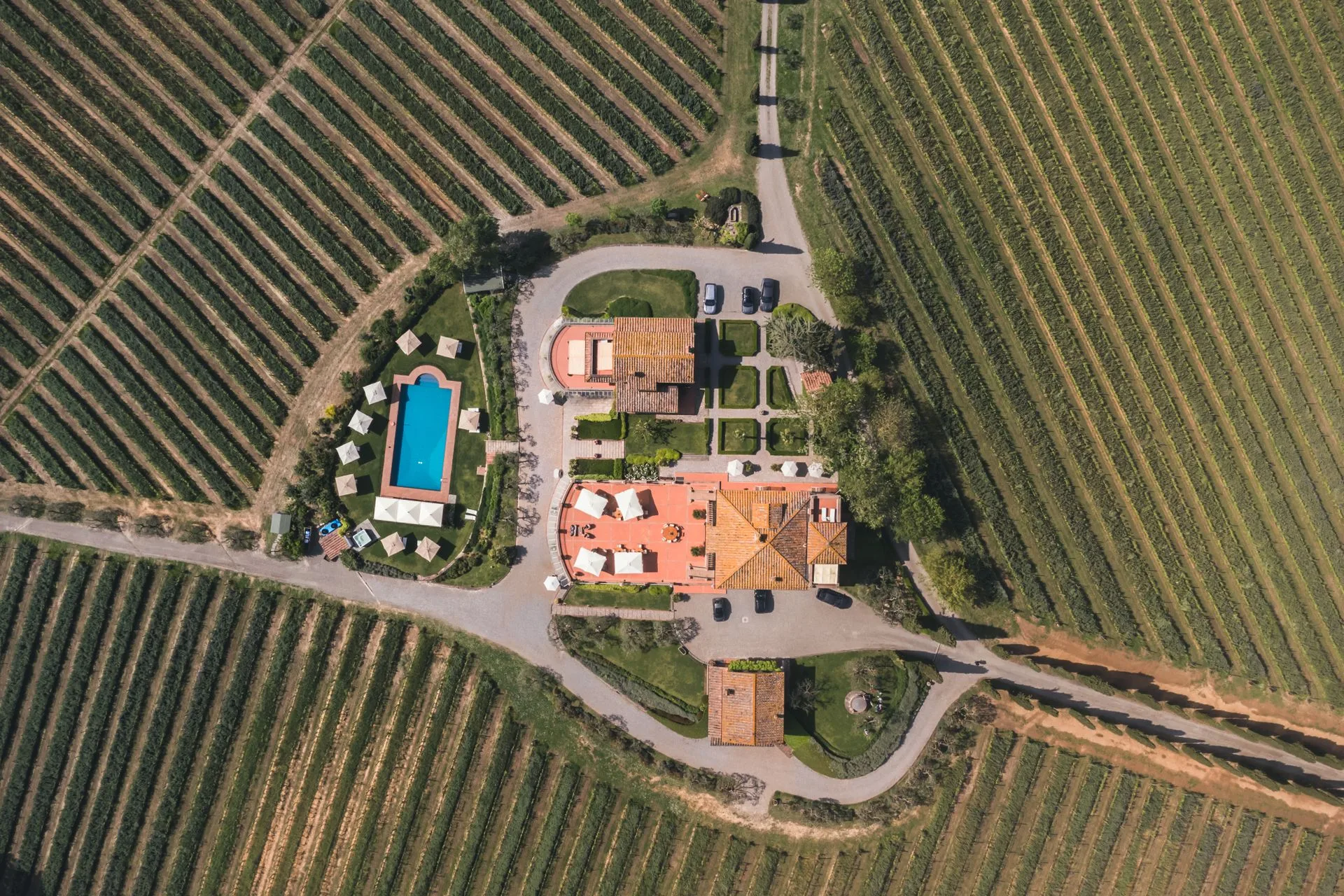
Luxury villas in Tuscany are high-end private vacation homes that rent by the week to groups seeking privacy, space and countryside views, and most have a private pool. Where and when you travel shape the right choice. So does budget. Below, you’ll find Tuscan areas compared side by side, along with true costs, booking rules, travel from the USA and the steps for buying. They rank among the most loved luxury villas in Italy.
Key Takeaways
- Chianti suits first-time visitors who want short drives to Florence and Siena. For cypress-lined hills and Brunello wine country, pick Val d’Orcia.
- Peak-summer villa rentals in Tuscany usually run Saturday to Saturday. Booking 9 to 12 months ahead gives the widest choice for July and August.
- The weekly rental rate excludes common extras such as the security deposit, the municipal tourist tax, private chef fees, groceries and car rental.
- A legally registered Italian short-term rental displays a Codice Identificativo Nazionale (CIN), a national registration code issued by Italian authorities.
- US citizens can buy property in Tuscany. The process starts with an Italian tax code (codice fiscale) and ends with a final deed signed before a notary (notaio).
- A rental car is close to essential for a countryside villa. Drivers must avoid camera-enforced limited traffic zones (ZTL) in historic town centers.

What Makes Luxury Villas in Tuscany Different
A luxury villa in Tuscany stands apart from a standard rental through private grounds, a private pool, en-suite bedrooms, air conditioning and optional services such as housekeeping, a private chef and concierge support. Wine estates and olive groves are typical settings. Others occupy a hilltop, and from there the panoramic vineyard views become the main draw for the guests who book them.
Many luxury Tuscany villas are restored stone farmhouses, called casali, and you’ll typically find terracotta floors and wood-beamed ceilings inside. Others are historic patrician villas. Their grounds often hold formal gardens and private chapels, with long cypress driveways leading up to the house.
Not every villa is old, though. Luxury villas in Tuscany, Italy, also include modern architect-designed homes, where glass walls and minimalist interiors replace the stone and beams of a farmhouse.
Groups mainly choose a villa over a hotel for size. One property that sleeps up to 12 or more guests keeps a multigenerational family under one roof, and it works just as well for a milestone birthday party or a wedding group. Shared kitchens and terraces pull people together. Gardens give them room to spread out.
Common Luxury Amenities
Amenities vary widely between properties, and a listing photo alone won’t confirm what you’re actually getting once you arrive at the gate. Ask first. This table compares common luxury amenities and what to confirm before you book. Compare the villa amenities on offer before you choose.
| Amenity | How Common | What to Confirm |
|---|---|---|
| Private pool | Standard in luxury listings | Opening dates, heating, fencing |
| Air conditioning | Common, not universal | Every bedroom or only some |
| Wi-Fi | Standard | Speed if you need to work |
| En-suite bedrooms | Common in renovated villas | Bathroom count matches bedroom count |
| Housekeeping | Often included part-time | Hours per day and days per week |
| Private chef | Available on request | Per-meal fee and grocery billing |
| Gated estate | Common on larger properties | Shared or private grounds |
Villa vs Agriturismo vs Hotel
A private villa is the best choice for groups that want space and privacy. An agriturismo suits couples who want a farm stay with meals, and a hotel suits short stays with daily service. An agriturismo is a working farm licensed to host guests, and many have a shared pool plus wine or olive oil made on the estate. Meals are often part of the deal. The table below compares the three main accommodation types in Tuscany.
| Stay Type | Best For | Privacy | Booking Pattern |
|---|---|---|---|
| Private villa | Groups of 6 or more | Full property | Weekly, often Saturday to Saturday |
| Agriturismo | Couples, small families | Shared grounds | Flexible, sometimes weekly |
| Hotel | Short stays, couples | Room only | Nightly |
What Is the Best Area in Tuscany to Rent a Villa?
Chianti is the best area in Tuscany to rent a villa for first-time visitors because it sits between Florence and Siena, with short drives to both cities, wine estates and hill towns. Val d’Orcia wins on scenery. The Lucca hills give the easiest airport access, while the Maremma coast is the pick for travelers who want beach time alongside the countryside. Many travellers pair a Tuscan stay with the luxury villas in Marbella for a second week on the Spanish coast.
Drive times below are approximate and assume normal traffic from Florence Airport (FLR). Expect delays. Summer weekend traffic adds time, and so do the narrow country roads that lead out to most rural villas. This table compares the five main villa areas by traveler type and distance.
| Area | Best For | Drive from FLR (Hr) | Distance (Mi / km) |
|---|---|---|---|
| Chianti | First-timers, wine lovers | About 0.75 to 1 | About 20 to 40 / 30 to 65 |
| Val d’Orcia | Scenery, couples, honeymoons | About 1.75 to 2 | About 75 / 120 |
| Lucca hills | Families, quick airport access | About 1.25 | About 47 / 75 |
| Maremma coast | Beach plus countryside | About 2 | About 95 / 150 |
| Cortona | Repeat visitors, quieter towns | About 1.5 | About 72 / 115 |
Chianti
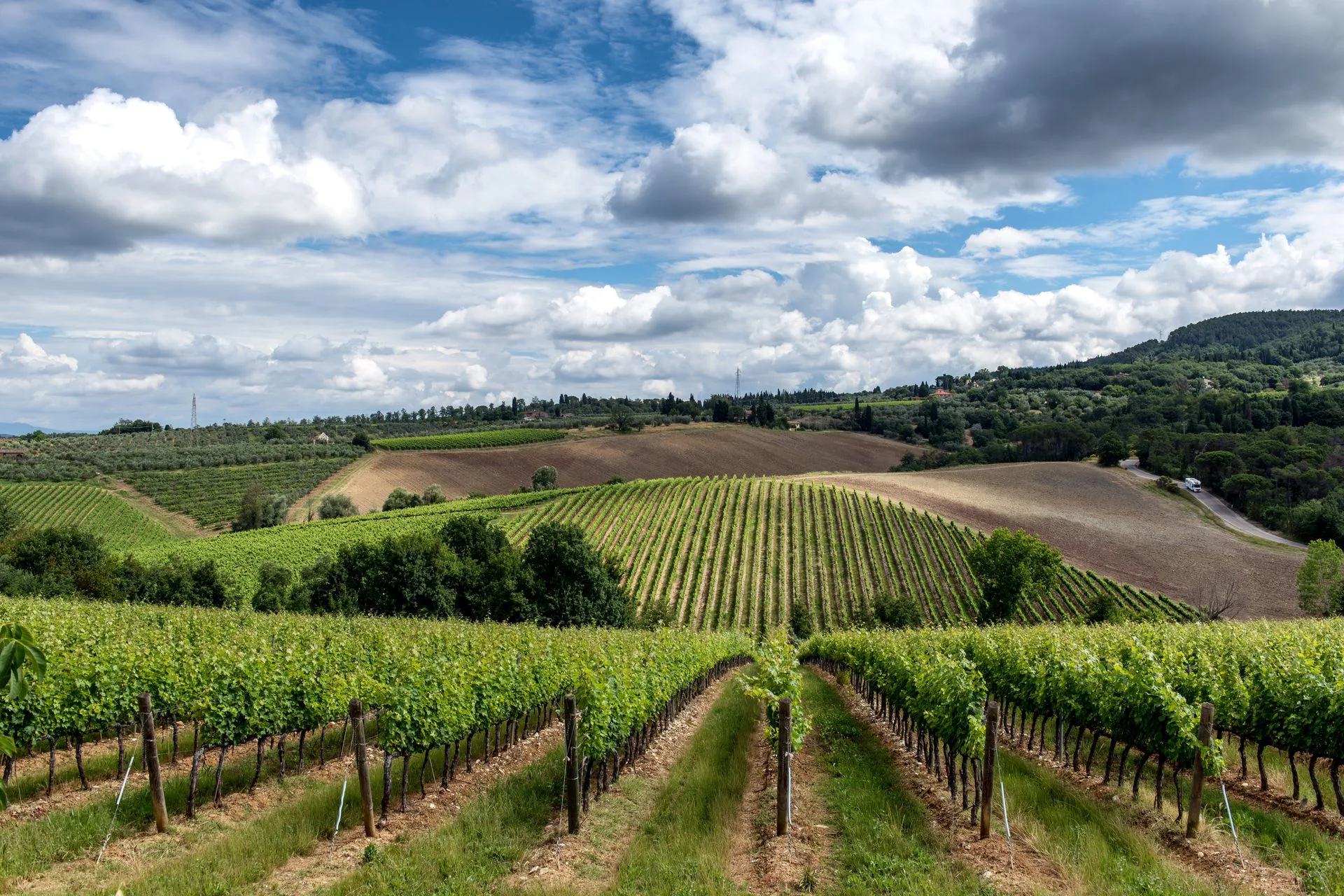
Chianti is the wine region between Florence and Siena, famous for Chianti Classico wine and the black rooster emblem that marks it. Villas cluster around four towns: Greve in Chianti, Radda in Chianti, Castellina in Chianti and Gaiole in Chianti. A week here is easy to fill. Wine tastings and cooking classes slot in between day trips to both cities.
Val d’Orcia
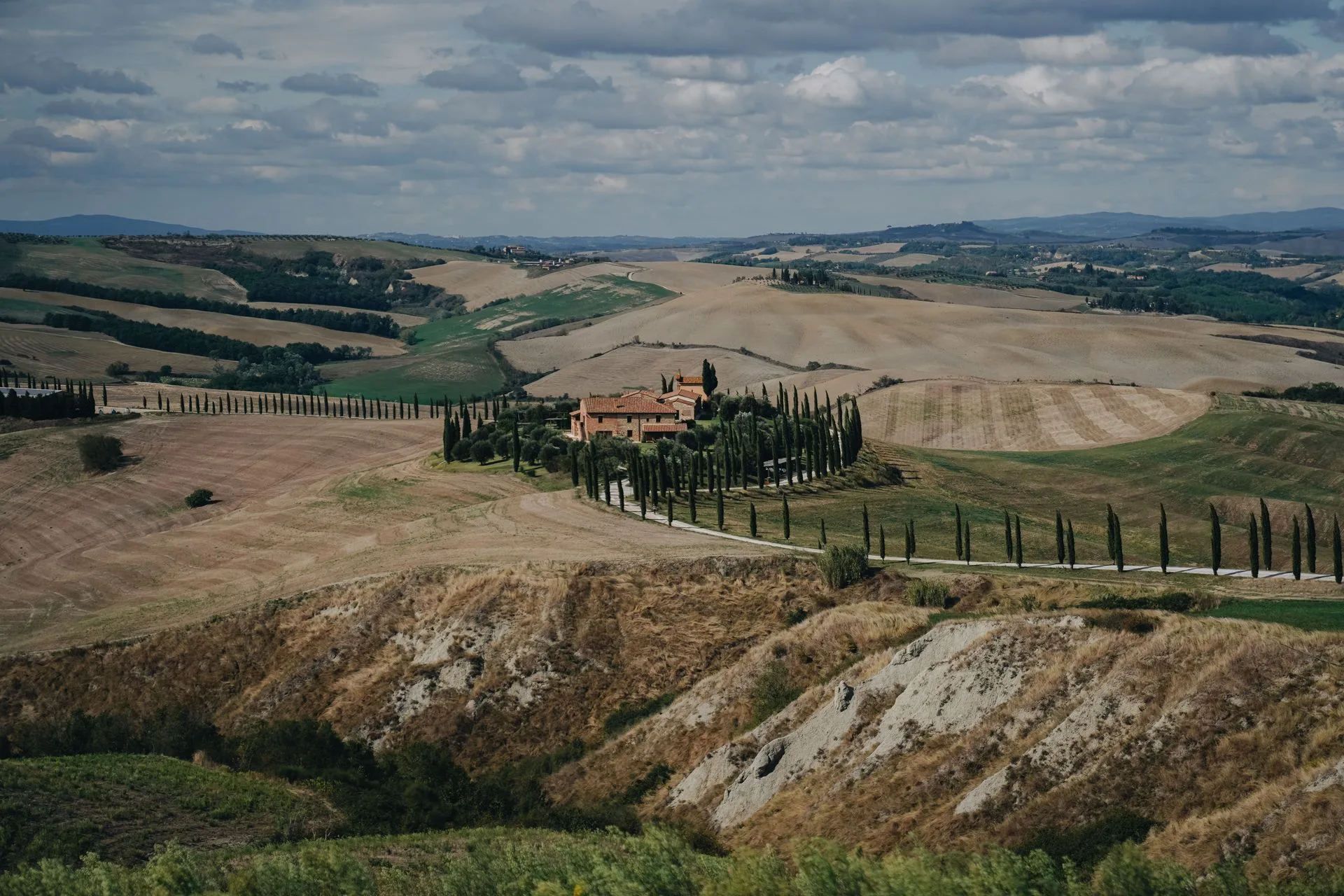
Val d’Orcia is a UNESCO World Heritage site in southern Tuscany, inscribed in 2004 for a Renaissance-planned countryside of rolling hills and cypress rows. Wine lovers come for two reds. Montalcino makes Brunello di Montalcino, and nearby Montepulciano is home to Vino Nobile di Montepulciano. Pienza and San Quirico d’Orcia sit within short drives, and so does Bagno Vignoni.
Lucca Hills
The hills north and east of Lucca hold historic villas with formal gardens, and many are within about 30 minutes of Pisa International Airport (PSA). Lucca itself suits families. Its intact Renaissance walls form a flat, car-free loop for walking and biking. For sea days, the beaches at Forte dei Marmi and Viareggio make easy trips.
Maremma Coast
The Maremma covers southern coastal Tuscany and pairs beach access with quieter countryside. Good villa bases include Castiglione della Pescaia and Monte Argentario, along with Bolgheri, and all of them suit travelers who want sea swimming plus a private pool. Bolgheri also means wine. The town is famous for Super Tuscan bottles such as Sassicaia.
Cortona
Cortona is a hill town in eastern Tuscany that many US readers know from the memoir and film “Under the Tuscan Sun.” Umbria is right next door. Villas here sit close to Lake Trasimeno and the Umbrian border, which puts Assisi and Perugia within easy day-trip range. Perugia Airport (PEG) is actually closer to Cortona than Florence Airport.
How Much Does It Cost to Rent a Luxury Villa in Tuscany?
The cost to rent a luxury villa in Tuscany varies by size, season, location and services, and no verified figure is available for a typical weekly rate. Rates are usually quoted per week for the whole property rather than per person, and peak weeks in July and August cost the most. Always get written quotes. Ideally, each one shows the price in both US dollars and euros.
Value is easy to test. Compare the price per person per night with the cost of an equal number of hotel rooms. Split among 10 or 12 guests, a large villa often compares well with five or six luxury hotel rooms, especially once a shared kitchen cuts restaurant spending.
Extra Costs Beyond the Rental Rate
The weekly rate rarely covers every charge. Budget for the gaps. No verified dollar figures are available for the items below, so treat each one as a question to put to the agency before you book. This table compares the extra costs US travelers should budget for.
| Cost Item | What It Covers | When You Pay |
|---|---|---|
| Security deposit | Refundable damage cover | Before arrival or at check-in |
| Tourist tax (tassa di soggiorno) | Municipal per-person nightly tax | At check-in or checkout |
| Final cleaning | Departure cleaning | Often bundled, sometimes extra |
| Utilities | Metered heating or air conditioning | At checkout, if not included |
| Pool heating | Warming the pool water | Booked in advance |
| Private chef | Cooking labor, plus grocery costs | Locally, often in cash |
| Staff tips | Housekeeping and chef gratuity | At checkout |
| Car rental | Vehicle, fuel, highway tolls | At pickup and return |
Each comune (municipality) sets its own tassa di soggiorno, which means the rate and the maximum number of taxed nights can change from one town to the next. Child exemptions differ too. Ask the agency which comune the villa sits in and how the tax gets collected.
Paying for a Villa from the USA
Most European villa agencies bill in euros, which means exchange rates and bank fees shift the final cost in dollars from the deposit through to the final balance. Small fees add up. Follow these steps to keep payment costs down.
- Ask whether the agency accepts US credit cards, and pay with a card that has no foreign transaction fees.
- Choose to pay in euros when a card terminal offers dollars, because conversion at the terminal usually adds a markup.
- Confirm international wire fees with your US bank before sending a deposit.
- Get the deposit refund terms, timeline and method in writing.
- Check that the cancellation policy and your travel insurance cover the full prepaid amount.
Do Tuscan Villas Have Private Pools?
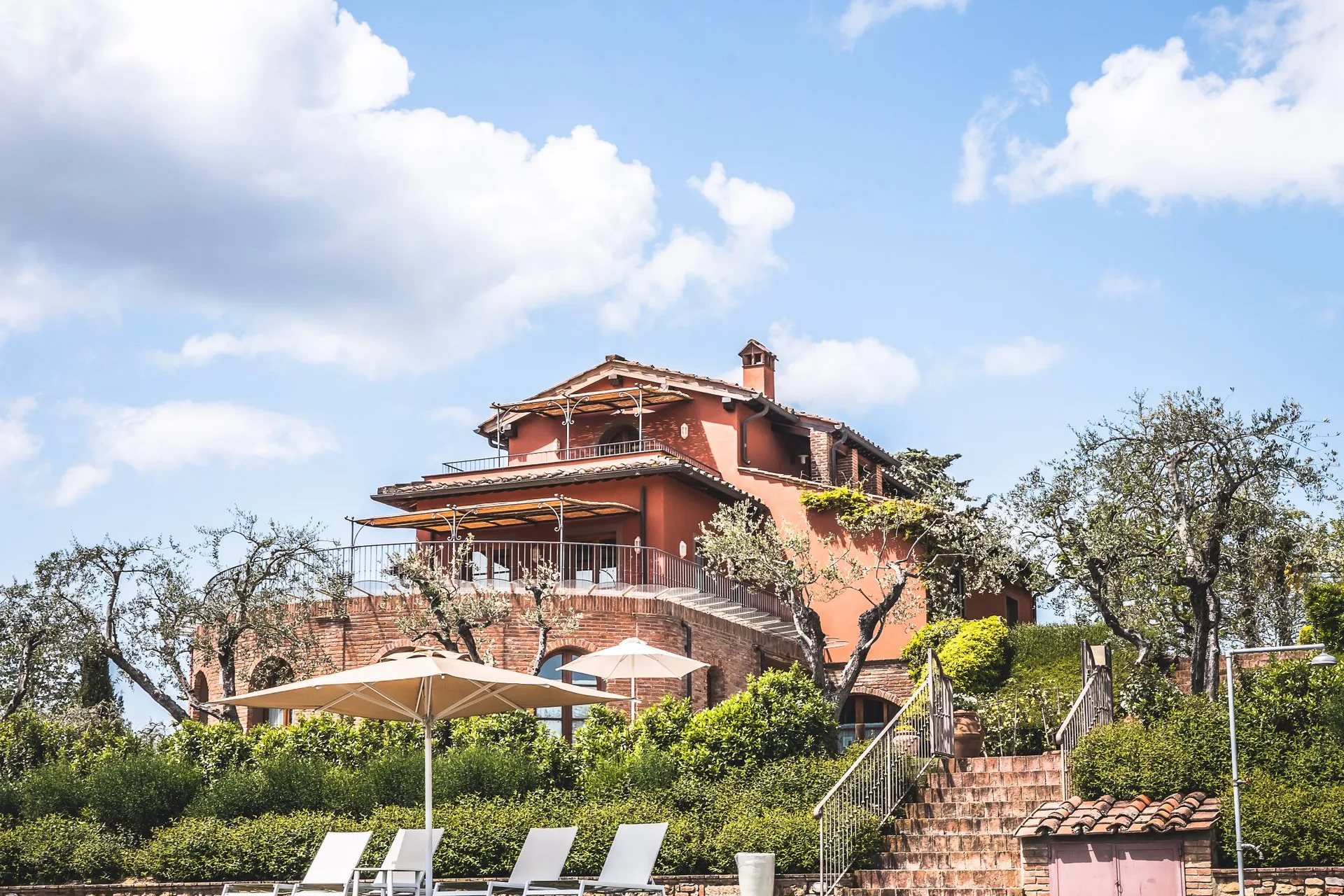
Yes, most luxury villas in Tuscany have a private pool, often with panoramic views, though some historic properties, agriturismi and town houses offer a shared pool or none. Filter listings for villas in Tuscany with pool access marked private. Then dig deeper. Before paying a deposit, confirm the pool’s size and depth, plus the dates it opens for the season.
Infinity pools and saltwater systems show up on many newer luxury listings. Safety is another matter. Families with young children should ask whether the pool has a fence or safety cover, because not every villa has one.
Are Villa Pools Heated?
No, most Tuscan villa pools aren’t heated by default. Heating is usually an optional extra, and you’ll need to book it in advance rather than request it on arrival. It matters most in May and October. Unheated water feels cold in those months, and some owners rely only on solar covers to take the chill off.
When Do Villa Pools Open?
Most villa pools in Tuscany open from about May to late September or early October. Each owner sets the exact dates, so check the listing carefully if your trip falls in April or late October. Pools close for winter.
When Is the Best Month to Rent a Villa in Tuscany?
June and September are the best months to rent a villa in Tuscany because pools are open, days are long and warm, and crowds are lighter than in July and August. May suits garden and wildflower lovers. For the grape harvest and cooler hiking weather, October is the better bet, with mild days that still suit walking among the vines.
Shoulder-season weeks in May, early June, September and October are usually priced below peak summer weeks, which stretches a group budget further. Rules loosen, too. Some villas relax the Saturday-to-Saturday requirement outside July and August. This table compares the main villa season by month.
| Month | Weather | Crowds | Pool Use |
|---|---|---|---|
| April | Mild, some rain | Moderate, peaks at Easter | Usually closed |
| May | Warm days, cool nights | Moderate | Open, cool without heating |
| June | Warm, long days | Rising | Ideal |
| July | Hot | High | Ideal |
| August | Hot, some Italian business closures | Highest around Ferragosto, Aug. 15 | Ideal |
| September | Warm, harvest begins | Moderate | Ideal |
| October | Mild, harvest season | Moderate | Closing, heating helps |
How to Rent a Villa in Tuscany from the USA
Rent a villa in Tuscany from the USA by setting your group size and budget, choosing an area, booking through a reputable agency or verified owner, confirming the CIN and contract, and arranging services and a rental car before you fly. The process works best when you start 9 to 12 months before a summer trip, giving everyone time to agree on dates and budget. Follow these steps. Start with villa vacation ideas that fit your group size and budget.
- Count guests and bedrooms, and decide whether every couple needs an en-suite bathroom.
- Choose an area based on scenery, wine interests and drive time from your arrival airport.
- Pick dates, keeping in mind that peak summer weeks usually run Saturday to Saturday.
- Compare US-based agencies, Italy-based specialists and direct owners on the same villa when possible.
- Verify the CIN on the listing and in the contract.
- Read the contract for deposit, cancellation, utilities and maximum occupancy terms.
- Book a private chef, cooking class, wine tastings and airport transfers in advance.
- Buy travel insurance that covers the prepaid rental amount.
Listing sites for Tuscany, Italy villas differ in how closely they check properties. Vetting is uneven. Specialist agencies for Tuscany vacation rentals often inspect villas in person, while open marketplaces rely more heavily on owner descriptions and guest reviews.
How Far in Advance to Book
Book 9 to 12 months ahead for July and August, especially for villas that sleep 10 or more, since large luxury properties are limited and repeat guests rebook early. Shoulder season is easier. For trips in May, June, September or October, 4 to 6 months of lead time is enough.
Saturday-To-Saturday Stays
Many villas require Saturday-to-Saturday weekly stays in peak season, with check-in in the afternoon and checkout the following Saturday morning. There’s a reason. A fixed changeover day lets owners schedule cleaning and staff. Shorter stays are sometimes possible in shoulder season or to fill last-minute gaps.
Check the CIN Before You Pay
The CIN is a national identification code that Italy introduced for tourist and short-term rentals. Owners must display it in online listings and outside the property. No code is a red flag. Ask the agency or owner for the CIN before you send any money, and check that it matches the one in your contract.
Getting to a Tuscan Villa from the USA
Most US travelers reach a Tuscan villa by flying to Florence (FLR) or Pisa (PSA) with a European connection, or by flying nonstop to Rome Fiumicino (FCO) and then driving or taking a train north. The closest airport depends on the villa’s area. Do the math first. Compare driving times from each airport before you book any flights.
Closest Airports to Tuscan Villas
Florence Airport has a short runway that limits large aircraft, so most of its traffic is European flights rather than long-haul service from the USA. That shapes your routing. This table compares the main airports for villa travelers.
| Airport | Best For | US Connection Notes |
|---|---|---|
| Florence Airport (FLR) | Chianti, Florence area | Connect via European hubs |
| Pisa International Airport (PSA) | Lucca hills, northern coast | Mostly European connections, check seasonal nonstops |
| Rome Fiumicino (FCO) | Southern Tuscany, Maremma | Nonstop service from several US cities |
| Bologna Airport (BLQ) | Florence, northern Tuscany | Connect via European hubs |
Do You Need a Car at a Tuscan Villa?
Yes, you need a car at most Tuscan villas, because countryside estates sit on rural roads with little or no public transit. Bring the right paperwork. US license holders should carry an International Driving Permit (IDP), which AAA issues in the USA, along with a valid state driver’s license. Size matters too. Pick a compact or midsize car, since village streets and villa driveways are narrow and often unpaved.
Not everyone wants to drive. Groups who’d rather skip the wheel can book a private driver for airport transfers and day trips, and many villa agencies arrange both transfers and wine-tour drivers through their concierge services.
Avoid ZTL Fines
A Zona a Traffico Limitato (ZTL) is a limited traffic zone in a historic town center where cameras photograph unauthorized cars. Florence, Siena, Lucca, Pisa and many smaller hill towns use ZTLs. Fines arrive by mail months later, and rental companies often tack on an administrative fee. Follow these steps to avoid them.
- Learn the round red-bordered ZTL sign and treat it as a no-entry sign.
- Park in signed public lots outside the town walls, then walk in.
- Set your GPS to avoid restricted zones, and never trust it blindly near old centers.
- Ask your hotel or villa host whether they can register your plate, if you must drive into a ZTL.
- Check that the ZTL sign reads “attivo” (active) or “non attivo” (inactive) before you enter.
Are Staff and Private Chefs Included in Villa Rentals?
No, staff and private chefs are not always included in Tuscan villa rentals. Many luxury villas include part-time housekeeping, while a private chef, daily cooks, butlers and nannies are usually optional extras billed separately. Groceries for chef-prepared meals are typically charged on top of the chef’s fee. Get both costs in writing.
A staffed villa suits celebration trips and multigenerational groups that want restaurant-quality meals without anyone driving after dinner. Not ready for full service? A single welcome dinner or one farewell feast cooked by a local chef makes a popular middle option. No verified price figures are available for these services. This table compares common villa services and how they’re usually billed.
| Service | Usually Included | How It Is Billed |
|---|---|---|
| Housekeeping | Often, part-time | Included or per extra hour |
| Linen change | Often, weekly or midweek | Included or per change |
| Private chef | Rarely | Per meal plus groceries |
| Concierge | Sometimes, through agency | Included or per booking |
| Cooking class | No | Per person or per group |
| Wine tasting | No | Per person at the estate |
| Airport transfer | No | Per vehicle, each way |
Luxury Villas for Sale in Tuscany: Can Americans Buy?
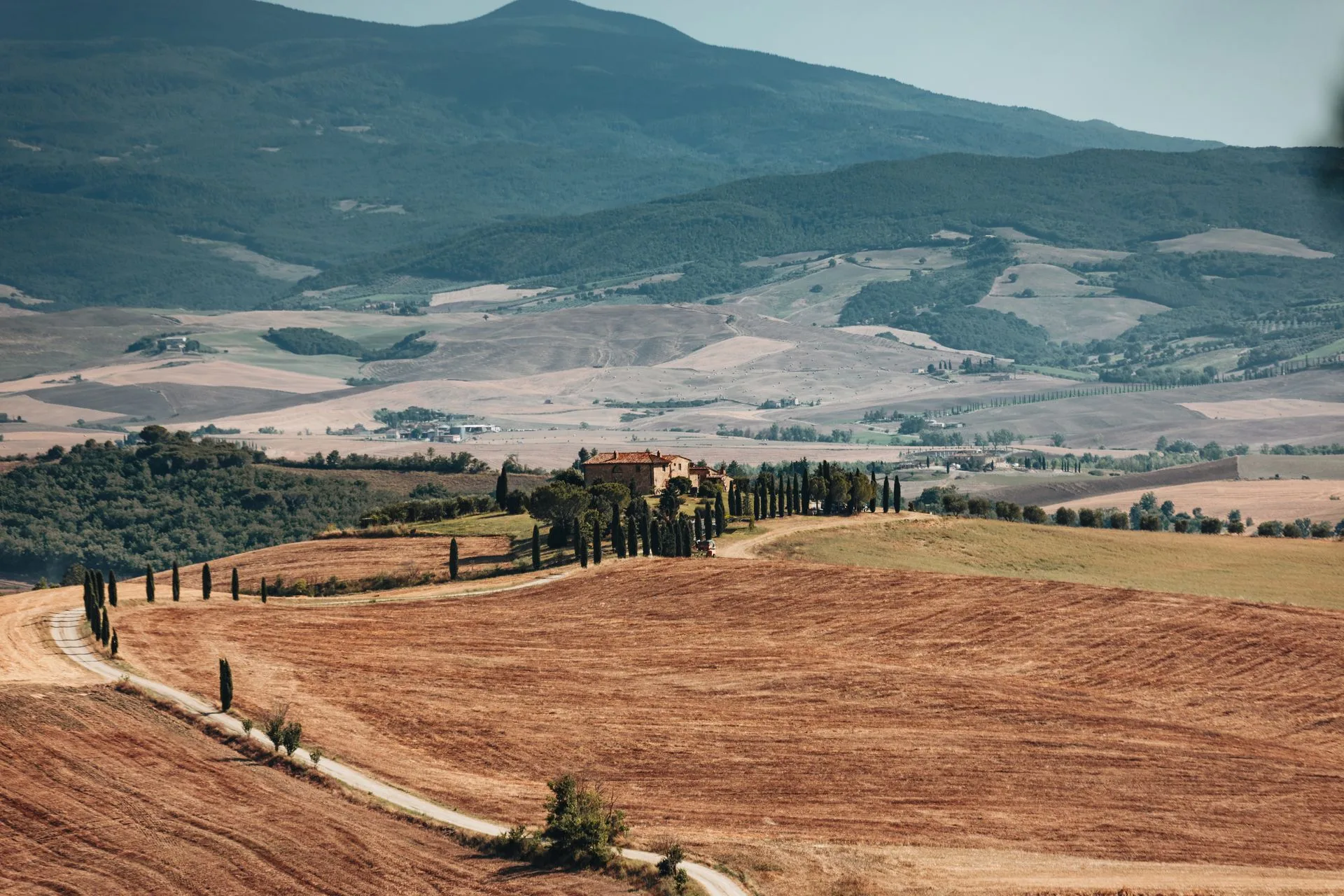
Yes, Americans can buy property in Tuscany, because Italy allows US citizens to purchase real estate under the reciprocity principle between the two countries. Residency isn’t required to own a home. To complete the sale, a buyer needs an Italian tax code and independent legal advice, plus a notary to handle the final deed.
Luxury villas for sale in Tuscany, Italy, range from restored farmhouses on a few acres to working wine estates with vineyards and olive groves. Paperwork is the catch with older homes. Older rural properties often need permit checks, because past renovations weren’t always approved.
Buying Steps for US Citizens
Each step below involves a different Italian document or professional, so it helps to know the full sequence before you make an offer on a Tuscan villa. Follow it in order.
- Obtain a codice fiscale through an Italian consulate in the USA or the Agenzia delle Entrate.
- Hire an independent English-speaking lawyer (avvocato) to represent you, separate from the seller’s agent.
- Commission a surveyor (geometra) to check title, building permits, boundaries and planning compliance.
- Submit a written offer (proposta d’acquisto), usually with a small deposit.
- Sign the preliminary contract (compromesso) and pay the larger deposit (caparra confirmatoria).
- Transfer funds through traceable bank channels, and open an Italian bank account if your lawyer advises it.
- Sign the final deed (rogito) before the notaio, a public official who registers the sale.
- Transfer utilities into your name and set up payment for annual property tax on second homes (IMU).
Rent vs Buy
Renting suits most travelers. Buying makes sense only for people who plan to return often or rent the property out, since ownership brings year-round maintenance and a heavier paperwork load. This table weighs luxury villas in Tuscany for sale against weekly rentals.
| Factor | Rent | Buy |
|---|---|---|
| Upfront cost | Weekly rate plus extras | Purchase price, taxes, notary fees |
| Flexibility | New area every trip | One fixed location |
| Maintenance | Owner’s responsibility | Your responsibility year-round |
| Paperwork | Contract and deposit | Codice fiscale, compromesso, rogito |
| Rental income | N/A | Possible, with CIN registration |
| Best for | Most US vacationers | Frequent visitors, long stays |
Owners who plan to rent a purchased villa to guests must register it and obtain a CIN. That’s not all. Local rules on short-term rentals can also apply, so confirm them with your lawyer before you sign anything.
Frequently Asked Questions
Yes, for groups of six or more. A villa gives a group private space and its own pool, and once you factor in the shared kitchen, the per-person cost often compares well with booking several hotel rooms.
A villa that sleeps 12 or more works best, ideally with en-suite bedrooms and a fenced pool, plus air conditioning for hot summer nights. Look in the Lucca hills or Chianti. Both areas offer short airport drives and easy day trips.
No verified standard amount exists. Many guests leave cash for housekeepers and chefs at checkout, and they scale the amount to the size of the group and the level of service. Ask your agency what local guests typically leave.
No, Italian law does not strictly require one for purchase. Most lawyers still recommend opening an account. It makes traceable payments simpler, and later it handles utility bills and annual property taxes with far less hassle.
Major hubs such as New York, Newark, Chicago and Atlanta offer nonstop flights to Rome, and from there a train or rental car covers the trip north. Smaller airports work differently. Travelers from those usually connect through a European hub to Florence or Pisa.
Conclusion
Planning a stay at one of the luxury villas in Tuscany starts with three choices, beginning with the area you want as your base for the week. Season comes next. Group size settles the rest.
Chianti and the Lucca hills keep drives short. Val d’Orcia has the classic cypress views. The Maremma, meanwhile, adds the sea for groups that want beach days and a private pool in the same trip. For a lakeside alternative, see our Luxury Villas Lake Como guide.
Italy’s CIN registration system now gives US travelers a clear way to separate legal Tuscany vacation rentals from risky listings. Verified listings should get easier to find. Shoulder seasons are gaining ground too. Summer heat and peak crowds keep pushing travelers toward cooler weeks in May, June, September and October.
Start your search 9 to 12 months out for summer, and compare quotes for luxury Tuscany villas in both dollars and euros. Every extra cost belongs in writing. Some travelers fall hard for the region. They can explore ownership next, with a lawyer and a surveyor working alongside the notaio.