

The Anne Frank House in Amsterdam, Netherlands, is a museum at Prinsengracht 263, beside the Westerkerk church, where Anne Frank hid from the Nazis from 1942 to 1944. Tickets are sold online only. Visitors who hold a timed slot enter from Westermarkt and walk through the original Secret Annex, which still hides behind a moveable bookcase. It is one of the 10 places to visit in Europe for history lovers.
Key Takeaways
- The Anne Frank House sits at Prinsengracht 263 in Amsterdam, Netherlands, and its museum entrance is at Westermarkt 20, beside the Westerkerk church.
- Anne Frank House tickets are sold online only for a fixed date and time slot, so US travelers should book before leaving home.
- Anne Frank lived at Merwedeplein 37 in south Amsterdam from 1934 to 1942, then hid in the Secret Annex until August 4, 1944.
- Eight people hid behind a moveable bookcase in the rear annex of the canal house where Otto Frank ran his business.
- The Secret Annex has steep, narrow stairs and is not wheelchair accessible.
- No investigation has confirmed who betrayed the eight people in hiding.
What Is the Anne Frank House in Amsterdam?
The Anne Frank House is a historic house museum that preserves the Secret Annex where Anne Frank, her family and four others hid during the Nazi occupation of the Netherlands. Its operator is the Anne Frank Foundation. Doors first opened to the public in 1960, inside a 17th-century canal house on the Prinsengracht.
One building, one story. Anne Frank, a Jewish teenager born in Germany, hid here for just over two years with her parents and sister, sharing the cramped rooms with four other people.
Her diary from those hiding years went on to become one of the most widely read books ever written about the Holocaust. Americans know it by another title. The Diary of a Young Girl, the English edition, first came out in 1952.
The original Dutch edition appeared five years earlier, in 1947, under the title Het Achterhuis, a name that points straight back to the hiding place. Achterhuis means “rear house.” That word names the Secret Annex itself.
The Anne Frank House Amsterdam museum pairs the preserved hiding place with exhibits on the Nazi occupation and on the persecution of Jews in the Netherlands. The family’s helpers feature too. For US visitors, the building offers the most direct physical link to a book that US schools often assign.
This table summarizes the core facts about the museum.
| Fact | Detail |
|---|---|
| Official Name | Anne Frank House (Anne Frank Huis) |
| Historic Address | Prinsengracht 263, Amsterdam |
| Museum Entrance | Westermarkt 20, Amsterdam |
| Operator | Anne Frank Foundation (Anne Frank Stichting) |
| Opened as Museum | 1960 |
| Ticket Sales | Online only, timed entry |
| Prices and Hours | No verified figure available; check annefrank.org |
Where Is the Anne Frank House Located?
The Anne Frank House is located at Prinsengracht 263 in central Amsterdam, Netherlands, with the museum entrance at Westermarkt 20, beside the Westerkerk church. Its front faces the Prinsengracht canal. The house stands at the edge of the Jordaan neighborhood, inside the 17th-century Canal Ring that the United Nations Educational, Scientific and Cultural Organization (UNESCO) listed as a World Heritage Site in 2010.
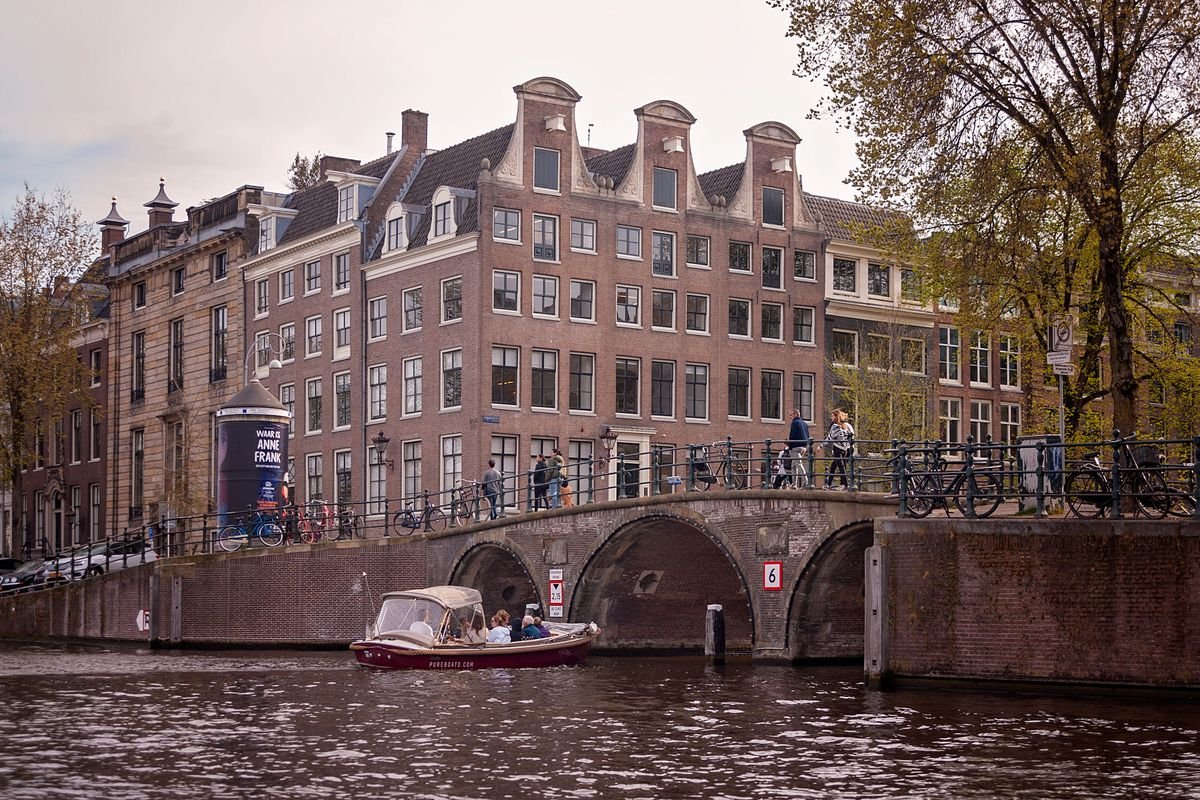
Searching for the Anne Frank House Westermarkt address or for Prinsengracht 263 will land you at the same spot on the canal. Two buildings stand there. The historic canal house looks onto the water, while a modern museum building next door handles entry and exhibits.
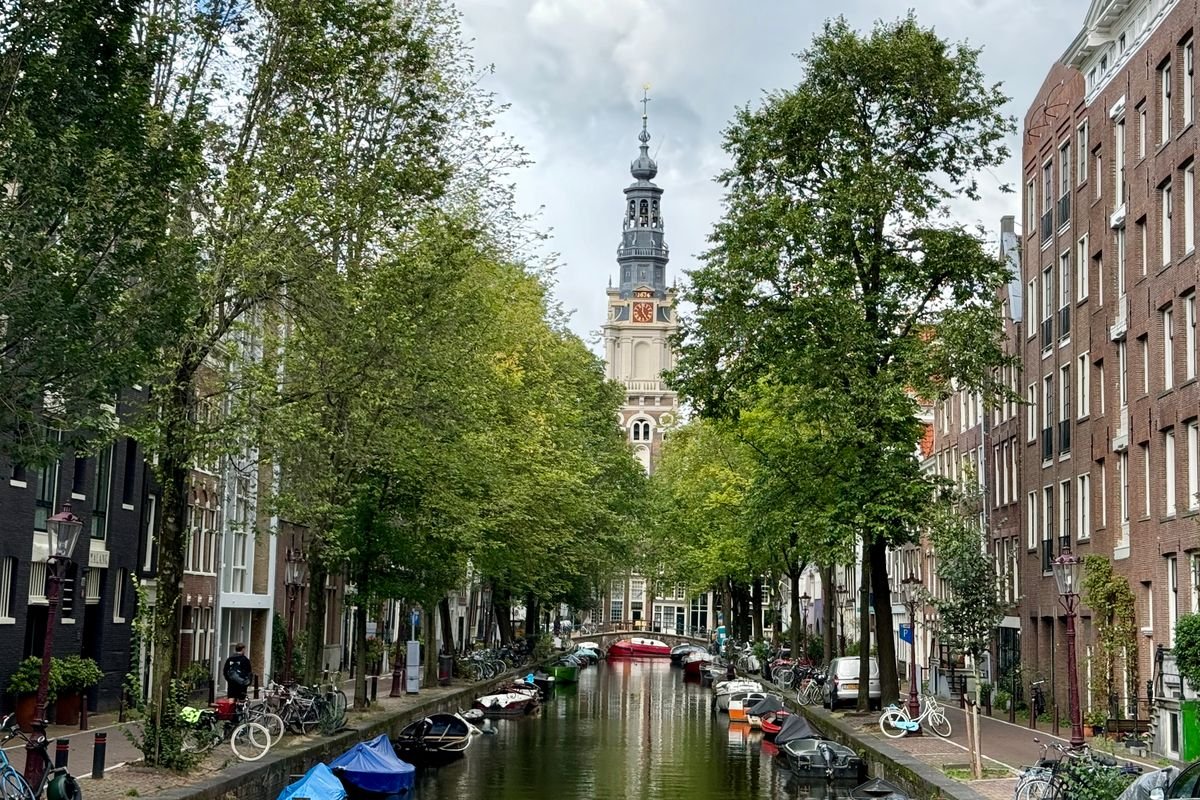
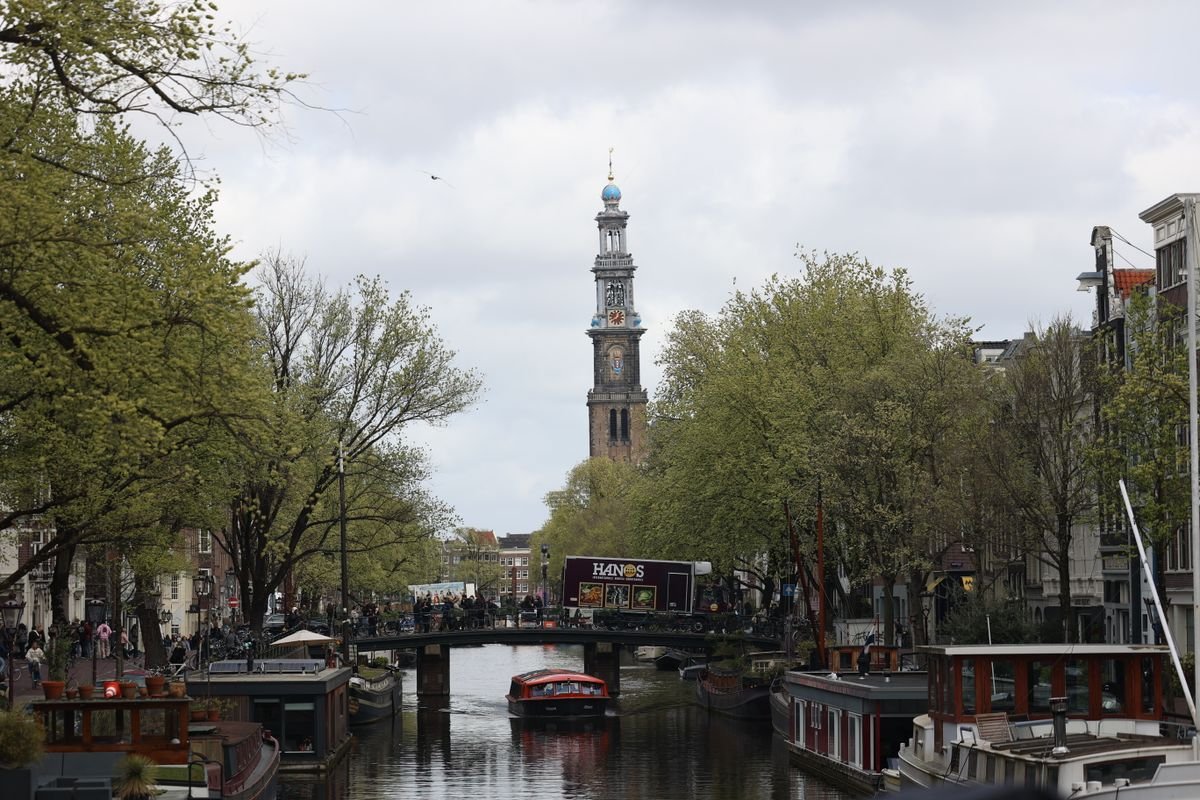
Amsterdam Centraal Station, the city’s main rail hub, sits roughly a 20-minute walk to the northeast of the museum. Look up to orient yourself. The Westerkerk tower rises directly beside the museum and makes the location simple to spot from the canal.
Getting There from Schiphol and Centraal Station
Schiphol Airport, Amsterdam’s main international airport, links to the city center by direct train, and the rest of the route is easy on foot or by tram. Follow these steps.
- Take a direct train from Schiphol Airport to Amsterdam Centraal Station, a ride of about 15 to 20 minutes.
- Walk southwest from Centraal Station through the canal belt to Westermarkt, about 20 minutes on foot.
- Board a tram to the Westermarkt stop if you prefer to ride; trams 13 and 17 serve this stop, but confirm current lines with GVB, Amsterdam’s public transit operator.
- Tap in and tap out on every tram ride with your contactless card or GVB ticket.
- Walk to the museum entrance at Westermarkt 20, beside the church.
The Westermarkt and Westerkerk Area
The Westerkerk is a Protestant church next door to the museum. Its bells mattered to Anne. In her diary, Anne Frank wrote about hearing those bells while she lived hidden inside the Secret Annex next door.
Rembrandt lies here too. The Dutch painter is buried inside the Westerkerk in an unmarked grave, and a bronze statue of Anne Frank by the sculptor Mari Andriessen stands near the church on Westermarkt.
Westermarkt also holds the Homomonument, a memorial beside the canal to gay men and lesbians persecuted for their sexuality. Head west from the square. That’s where the Jordaan begins, a neighborhood of narrow streets lined with small cafes and independent shops.
How Do You Get Anne Frank House Amsterdam Tickets?
Anne Frank House Amsterdam tickets are sold online only, through the official site at annefrank.org, for a specific date and time slot. No tickets are sold at the door. US travelers should book before flying, ideally on the day new time slots open, and keep the confirmation on their phone.
Each ticket covers one entry time. Space is the reason: the museum admits visitors in timed groups because the rooms and stairs of the Secret Annex are small.
Ticket prices are listed in euros (EUR). This guide has no verified current price, so check the official ticket page for current rates and any reduced fares for children.
The museum puts new tickets on sale on a set schedule ahead of each visit date. Timing varies. Confirm the exact release day and hour on annefrank.org before you plan your booking, and check again a few days before. Add the ticket release date to your travel checklist so you do not miss the booking window.
Steps to Book Tickets Online
Speed matters here. Follow these steps to book Anne Frank House tickets from the US, and have your card ready before the release time arrives.
- Open the official ticket page linked from annefrank.org, and avoid third-party resale sites.
- Find the current release schedule for your travel date on that page.
- Convert the release time from Amsterdam time to your US time zone with the conversion table in the next section.
- Set a phone alarm 10 minutes before tickets go on sale.
- Select your date, time slot and number of tickets as soon as booking opens.
- Pay by card in euros, and check whether your US card charges a foreign transaction fee.
- Save the e-ticket to your phone and print a backup copy.
- Arrive at Westermarkt 20 at your booked time slot.
Converting Amsterdam Times for US Travelers
Amsterdam runs on Central European Time, which is 6 hours ahead of US Eastern Time and 9 hours ahead of US Pacific Time for most of the year. That means early alarms. This table converts common Amsterdam clock times so you can set an alarm once you confirm the official release time.
| Amsterdam Time | US Eastern | US Central | US Pacific |
|---|---|---|---|
| 9:00 a.m. | 3:00 a.m. | 2:00 a.m. | 12:00 a.m. |
| 10:00 a.m. | 4:00 a.m. | 3:00 a.m. | 1:00 a.m. |
| 12:00 p.m. | 6:00 a.m. | 5:00 a.m. | 3:00 a.m. |
| 3:00 p.m. | 9:00 a.m. | 8:00 a.m. | 6:00 a.m. |
For a few weeks each March, and again from late October to early November, the gap between Amsterdam and US clocks shrinks by 1 hour. Blame daylight saving time. The US and Europe switch to and from it on different dates.
What to Do If Tickets Are Sold Out
Popular dates can sell out, especially during school vacations, and a blank calendar on the official ticket page doesn’t have to end your plans. Try these steps instead.
- Recheck the official ticket page on several different days, because availability changes.
- Refuse offers from unofficial resellers, because the official site is the only verified sales channel.
- Visit Westermarkt anyway to see the canal house facade, the Westerkerk and the Anne Frank statue.
- Walk to Merwedeplein in south Amsterdam to see the outside of Anne’s family home.
- Explore the online tour of the Secret Annex on the museum’s official website.
- Book a visit to the National Holocaust Museum in Amsterdam’s Jewish Cultural Quarter.
Where Did Anne Frank Live Before Hiding?
Anne Frank lived at Merwedeplein 37, an apartment in Amsterdam’s Rivierenbuurt neighborhood, from 1934 until July 6, 1942, when the family moved into hiding. Frankfurt am Main, Germany, came first. Anne was born there on June 12, 1929, and the Merwedeplein apartment she later lived in is a private residence, not a public museum. Amsterdam is one of the good places in Europe to visit for travellers tracing wartime history.
Otto Frank moved to Amsterdam in 1933, after the Nazis took power in Germany. Work came first. He set up the Dutch branch of Opekta, a company that sold pectin, a natural thickener used for making jam.
Edith Frank and Margot Frank followed him. Anne joined the family in Amsterdam in early 1934, settling into Rivierenbuurt, the River Quarter, a newer neighborhood in south Amsterdam where many Jewish refugee families from Germany made their homes.
School was close by. Anne attended a Montessori school near the apartment until 1941, when the occupiers forced Jewish children into separate schools and she moved to the Jewish Lyceum.
Anne received her diary as a 13th birthday present on June 12, 1942, while the family still lived at Merwedeplein. She began writing at once. Those first pages came weeks before the family went into hiding.
This table lists Anne Frank’s homes and the places she was held after her arrest.
| Place | Location | Years | What Happened |
|---|---|---|---|
| Frankfurt am Main | Germany | 1929 to 1933 | Born June 12, 1929 |
| Merwedeplein 37 | Rivierenbuurt, Amsterdam | 1934 to 1942 | Family apartment, diary begins |
| Prinsengracht 263 | Canal Ring, Amsterdam | 1942 to 1944 | Hid in the Secret Annex |
| Westerbork | Northeast Netherlands | 1944 | Transit camp after the arrest |
| Auschwitz-Birkenau | Occupied Poland | 1944 | Deported in September 1944 |
| Bergen-Belsen | Northern Germany | 1944 to 1945 | Died in early 1945 |
You can view the Merwedeplein building only from the square outside. Tours aren’t offered. Since the apartment isn’t open to visitors, plan a short exterior stop that fits easily between other sights in south Amsterdam.
How Long Did Anne Frank Hide in the Secret Annex?
Anne Frank hid in the Secret Annex for just over two years, from July 6, 1942, until August 4, 1944, when police discovered and arrested all eight people in hiding. A summons forced the move. The Frank family went into hiding one day after Anne’s sister, Margot, received a call-up notice ordering her to report for a German labor camp.
The hiding place had been readied in advance in the rear annex of Otto Frank’s business premises. Nobody carried suitcases. Instead, the Frank family walked there in the rain, wearing layers of clothes so they wouldn’t have to carry luggage through the streets.
This table lists the main dates in Anne Frank’s life and the history of the house.
| Date | Event |
|---|---|
| June 12, 1929 | Anne Frank is born in Frankfurt am Main |
| Early 1934 | Anne joins her family in Amsterdam |
| May 1940 | Germany invades and occupies the Netherlands |
| June 12, 1942 | Anne receives her diary |
| July 6, 1942 | The Frank family goes into hiding |
| August 4, 1944 | Police arrest all eight people in hiding |
| Early 1945 | Anne dies at Bergen-Belsen |
| 1947 | Het Achterhuis is published in Dutch |
| 1952 | The Diary of a Young Girl is published in the US |
| 1960 | The Anne Frank House opens as a museum |
The Eight People in Hiding
Eight people lived in the Secret Annex, and of that group Otto Frank was the only one who survived the war. Anne renamed some of them. In her diary, the van Pels family became “Van Daan” and Fritz Pfeffer became “Dussel.”
| Name | Relationship | Fate |
|---|---|---|
| Otto Frank | Anne’s father | Survived; died in 1980 |
| Edith Frank | Anne’s mother | Died at Auschwitz, January 1945 |
| Margot Frank | Anne’s older sister | Died at Bergen-Belsen, early 1945 |
| Anne Frank | Diarist | Died at Bergen-Belsen, early 1945 |
| Hermann van Pels | Otto Frank’s business associate | Died at Auschwitz, 1944 |
| Auguste van Pels | Hermann’s wife | Died in 1945 during deportation |
| Peter van Pels | Son of Hermann and Auguste | Died at Mauthausen, May 1945 |
| Fritz Pfeffer | Dentist and family acquaintance | Died at Neuengamme, December 1944 |
The Helpers Who Hid the Family
Six helpers supported the people in hiding while running the business in the front house, and they brought food and books up to the annex. News arrived with them too. Their names were Miep Gies, Jan Gies, Johannes Kleiman, Victor Kugler, Bep Voskuijl and Bep’s father, Johan Voskuijl.
Johan Voskuijl built the moveable bookcase that concealed the entrance to the annex. Two helpers faced arrest. Police took Johannes Kleiman and Victor Kugler on August 4, 1944, and sent both men to camps, though each of them survived.
After the arrest, Miep Gies and Bep Voskuijl gathered Anne’s diary and loose pages from the annex. Miep kept them safe. She handed the papers to Otto Frank in 1945, but only after he’d learned that Anne had died in the camps.
How the Canal House Layout Made Hiding Possible
The Prinsengracht 263 canal house hid eight people because its layout split into a street-facing front house (voorhuis) and a separate rear annex (achterhuis), joined by a landing that the street could not see. Business cover did the rest. Otto Frank’s company, Opekta, used the front house as offices and a warehouse, which gave the helpers daily, routine access to the hidden rear rooms.
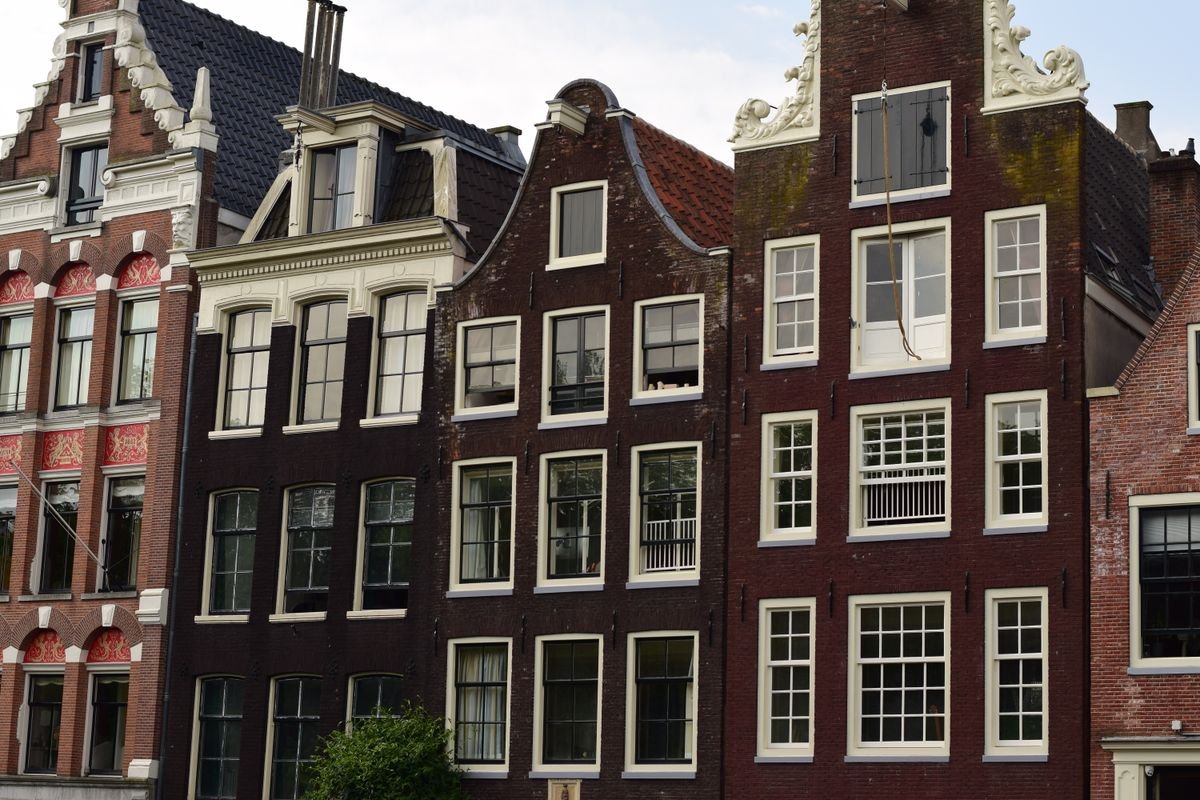
Amsterdam’s canal houses sit on narrow, deep plots along the water. Looks deceive. Many have a rear annex built behind the main house, so a single property often holds far more space than its facade suggests.
A passerby walking along the Prinsengracht saw only the front house and the ordinary bustle of a working business behind its windows. The annex stayed hidden. Its windows faced the enclosed back gardens of the block, never the street.
For anyone interested in historic property, the building shows how Canal Ring architecture shaped daily life. Design and survival overlapped. A deep plot and a separate rear wing made the house a practical business address, and those same features made concealment possible.
Front House and Rear Annex
During the war, the front and rear sections of the building served very different purposes for the people inside it. Each had a role. This table compares how each section was used.
| Section | Wartime Use | Who Used It |
|---|---|---|
| Front House (Voorhuis) | Offices and warehouse | Opekta staff and the helpers |
| Rear Annex Living Floors | Hiding place for eight people | The Franks, van Pels family, Fritz Pfeffer |
| Rear Annex Attic | Food storage and quiet space | People in hiding, mainly Peter and Anne |
| Bookcase Landing | Concealed entrance to the annex | Helpers and people in hiding |
Silence ruled the working day. Warehouse workers in the front house didn’t know about the hiding place, so the people in hiding had to stay quiet during working hours. Footsteps were a risk. So were running water and flushing toilets.
The Moveable Bookcase
The moveable bookcase is a hinged set of shelves that covered the door to the Secret Annex. It swung like a door. Helpers pulled it open whenever they brought supplies to the people in hiding, and they closed it behind them each time they left.
The bookcase stood on the landing between the front house and the annex. Nothing about it looked odd. Ordinary office binders lined its shelves, so anyone glancing at it saw just another piece of furniture in a working business.
Visitors still pass through this entrance today. Many of them describe stepping behind the bookcase as the single most powerful moment of the whole museum visit.
What Will You See Inside the Museum?
Inside the Anne Frank House, visitors walk through the former Opekta offices and warehouse, pass behind the moveable bookcase, and climb into the empty rooms of the Secret Annex, where Anne’s magazine pictures still hang on her bedroom wall. Furniture is missing on purpose. The rooms stay unfurnished at Otto Frank’s request, so the emptiness itself tells visitors what the war took from the people who lived there.
The route begins in the front house, where quotes from the diary and wartime context introduce the hiding period to each group of visitors. Short texts and films explain who worked in each room. Take your time here.
In the annex, you’ll see the room Anne shared with Fritz Pfeffer, with the pictures of film stars and royals she pasted on the wall still in place. Look for the pencil marks. On another wall, they record how tall Anne and Margot grew while in hiding.
From the annex, the visit continues into the modern museum building next door. Anne’s life story is told there. Other exhibits trace what happened to the people in hiding after the arrest and how the diary eventually reached publication.
The museum displays original diary materials, but the specific pages on view change from time to time, so what you see won’t always match what a friend saw. Check the official site for current details.
From the attic window, Anne could see a horse chestnut tree, and she wrote about it in her diary. The tree fell in 2010. Saplings grown from it have since been planted at sites around the world, including in the United States.
Accessibility and Visit Rules
The historic building limits access for some visitors, especially anyone who can’t manage steep stairs, so review these points before booking. Plan ahead. This table compares the main practical rules and conditions.
| Topic | What to Know |
|---|---|
| Wheelchair Access | Secret Annex not accessible; steep, narrow stairs |
| Limited Mobility | Use the online Secret Annex tour |
| Photography | Not allowed inside the museum |
| Visit Length | Plan about 1 hour |
| Recommended Age | 10 and up, per museum guidance |
| Arrival | Arrive at your booked time slot |
Policies can change. Before your trip, verify accessibility details and age guidance on annefrank.org, and confirm the expected visit length while you’re on the site.
Who Betrayed Anne Frank?
No one knows for certain who betrayed Anne Frank and the others in the Secret Annex, and no investigation has produced a confirmed answer. Proof remains missing. The trigger for the August 4, 1944, raid has never been established, and when a 2022 cold case investigation named a suspect, historians widely disputed its conclusion.
After the war, Dutch police investigated the arrest on two separate occasions, first in the late 1940s and then again in the 1960s. Neither inquiry identified the person responsible.
Other theories exist. Researchers at the Anne Frank House have explored explanations other than a direct betrayal, and their work shows how little documentary evidence survives from the raid.
The 2022 investigation appeared as a book, produced by a team that included a retired Federal Bureau of Investigation (FBI) agent. Criticism followed quickly. The book’s Dutch publisher later apologized after historians challenged its evidence.
Nearby Sites Worth Adding to Your Visit
The best sites near the Anne Frank House are the Westerkerk church next door, the canals and cafes of the Jordaan, and Amsterdam’s Jewish Cultural Quarter, which includes the National Holocaust Museum. Group them by area. Pairing these sites with the museum turns one timed ticket into a full day of history in Amsterdam. Many visitors fit the museum into a wider trip, and the Netherlands earns its place among the top countries to visit in Europe for history lovers.
This table compares nearby sites by area and reason to visit.
| Site | Area | Why Go |
|---|---|---|
| Westerkerk | Next door | Church whose bells Anne heard |
| Anne Frank Statue | Westermarkt | Bronze statue by Mari Andriessen |
| Jordaan | West of the museum | Canal-side cafes, shops and quiet streets |
| National Holocaust Museum | Jewish Cultural Quarter | Holocaust history in the Netherlands |
| Dutch Resistance Museum | Plantage district | Occupation and resistance history |
| Merwedeplein | Rivierenbuurt, south Amsterdam | Exterior of Anne’s family home |
The history continues back home. In Washington, DC, the United States Holocaust Memorial Museum holds extensive Holocaust collections, while the Idaho Anne Frank Human Rights Memorial stands in Boise for travelers in the West.
Frequently Asked Questions
Yes, for children old enough to grasp the history, and museum guidance recommends ages 10 and up. Preparation helps. Reading passages from The Diary of a Young Girl together before the trip gets younger visitors ready for what they’ll see.
Yes. The moveable bookcase still covers the entrance to the Secret Annex, and every visitor walks through the doorway behind it.
The museum opened in 1960. Established in 1957 with Otto Frank’s involvement, the Anne Frank Foundation saved the canal house from planned demolition and converted it into a public museum.
Otto Frank was Anne’s father, and of everyone who hid in the Secret Annex, he was the only person who survived the war. He published Anne’s diary in 1947. Doing so fulfilled her wish to become a writer.
Yes, the museum displays original diary materials. The pages on view rotate. Check annefrank.org before your visit to confirm which items appear in the current exhibit, since the selection can differ between trips.
Conclusion
A visit to the Anne Frank House Amsterdam museum starts long before you reach Westermarkt: it begins with an online ticket booked from home, a converted release time, and a plan that links Prinsengracht 263 with Merwedeplein and the nearby memorials. Planning pays off. Each step brings Anne’s diary closer to the real places behind it.
Booking systems and opening hours will keep shifting, and the exhibits will rotate as well, yet the building on the Prinsengracht stays exactly where it has always stood. The bookcase is still there. So are the canal house and the empty annex rooms where Anne wrote her diary.
Book your time slot early and reread the diary before you fly. Leave room in your itinerary, too, for a slow walk through the streets Anne knew, from Merwedeplein to the canal house. Her story unfolds room by room.