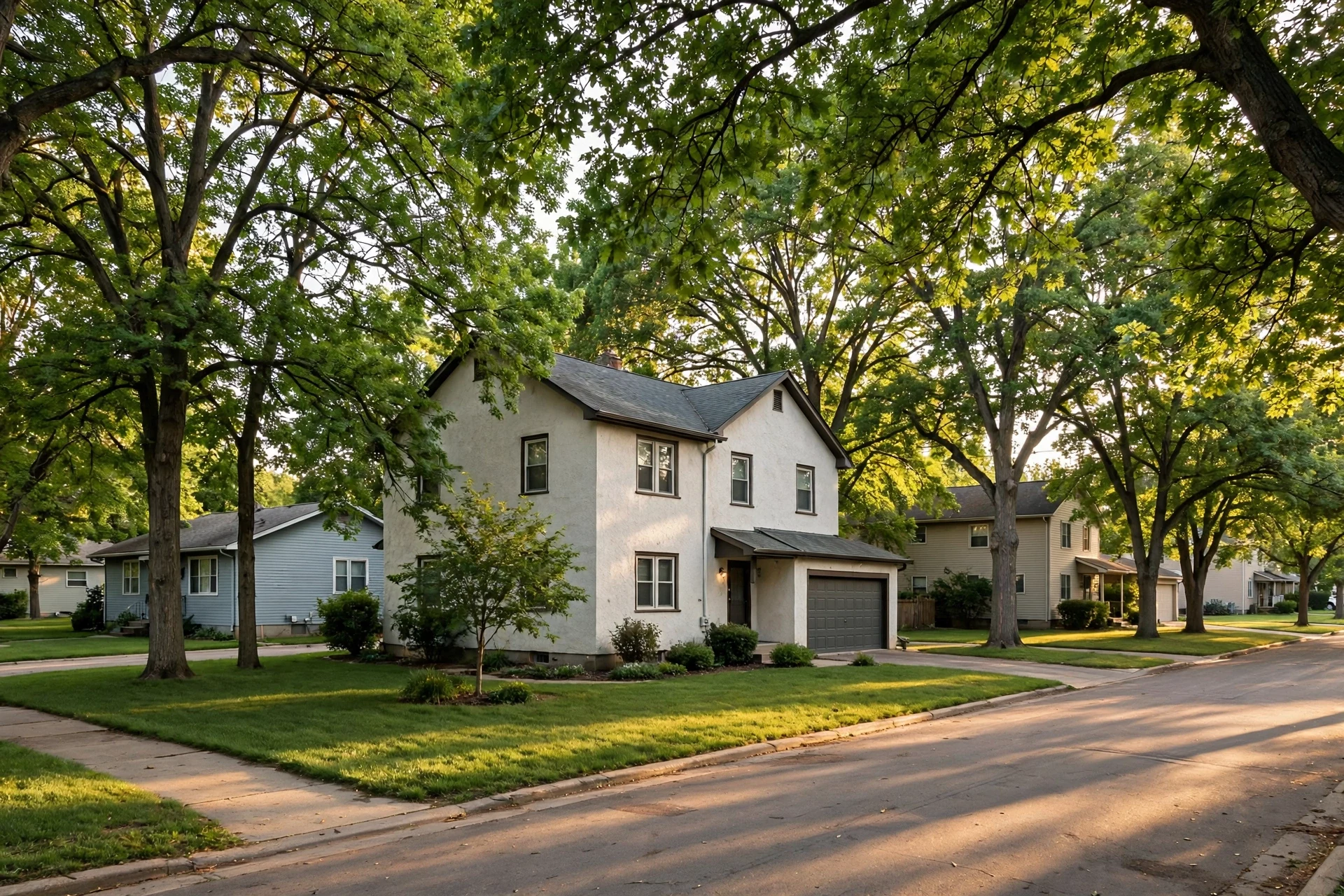
The Warren Buffett house is a modest stucco single-family home in Omaha, Nebraska, that has served as the investor’s primary residence ever since 1958. It stands at 5505 Farnam Street. Buffett paid $31,500 for it at age 28 and later called it the third best investment he ever made. The Bill Gates House took the opposite route, a purpose-built Medina estate planned and built over years.
Key Takeaways
- Warren Buffett bought his Omaha home in 1958 for $31,500, a price he confirmed in his 2010 Berkshire Hathaway shareholder letter.
- Warren Buffett’s house sits at 5505 Farnam Street in Omaha’s Dundee neighborhood. It is a private residence, not a tourist site.
- The Douglas County Assessor publishes the official assessed value of Warren Buffett’s house. This article contains no verified current value.
- Warren Buffett is widely reported to own one house since he sold his Laguna Beach, California, vacation home in 2018.
- Warren Buffett’s view on housing is that buyers should purchase a home to live in, make a real down payment and keep payments affordable.
- Berkshire Hathaway owns HomeServices of America and Clayton Homes, two large US housing businesses.
Where Is the Warren Buffett House?
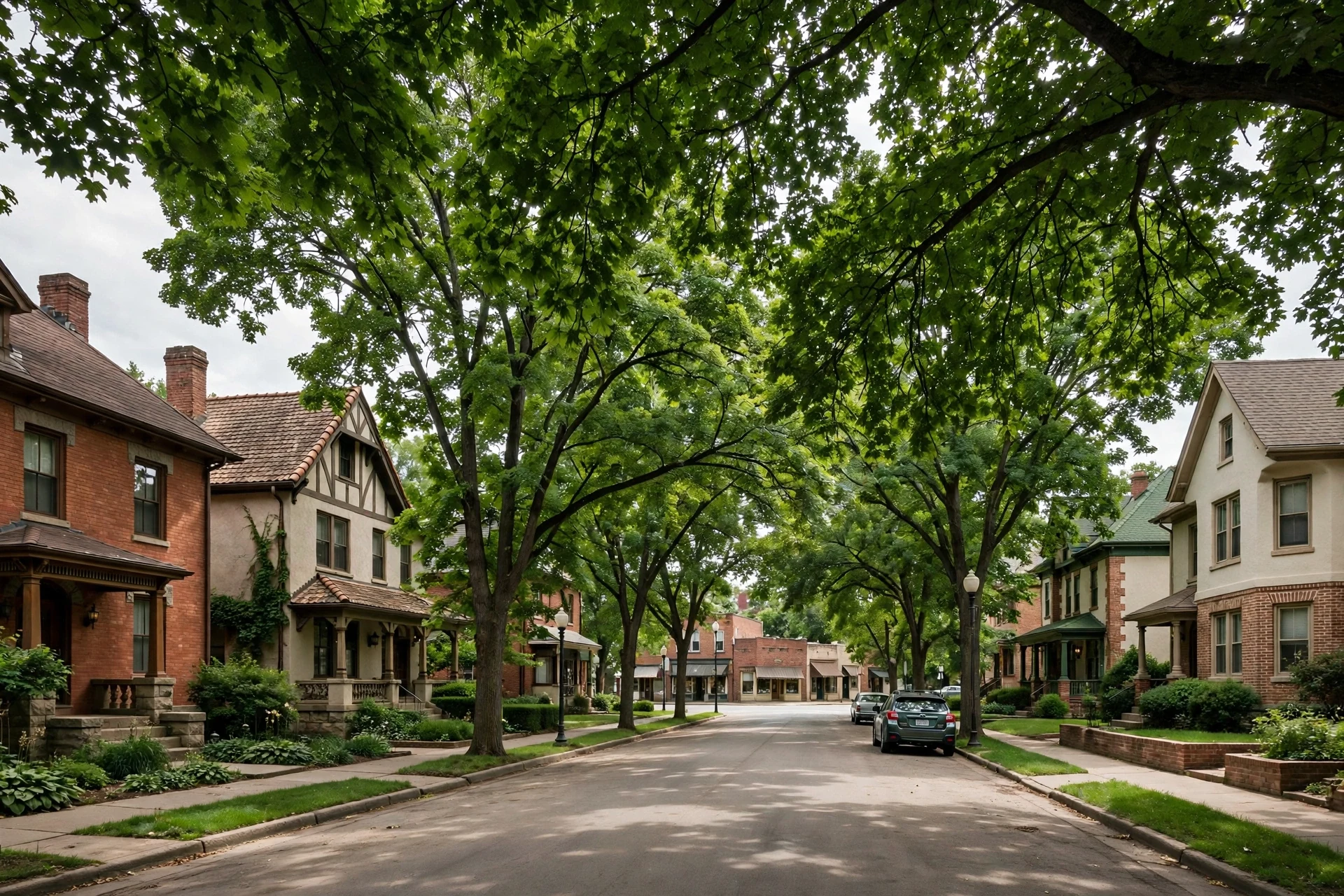
The Warren Buffett house is in Omaha, Nebraska, at 5505 Farnam Street in the Dundee neighborhood west of downtown. Buffett has lived here since 1958. Even after becoming one of the richest people in the world, he never moved his household to a financial center like New York or California.
Berkshire Hathaway’s headquarters is in Omaha too. It’s why the press calls Buffett the “Oracle of Omaha.” For his entire career at Berkshire, his home and his office have stayed in the same Nebraska city, and he’s never had to pick between the two.
Staying put makes the Warren Buffett house Omaha’s best-known private home. It’s also among the most searched residences nationwide. Why? Most of the curiosity comes from one contrast, a world-famous billionaire living in an ordinary house on an ordinary city street.
Here’s the quick version. The table below lists the basic facts about the Warren Buffett residence and shows where each individual fact comes from.
| Fact | Detail | Source |
|---|---|---|
| City | Omaha, Nebraska | Public records and news coverage |
| Street Address | 5505 Farnam Street | Publicly reported |
| Neighborhood | Dundee | Publicly reported |
| Purchase Year | 1958 | 2010 Berkshire shareholder letter |
| Purchase Price (USD) | $31,500 | 2010 Berkshire shareholder letter |
| Buyer’s Age | 28 | Widely reported |
| Current Assessed Value (USD) | No verified figure available | Douglas County Assessor |
| Home Size (sq ft / m²) | No verified figure available | Douglas County Assessor |
The Address and Dundee Neighborhood
The Warren Buffett house address is 5505 Farnam Street, Omaha, Nebraska, in the Dundee neighborhood. It’s hardly a secret. Reporters have printed this address for years, and it also appears in the public property record that Douglas County keeps.
Farnam Street isn’t a quiet cul-de-sac. As one of Omaha’s main east-west routes, it runs from downtown out toward the city’s older residential neighborhoods, Dundee included.
Dundee is an established residential neighborhood made up of older homes on tree-lined streets, plus a small cluster of local shops. There’s no gate. It isn’t an estate community or a private compound.
That setting fuels the fascination. Buffett could afford almost any property in the United States, yet his home sits among neighbors who lead everyday lives. He could buy one of the most expensive homes in the US outright, yet he chooses to stay here.
Can You Visit Warren Buffett’s House?

No. The Warren Buffett house is a private residence, and it is not open for tours, visits or photography from the property. Buffett shares the home with his wife, Astrid Menks. Respect their privacy. Stay off the lot and away from the front door, and never take a photo of the house while standing on private land.
Fans have better options. Anyone who wants a taste of Buffett’s Omaha should head to public places tied to Berkshire Hathaway instead of his street. The table below compares public Omaha sites connected to Buffett’s company.
| Place | What It Is | Public Access |
|---|---|---|
| Berkshire Hathaway Annual Meeting | Yearly shareholder meeting in Omaha | Shareholders and credentialed guests |
| CHI Health Center Omaha | Arena that hosts the annual meeting | Open during public events |
| Nebraska Furniture Mart | Berkshire-owned home furnishings retailer | Open to the public |
| Borsheims | Berkshire-owned jewelry store | Open to the public |
How Much Did Warren Buffett Pay for His House?
Warren Buffett paid $31,500 for his Omaha house in 1958, when he was 28 years old. Buffett’s 2010 Berkshire letter confirms the figure. There, he ranked the purchase as the third best investment he ever made, right behind the two wedding rings he named as his best.
The letter measures the home’s return in memories, not dollars. Buffett put it plainly. He wrote: “For the $31,500 I paid for our house, my family and I gained 52 years of terrific memories with more to come.”
Buffett didn’t dodge the financial trade-off. Renting the house and putting the purchase money into stocks instead would have made him far more money, as Buffett wrote in 2010.
That candor makes the letter more useful to homebuyers than most real estate marketing. A home can be two things at once. It can be a good life decision and, at the very same time, a mediocre financial asset for the person who owns it.
In 1958, Buffett was running his own investment partnerships in Omaha, years before he took control of Berkshire Hathaway and built the fortune that followed. He was a young family man. Billionaire status was still decades away.
What Is $31,500 Worth Today?
No verified figure for the inflation-adjusted value of $31,500 appears in this article. You can get one fast. The Bureau of Labor Statistics (BLS) Consumer Price Index (CPI) Inflation Calculator gives you an official figure in about a minute, free of charge.
Follow these steps to calculate it:
- Open the BLS CPI Inflation Calculator at bls.gov.
- Enter 31500 in the dollar amount field.
- Select a month in 1958 as the starting date.
- Select the most recent available month as the ending date.
- Click Calculate and record the result.
Don’t confuse the two numbers. An inflation-adjusted purchase price isn’t the same thing as the home’s value, because CPI tracks consumer prices across the whole economy. Home values respond to local supply and demand instead, land costs included.
Next, compare the CPI result with the current Douglas County assessed value. The gap tells the story. If the assessed value comes out higher, Buffett’s house beat general inflation, and if it’s lower, the home trailed it.
How Much Is Warren Buffett’s House Worth?
No verified current value for Warren Buffett’s house is available in this article. The official public figure is the assessed value that the Douglas County Assessor publishes for the 5505 Farnam Street parcel. Sites such as Zillow publish online estimates for homes like this one, but those figures are algorithm-based guesses built from local data. The county record beats them. It’s the most reliable public source.
Nebraska law directs county assessors to value real property at its actual value, which the state defines in market terms. Values aren’t frozen. The Douglas County Assessor reviews them and mails valuation change notices whenever a property’s value moves.
The assessed value of Warren Buffett’s house shifts as Omaha’s housing market moves. Old numbers go stale. Check the county record on the day you read this instead of trusting a figure that’s been copied from site to site across the web.
There’s more than one answer. The table below compares the four common ways to answer “how much is Warren Buffett’s house worth.”
| Value Type | Who Sets It | What It Measures | Best Use |
|---|---|---|---|
| Purchase Price | Buyer and seller in 1958 | What Buffett paid | Historical cost |
| Assessed Value | Douglas County Assessor | Taxable value of the parcel | Official public figure |
| Online Estimate | Sites like Zillow | Algorithm guess from local data | Rough reference only |
| Market Value | A real buyer and seller | Price in an open sale | Known only after a sale |
Assessed Value vs Market Value
Assessed value is the figure a county assessor assigns for property tax purposes. Market value is what a willing buyer would pay in an open sale. These figures often differ, since assessors value thousands of homes with mass appraisal models while a market sale reflects one buyer’s offer. That gap is normal.
Fame complicates things. A famous owner can change what a private buyer might pay, but county mass appraisal doesn’t add any premium for celebrity ownership. The Warren Buffett house would only reveal its true market value if it sold.
Follow these steps to look up the official record yourself:
- Go to the Douglas County Assessor website at dcassessor.org.
- Search by the street address, 5505 Farnam Street.
- Open the parcel record for the property.
- Review the land value, improvement value and total assessed value.
- Check the Douglas County Treasurer’s website for the matching property tax record.
How Many Houses Does Warren Buffett Own?
Warren Buffett is widely reported to own one house: his Omaha home on Farnam Street. The other one is gone. Buffett sold his vacation home in Laguna Beach, California, in 2018, and no verified record shows him buying another residence since then. That leaves the Omaha house as his only reported home.
Plenty of readers find that surprising. Wealthy Americans often spread their money across several properties, pairing a city home with a beach house or a ski retreat. Buffett has spent most of his life with one or two.
Two properties come up again and again. The table below compares the two homes most often linked to Buffett.
| Property | Location | Status | Use |
|---|---|---|---|
| Omaha Home | 5505 Farnam Street, Omaha, NE | Owned since 1958 | Primary residence |
| Laguna Beach Home | Laguna Beach, California | Sold in 2018 | Former family vacation home |
What Happened to the Laguna Beach Home?

Warren Buffett sold his Laguna Beach, California, vacation home in 2018 after the Buffett family had used it for decades. It was a family place. The beach house served as the family’s Southern California retreat during the years Buffett was married to his first wife, Susan Thompson Buffett.
Financial media covered both the listing price and the final sale price when the deal happened. Neither figure is verified in this article. Check contemporary news coverage if you want the reported numbers, and look for outlets that cite the listing or sale record.
There’s a practical lesson in the sale. A second home racks up property taxes every year whether anyone uses it or not, and insurance and maintenance bills keep arriving too. Selling an underused property frees that money for something you value more.
Why Does Warren Buffett Still Live in His First House?
Warren Buffett still lives in his first house because the home meets his needs and he values comfort and family memories over status. The record backs this up. In his 2010 shareholder letter, Buffett credited the Omaha house with giving his family 52 years of terrific memories, a return he valued above any price gain.
The choice fits Buffett’s frugal reputation. A bigger mansion would mean more staff and higher upkeep costs without adding much of anything to the way he actually lives day to day.
His investing philosophy points the same way. Buffett judges any asset by the value it produces rather than by how impressive it looks from the street or on paper. A house that serves a family well for decades delivers exactly that kind of value.
Omaha itself helps. Housing costs there run lower than in coastal metros such as New York and San Francisco, so a comfortable home in Nebraska costs far less than a comparable one on either coast.
Living near work counts as well. Because Buffett’s home and Berkshire’s headquarters share a city, he’s never needed to relocate in order to run the company he built.
Did Buffett Call His House a Good Investment?
Yes. Buffett called his house the third best investment he ever made, but he also said renting and buying stocks would have made him far more money. The praise was personal. He rated the house highly for what it gave his family rather than for any financial return it produced over time.
He laid out two paths. The table below compares the two choices Buffett described in his 2010 letter.
| Choice | Financial Result | Personal Result |
|---|---|---|
| Buying the Omaha Home | Lower return than stocks, per Buffett | 52 years of family memories by 2010 |
| Renting and Buying Stocks | Far more money, per Buffett | Not the path he chose |
The verdict is clear. Buffett treats a home as a place to live first and a financial asset second, and he’s said so in plain language to his own shareholders.
What Does Warren Buffett Say About Housing?
Warren Buffett says people should buy a house as a place to live, not as a speculative bet, and only with payments they can afford. His warning was blunt. In the 2010 shareholder letter, he wrote that a house can become a nightmare when the buyer’s eyes are bigger than his wallet and a lender facilitates the fantasy.
That letter also tackled housing policy. Buffett wrote: “Our country’s social goal should not be to put families into the house of their dreams, but rather to put them into a house they can afford.”
He spelled out lending standards, too. Home purchases, he argued, should involve a real down payment of at least 10% and monthly payments the borrower’s income can comfortably handle.
Still, he wasn’t against buying. Writing in 2010, after the housing crash, Buffett said homeownership made sense for most Americans, particularly at the lower prices and bargain interest rates of the time.
A year later, in his 2011 shareholder letter, Buffett predicted that housing would recover. The logic was simple. Over time, the number of housing units has to match the number of households, so when builders slow down while households keep forming, the surplus eventually disappears.
Warren Buffett Housing Predictions Scorecard
Buffett’s housing calls from 2010 to 2012 were right on direction: national US home prices recovered in the years after the post-2008 slump. You can see the recovery in the S&P CoreLogic Case-Shiller US National Home Price Index on FRED. Anyone can check it.
Here’s the record. The table below compares what Buffett said with what happened next.
| Year | What Buffett Said | What Happened Next | Source |
|---|---|---|---|
| 2010 | Homeownership makes sense at lower prices and rates | National home prices later rose | 2010 shareholder letter |
| 2011 | Housing will come back | National home prices recovered in following years | 2011 shareholder letter |
| 2012 | Would buy a couple hundred thousand single-family homes if practical | Home prices climbed after 2012 | CNBC interview |
The 2012 remark is the best known Warren Buffett housing prediction. On CNBC, Buffett said he’d buy “a couple hundred thousand” single-family homes if he had a practical way to manage them. The message was clear. He saw homes as undervalued at the time.
The scorecard has a limit. Buffett called the direction correctly, but he never published exact price targets or dates for when the turn would come. Treat his comments as a value judgment rather than a timing forecast.
Does Warren Buffett Have a Mortgage?
No verified public source shows that Warren Buffett carries a mortgage on his Omaha house today. Buffett bought the home in 1958, and any current loan details would sit in county deed records or in a statement from Buffett himself. Those are the places to look.
The broader lesson applies to any buyer. The Consumer Financial Protection Bureau (CFPB) explains that a fixed-rate mortgage keeps the interest rate the same for the life of the loan, while an adjustable-rate mortgage can change. People who plan to stay for many years, as Buffett did, often value that predictability.
How Berkshire Hathaway Invests in Housing

Berkshire Hathaway invests in housing through operating businesses rather than through individual rental homes. Two stand out. The two largest examples are HomeServices of America, a residential real estate brokerage, and Clayton Homes, a builder and lender for manufactured and site-built homes. Both belong to the Omaha-based company Buffett built.
The structure matches his 2012 CNBC remark. Buffett liked single-family homes as an asset, but he saw managing thousands of individual rentals as impractical for a company like Berkshire. Owning housing businesses gives Berkshire exposure to the market without that burden.
HomeServices of America
HomeServices of America is a Berkshire Hathaway-owned residential real estate brokerage group. You’ve likely seen the name. The group operates brokerage brands across the United States and is connected to the Berkshire Hathaway HomeServices franchise network, which many US buyers see on yard signs.
Sales drive it. The business makes money when homes change hands, so its results rise and fall with home sales volume from year to year.
Clayton Homes
Clayton Homes is a Berkshire Hathaway-owned builder of manufactured and site-built homes that also offers home financing. Lending is part of the story. Buffett discussed Clayton’s lending approach in his shareholder letters, including the 2010 letter, as an example of lending to buyers who can actually repay.
Its niche is affordable housing. That focus lines up with Buffett’s view that families should buy homes they can afford, not the homes of their dreams.
Here’s how they differ. The table below compares Berkshire’s two main housing businesses.
| Business | What It Does | Housing Role |
|---|---|---|
| HomeServices of America | Residential real estate brokerage | Helps buyers and sellers close sales |
| Clayton Homes | Builds homes and offers financing | Supplies and finances affordable homes |
How to Buy a House Like Warren Buffett
To buy a house like Warren Buffett, purchase a home you will live in for decades, make a real down payment and keep monthly payments well within your income. The rules travel well. Buffett’s 2010 shareholder letter sets out these principles, and they apply to buyers in every US housing market, from Omaha to Atlanta.
Follow these steps:
- Buy for use, not for a quick profit. Choose a home that fits how you live now and how you expect to live for many years.
- Make a real down payment. Buffett argued for at least 10% down.
- Keep the monthly payment comfortable. Size the loan so your income covers it with room to spare.
- Avoid buying more house than you need. Extra space adds taxes, insurance, utilities and repairs every year.
- Compare buying with renting and investing. Buffett admitted that renting and buying stocks would have made him more money.
- Plan to stay for the long term. A long stay spreads closing costs over many years and lowers the risk of selling in a weak market.
- Check official records before you buy. Review the county assessor’s value and property tax history for any home you consider.
Two mindsets compete. The table below compares Buffett’s approach with a status-driven approach.
| Approach | Down Payment | Payment Size | Goal |
|---|---|---|---|
| Buffett-Style Purchase | At least 10% | Comfortably affordable | Long-term use and memories |
| Status-Driven Purchase | As little as possible | Stretched to the limit | Size and prestige |
How Much Is Warren Buffett Worth?
No verified figure for Warren Buffett’s net worth appears in this article because the number changes daily with Berkshire Hathaway’s stock price. Forbes and the Bloomberg Billionaires Index both publish live estimates. Both update frequently. Most of the Omaha billionaire’s fortune is held in Berkshire shares, and Buffett has pledged most of his wealth to philanthropy.
Check either tracker on the day you read this. Old numbers mislead. Any figure older than a few days should be treated as outdated, since a single big move in Berkshire stock can shift the total.
The contrast between Buffett’s net worth and his house is the reason this topic draws so much attention. Think about it. One of the richest people in the world lives in a home he bought for $31,500 back when he was 28.
How Did Buffett Build His Wealth?
Warren Buffett built his wealth by buying stocks and whole businesses at sensible prices through Berkshire Hathaway and holding them for decades. Time did the heavy lifting. Compounding over a long career, rather than a single big trade, created his fortune.
His housing choices follow the same logic. Buffett held on to what worked and kept his costs low, a habit that shows up in his portfolio and his home alike. He also avoided debt that could force a bad sale.
Conclusion
The Warren Buffett house will likely stay the clearest symbol of Buffett’s thinking about money, which boils down to buying what you need and judging it by the life it supports over decades. Future headlines about the Omaha home will probably focus on what happens to it once Buffett no longer lives there. Nobody knows that answer yet.
Homebuyers don’t need to wait for it. Make a real down payment and keep payments comfortable, then check the county record before you buy a home you expect to enjoy for a long time. Those habits will matter in any US housing market, whatever rates and prices do next.
For a sharp contrast in billionaire living, see how the Jeff Bezos house compares with Buffett’s modest Omaha home.