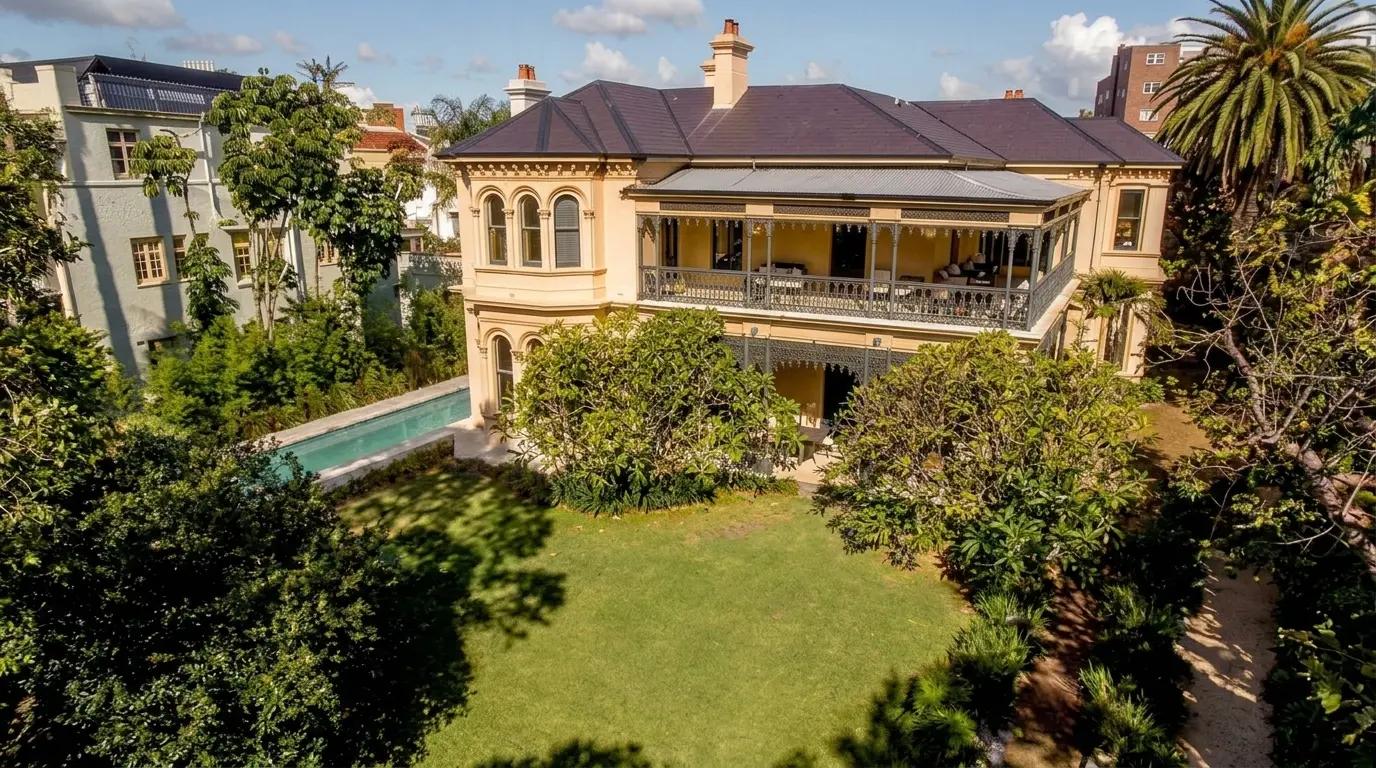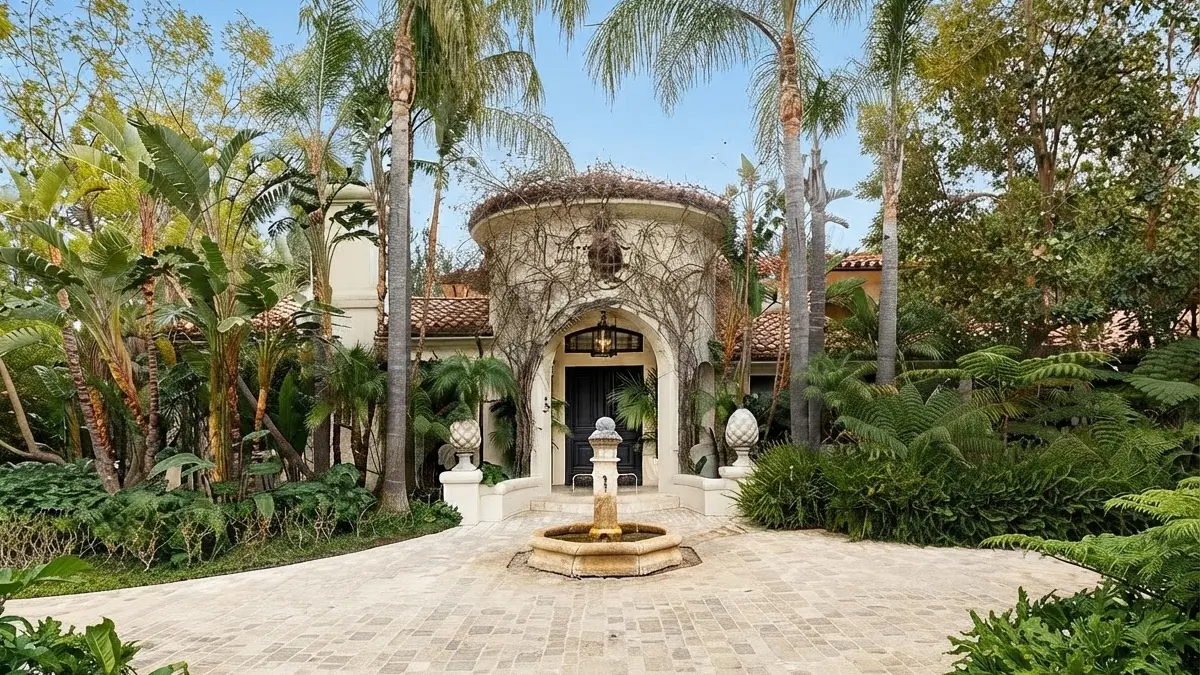
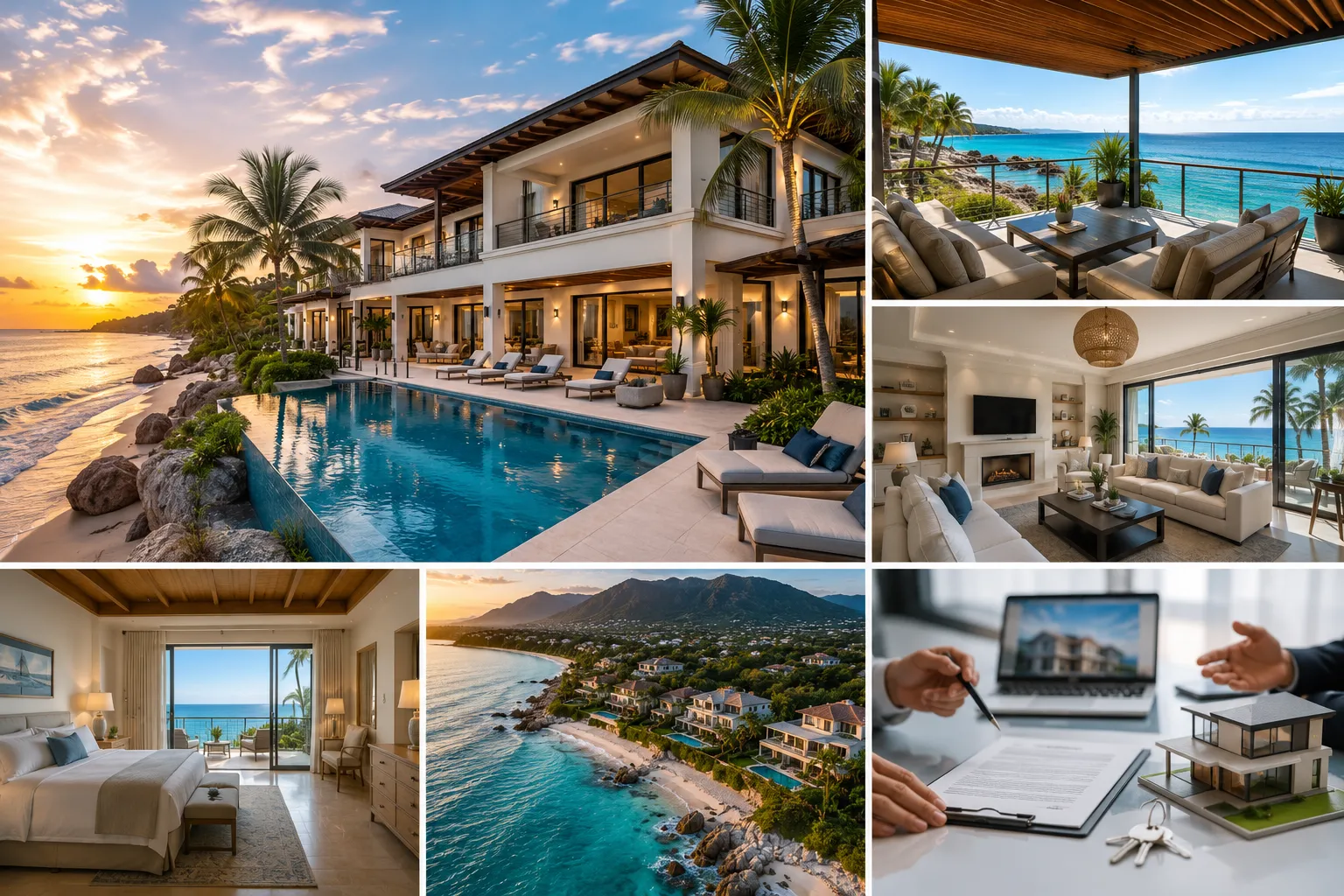
A beachfront luxury villa is a private residence whose plot directly borders the shoreline, with no road or public path between the home and the sand. This guide covers pricing, legal checks, rental yields, and the 8 hidden costs you need to budget for before you sign.
Demand for waterfront property has only grown. Browse our beachfront estates collection to see what a turnkey beachfront luxury villa looks like before you start comparing raw land or fixer-upper listings.
What Makes a Villa Truly Beachfront vs. Oceanfront?
A truly beachfront villa has a plot that meets the sand directly, letting you walk from the garden onto the beach. An oceanfront villa sits beside the sea but often lacks a beach, commonly perched on a cliff or rocky shoreline instead.
The distinction matters for resale value and lifestyle. Beachfront plots typically command a 30% to 60% premium over second-line properties set 50 to 150 meters (164 to 492 feet) back from the shore, based on Marbella market data. Oceanfront villas trade privacy and dramatic views for direct sand access.
How to Tell Frontline From True Beachfront
To tell frontline from true beachfront, check whether a public road sits between the villa and the water. Frontline beach means the home occupies the first row facing the sea, but a coastal promenade or road can separate it from the sand. True beachfront means the private plot itself touches the shoreline, with no infrastructure in between.
Oceanview Villas: A Lower-Cost Alternative
An oceanview villa offers sea views without direct shoreline access, sometimes from a hillside several miles away. This category costs significantly less than beachfront property while still delivering panoramic water views, making it a practical option for buyers who prioritize scenery over beach access.
What Legal Checks Protect a Beachfront Villa Purchase?
The single most important legal check confirms the property sits outside the maritime public domain, which is the protected coastal zone that varies by country but always restricts construction and ownership near the water’s edge.
In Spain, for example, this domain is defined by the Ley de Costas (Coastal Law), and buyers must verify boundaries against the official coastal demarcation before completing a sale. Equivalent coastal protection laws exist in the United States, the Caribbean, and Southeast Asia, each with different setback distances and enforcement bodies.
4 Documents to Request Before Making an Offer

- Title deed and land registry extract confirming clear ownership and no liens
- Municipal planning file verifying pools, terraces, and extensions are legally registered
- Coastal boundary survey showing the plot falls outside protected maritime zones
- Comparable sales data for similar beachfront plots in the same zone within the past 12 months
Why a Technical Survey Matters More for Coastal Homes
A technical survey for a beachfront villa must prioritize moisture penetration, salt corrosion, and façade integrity, since standard inland inspections miss these risks entirely. The surveyor should examine roofing membranes, window seals, electrical panels, and pool plant rooms for signs of salt-related deterioration.
How Much Does a Beachfront Luxury Villa Cost?
Beachfront luxury villa prices vary enormously by region, ranging from $300,000 entry points in the Caribbean to $35,000 per square meter (about $3,252 per square foot) on Spain’s Golden Mile. Location, plot frontage, and construction quality drive the spread more than square footage alone.
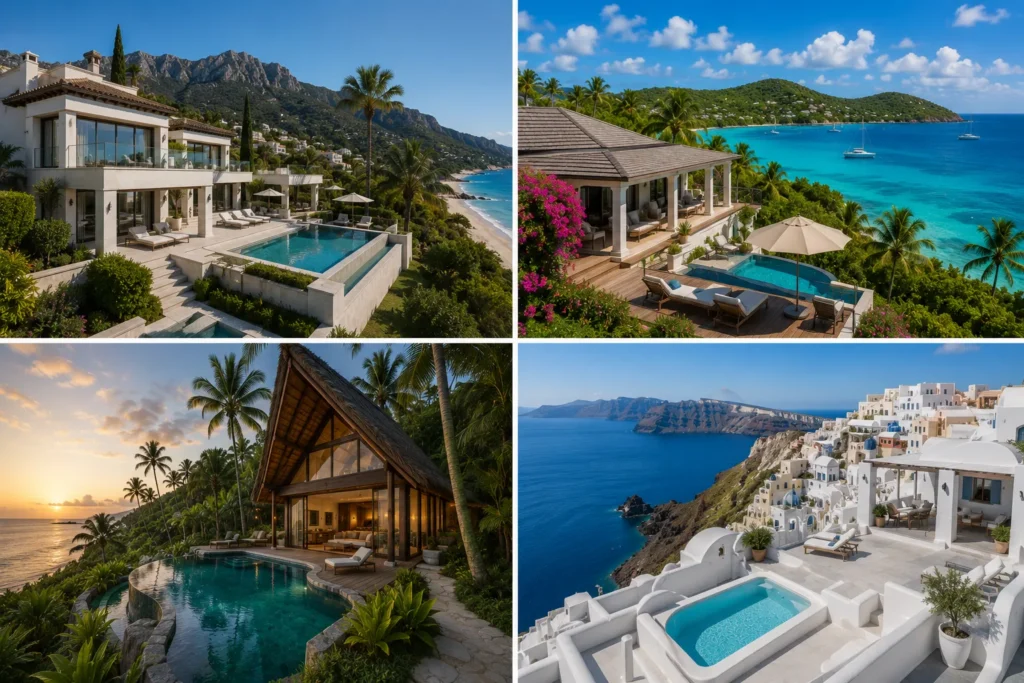
4 Regional Price Benchmarks for 2026
- Marbella Golden Mile, Spain: €18,000 to €35,000 per square meter (about $1,950 to $3,800 per square foot), extremely limited supply
- Caribbean (Antigua, St. Lucia): entry prices from $300,000, with freehold ownership available to foreign buyers
- Bali, Indonesia: entry prices from $200,000, sold under 25-to-30-year leasehold structures
- Greek Islands (Mykonos, Santorini): entry prices from $400,000, with freehold purchase available
Why Frontline Pricing Commands Such a Steep Premium
Frontline pricing commands a steep premium because true beachfront land rarely returns to market once developed. In mature destinations like Marbella, almost no vacant frontline plots remain, so buyers compete for existing villas or full reconstructions rather than new builds on virgin land.
What Rental Yield Can You Expect From a Beachfront Villa?
Rental yields for beachfront villas typically range from 3% to 12% net annually, with the wide range driven almost entirely by destination and management quality rather than property size.
| Region | Average Net Yield | Typical Occupancy |
| Marbella, Spain | 3% to 6% | Seasonal, high summer demand |
| Caribbean (Antigua, St. Lucia) | 4% to 5% | 50% to 70% annually |
| Bali, Indonesia | 12% to 20% | Above 70% annually |
How to Calculate Realistic Net Returns
To calculate realistic net returns, subtract management fees, maintenance reserves, insurance, and booking commissions from gross rental income before comparing yields. Management charges typically run 15% to 30% of bookings, maintenance reserves require 1.5% to 2.5% of property value annually, and booking platforms take another 10% to 20% per reservation.
What Are the Hidden Costs of Owning a Beachfront Villa?
Coastal exposure raises maintenance costs by 20% to 30% compared to inland properties, driven by salt air, humidity, and constant UV exposure on exterior materials. Budgeting for these costs upfront prevents the financial surprises that catch many first-time beachfront buyers.
8 Costs Buyers Frequently Underestimate
- Annual maintenance reserve of 1% to 2.5% of property value for salt-related wear
- Coastal insurance premiums of 0.5% to 2% of value, higher in hurricane-prone zones
- Property transfer tax or VAT, typically 7% to 12% of purchase price at closing
- Annual property tax based on cadastral or assessed value
- Non-resident income tax obligations even when the villa sits vacant
- Pool and HVAC servicing at higher frequency due to corrosion risk
- Staffing costs for gardeners, housekeepers, and security in remote coastal areas
- Booking platform fees and property management commissions if renting
Which Building Materials Resist Coastal Damage Best
Marine-grade stainless steel, anodized aluminum, and treated hardwoods resist coastal corrosion far better than standard steel and untreated wood. High-performance glazing with solar control coatings reduces heat gain while protecting against UV degradation, and natural stone or high-density ceramics hold up well on exposed terraces.
Where Are the Best Locations for a Beachfront Luxury Villa?
The best locations combine limited new supply, stable foreign-ownership rules, and strong year-round infrastructure. Marbella’s Golden Mile, the Caribbean’s Antigua and St. Lucia, and Bali’s southern coast each lead their regions for different reasons.
3 Markets With the Strongest Long-Term Fundamentals
- Marbella, Spain: 320+ days of sunshine annually, established infrastructure, and structurally limited beachfront supply under the Ley de Costas
- Antigua and Barbuda: Citizenship by Investment access from $300,000, plus freehold ownership for foreign buyers
- Bali, Indonesia: highest rental yields in this guide, though ownership requires a 25-to-30-year leasehold structure
For inspiration closer to home, our Malibu oceanfront villa listing shows how a private-pool beachfront property performs in the US short-term rental market.
How Do International Buyers Finance a Beachfront Villa?
Most international buyers finance a beachfront villa through a mix of local mortgages, home equity from their primary residence, and developer payment plans. Local lenders in the Caribbean and Mediterranean typically require 30% to 50% of the purchase price as a down payment from non-resident buyers, reflecting the higher perceived risk of overseas lending.

3 Financing Routes Worth Comparing
- Local bank mortgages in the target country, often requiring larger deposits but offering currency-matched repayments
- Developer-backed payment plans on new construction or redevelopment projects, sometimes requiring only 40% to 50% upfront
- Home equity or portfolio-backed lending through an international private bank, useful for buyers who want to avoid foreign currency exposure
How to Choose Between a New Build and a Renovated Beachfront Villa
To choose between a new build and a renovation, weigh the near-total absence of vacant frontline land against the design freedom of a full reconstruction. Most “new” beachfront villas in mature markets are full reconstructions of an older property rebuilt within its original permitted footprint, since truly vacant frontline land is almost nonexistent in established destinations.
Buyers chasing contemporary architecture on the sand have 2 realistic paths: acquire an older villa and rebuild within the existing footprint, or secure a unit early in a permitted redevelopment project. Both routes demand patience, since these opportunities rarely reach public listing portals and tend to move through private broker networks instead.
3 Renovation Restrictions Coastal Buyers Should Expect
- Interior upgrades and energy efficiency improvements are generally permitted under standard building codes
- Increasing built volume or structural height toward the shoreline often requires additional coastal authority approval
- An architect experienced with frontline coastal properties should review plans before purchase, not after
Quick-Reference Checklist for Beachfront Villa Buyers
Use this table to track the 7 tasks that matter most across the buying timeline, from pre-offer legal checks through ongoing maintenance.
| Task | Timing | Method | Difficulty |
| Verify beachfront legal status | Before offer | Title search + coastal boundary check | Hard |
| Commission technical survey | Before offer | Licensed surveyor inspection | Medium |
| Confirm zoning and rebuild rights | Before offer | Municipal planning office review | Hard |
| Budget for maintenance reserve | At purchase | Set aside 1%–2.5% of value yearly | Easy |
| Arrange flood/storm insurance | Before closing | Specialist coastal insurer quote | Medium |
| Set up rental management | After closing | Hire local property manager | Medium |
| Service HVAC and metal fixtures | Twice yearly | Licensed coastal maintenance contractor | Easy |
Frequently Asked Questions
Is a beachfront villa a good investment in 2026?
Yes. Beachfront villas in supply-constrained markets like Marbella and the Caribbean have shown consistent capital preservation, supported by permanent scarcity of frontline land and sustained international buyer demand.
Do foreign buyers need a local company to purchase beachfront property?
No, not in most markets. Spain, the Caribbean, and Greece allow foreign buyers to hold freehold title directly, though some buyers still use a local entity for tax efficiency. Indonesia is the main exception, requiring leasehold structures for foreign ownership.
Can you renovate an older beachfront villa freely?
No. Renovations are regulated by municipal planning rules and national coastal legislation. Interior changes are typically allowed, but increasing built volume or extending toward the shoreline often requires separate coastal authority approval.
How much should you budget for annual maintenance?
Budget 1% to 2.5% of the property’s value every year for coastal maintenance. Salt air, humidity, and UV exposure accelerate wear on metal fixtures, glazing, and pool equipment compared to inland properties.
What is the typical rental yield for a beachfront luxury villa?
Typical net rental yields range from 3% in mature European markets like Marbella up to 20% in high-occupancy destinations like Bali, depending on location, management quality, and seasonal demand.
Final Thoughts on Buying a Beachfront Luxury Villa
A beachfront luxury villa rewards buyers who verify legal boundaries, budget for coastal maintenance, and choose a location with lasting supply constraints. Get those 3 fundamentals right, and the property holds both lifestyle value and resale strength for decades. Explore our full beachfront estates collection to compare handpicked properties before you start your search, or read more about our editorial approach on our about page.