
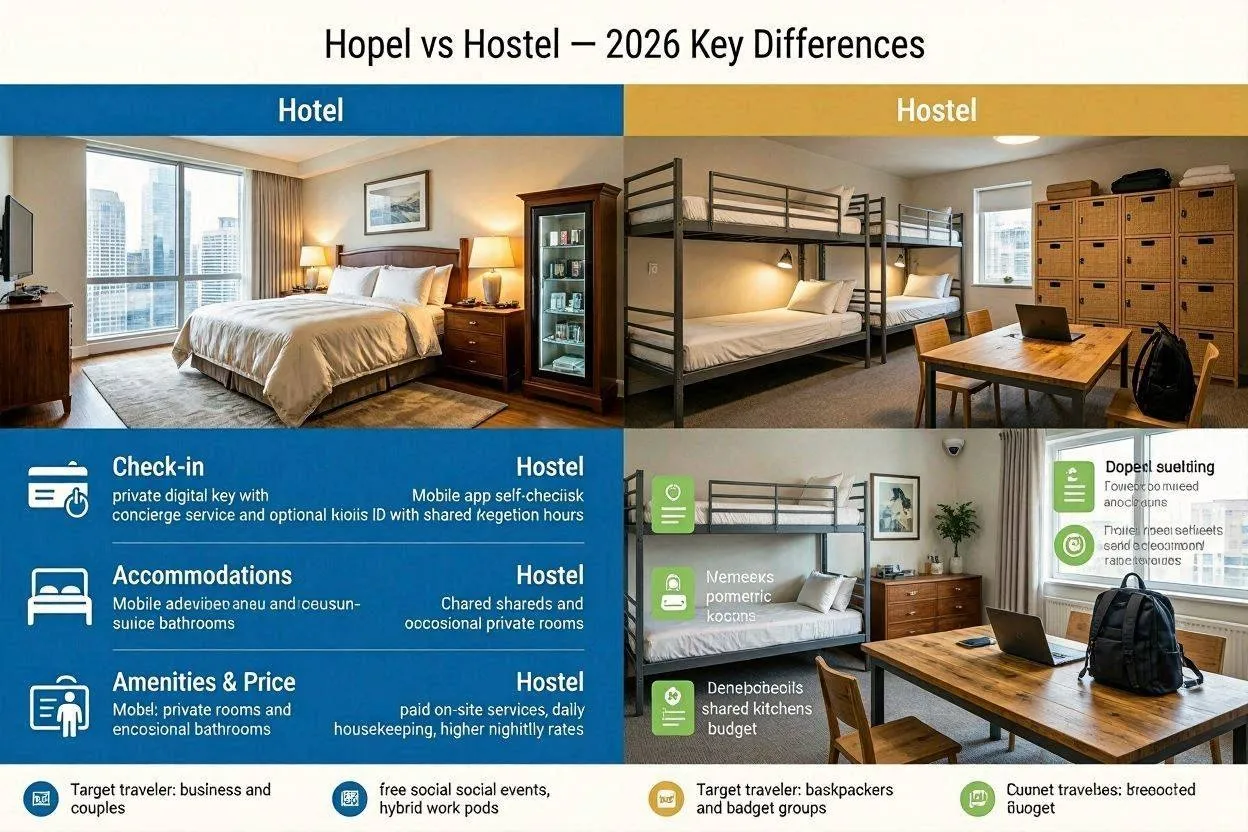
A hotel offers a private room, daily housekeeping, and on-site services like a restaurant or a pool. A hostel offers a shared dormitory bed, a communal kitchen, and a lower nightly price. The hotel vs hostel decision comes down to 3 factors: your budget, your need for privacy, and your travel goals.
This guide breaks down every major difference between a hotel and a hostel for 2026 travelers. You will see exact price ranges, room types, safety data, and a clear decision table. By the end, you will know which option fits your next trip.
What Is the Main Difference Between a Hotel and a Hostel?
The main difference between a hotel and a hostel is the sleeping arrangement. A hotel gives you a private room with a locked door and your own bathroom. A hostel gives you a single bed inside a shared dormitory room with 4 to 12 beds (2 to 6 bunk beds).
A hotel operates as a full-service property. Staff handle check-in, daily housekeeping, and guest requests through a 24-hour front desk. Many hotel chains, such as Marriott, Hilton, and Hyatt, follow the same room layout across every property.
A hostel operates as a budget-focused, community-driven property. Guests share a kitchen, a lounge, and sometimes a bathroom with 6 to 20 other travelers. Some hostels, including modern brands like Generator and Selina, now offer private rooms alongside dorm beds.
You will find both options in nearly every major city. Hotels cluster in business districts and airport zones, while hostels cluster near city centers, train stations, and nightlife areas.
Star ratings apply mainly to hotels, ranging from a 1-star budget property to a 5-star luxury resort. Hostels rarely use a star system; instead, review platforms like Hostelworld rank them by cleanliness, social atmosphere, and security score. This rating gap makes side-by-side comparisons harder unless you check both review platforms.
Ownership structure also differs between the two formats. Large hotel chains, including Marriott and Hilton, operate hundreds of standardized properties under one brand. Hostels usually operate as independent businesses or small regional chains, which explains the wide variation in design and service quality. This ownership gap is one more layer of the hotel vs hostel comparison worth checking before you book.
How Do Hotel and Hostel Prices Compare in 2026?
A hostel bed costs $20 to $50 (€18 to €46) per night in most cities. A hotel room costs $100 to $250 (€92 to €230) per night for a standard 3-star property. The price gap between a hotel and a hostel widens further during peak season.
In Western Europe, a hostel dorm bed averages $25 (€23) per night. A budget hotel room in the same city averages $140 (€129) per night. That gap equals a savings of $115 (€106) per night when you choose a hostel.
Hidden fees change the math in both directions. Hotels often add resort fees, parking charges, and Wi-Fi fees that range from $10 to $35 (€9 to €32) per day. Hostels sometimes charge $1 to $5 (€1 to €5) for towels, lockers, or linen rental.
A private room inside a hostel can cost nearly the same as a 3-star hotel room. Check both options before booking if privacy matters more than saving money.
Seasonality changes hotel vs hostel pricing more than most travelers expect. A hostel bed in a beach town can triple in price during summer weekends, while a city hotel often holds a steadier rate year-round. Book 4 to 8 weeks ahead during peak months to lock in lower rates at either type of property.
Group travel changes the hotel vs hostel math again. A family of 4 often pays less for one hotel room with 2 queen beds than for 4 separate hostel dorm beds. Compare the total trip cost, not just the nightly rate, before you choose.
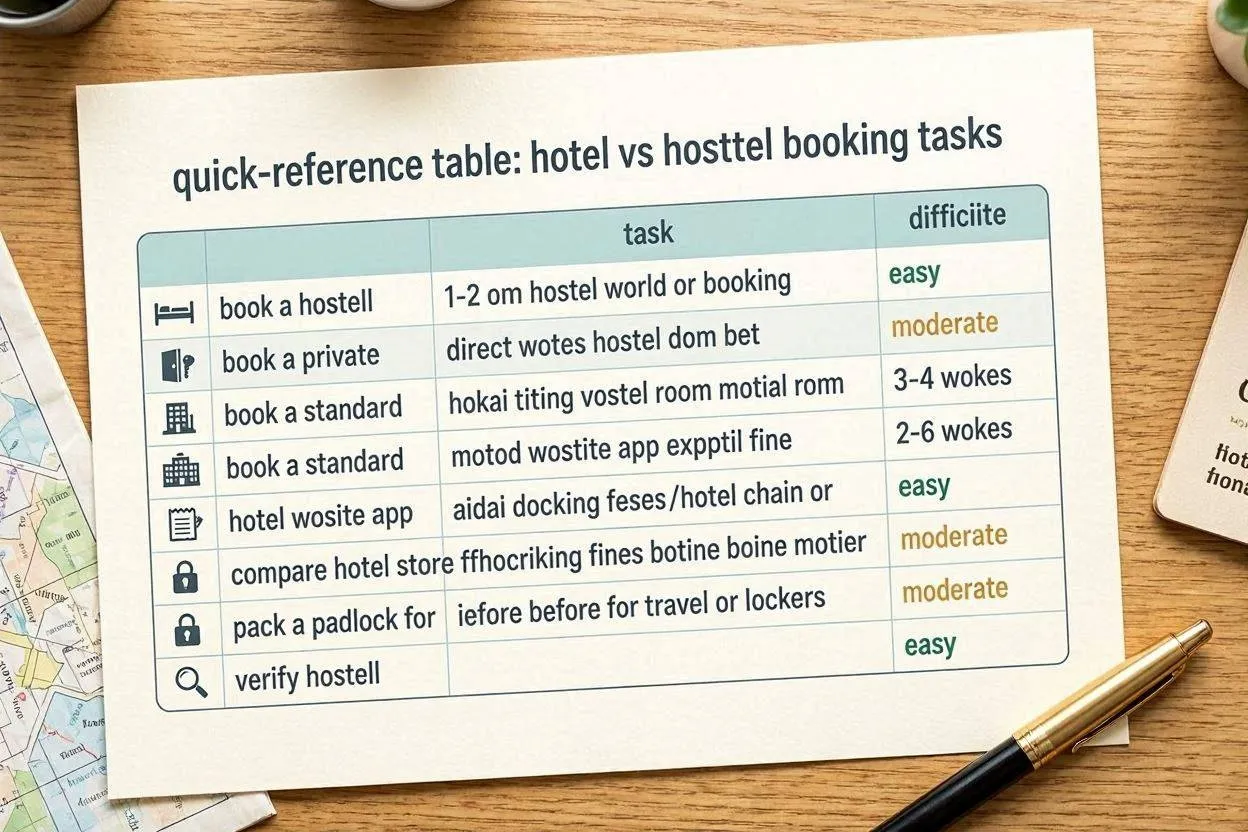
Quick-Reference Table: Hotel vs Hostel Booking Tasks
| Task | Best Timing | Method | Difficulty |
| Book a hostel dorm bed | 1-2 weeks ahead | Hostelworld or Booking.com app | Easy |
| Book a private hostel room | 3-4 weeks ahead | Direct hostel website | Moderate |
| Book a standard hotel room | 2-6 weeks ahead | Hotel chain app or Expedia | Easy |
| Compare hotel resort fees | Before checkout | Hotel website fine print | Moderate |
| Pack a padlock for lockers | Before departure | Travel store or online order | Easy |
| Verify hostel age limits | Before booking | Hostel policy page | Easy |
Which Offers Better Privacy in the Hotel vs Hostel Comparison?
A hotel offers better privacy than a hostel in nearly every case. You get a locked private room, your own bathroom, and no shared sleeping space. A hostel dorm room puts you in close contact with strangers throughout your stay.
Privacy inside a hostel depends entirely on the room type you book. A shared dorm offers almost no privacy beyond a curtain or a locker. A private hostel room with its own bathroom matches hotel-level privacy at a lower price.
Noise level is the privacy factor travelers underestimate most. A hotel room with a closed door blocks hallway and street noise reliably. A hostel dorm exposes you to snoring, late check-ins, and early risers packing bags, even with a quiet-hours policy in place.
How to Choose a Private Room in a Hostel
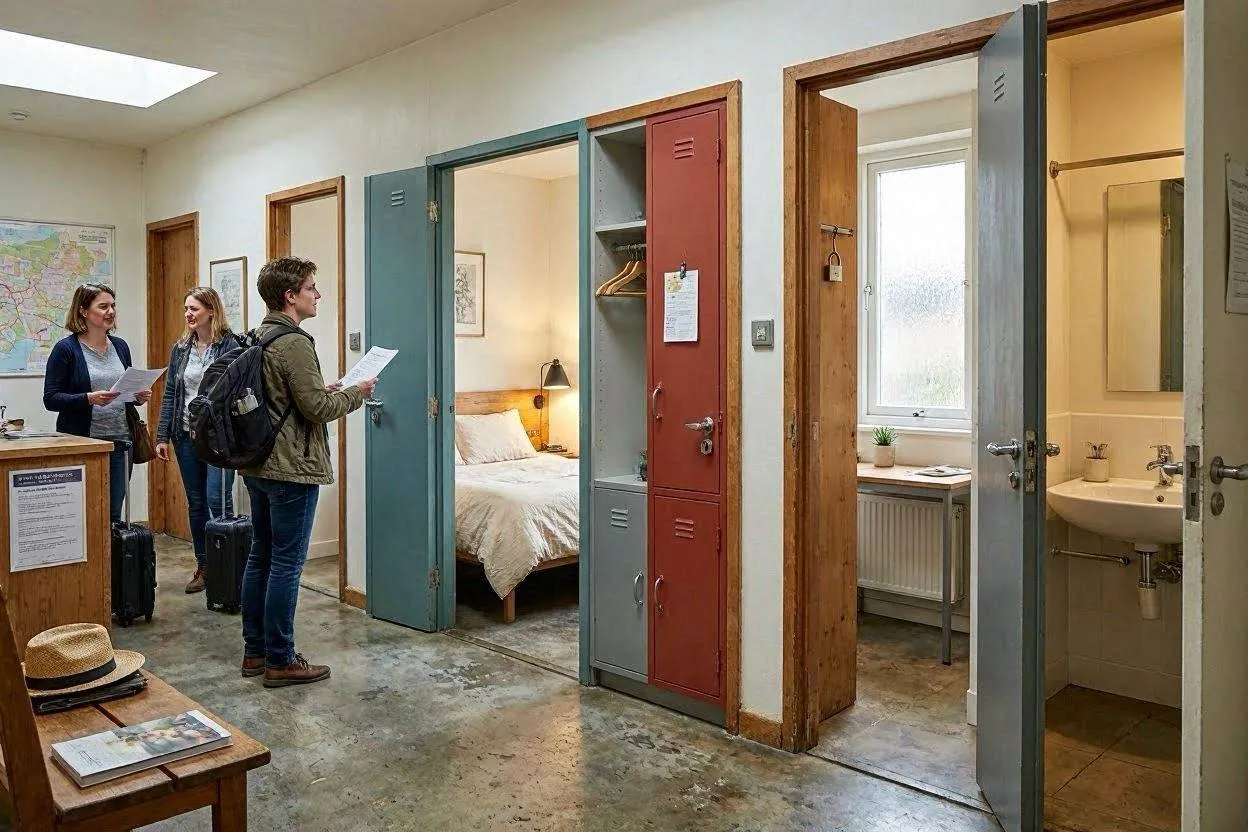
To choose a private room in a hostel, filter your search by “private” before sorting by price. Confirm the room includes an en-suite bathroom, not a shared hallway bathroom. Read 10 recent guest reviews to check noise levels near the room.
How to Book the Right Hotel Room Type
To book the right hotel room type, match the room category to your trip purpose. Choose a standard room for a short solo trip or a 1-night stay. Choose a suite or a connecting room for a family trip with 2 or more travelers.
What Amenities Do Hotels Offer That a Hostel Doesn’t?
Amenities mark one of the clearest splits in the hotel vs hostel comparison.
Hotels offer room service, daily housekeeping, and an in-house restaurant that hostels rarely provide. A typical 4-star hotel includes a gym, a pool, and a business center. A hostel typically includes a shared kitchen, a common lounge, and a laundry room instead.
Hotel amenities target comfort and convenience. Wake-up calls, a minibar, a room safe, and a concierge desk handle every guest request. Business travelers rely on these services for meetings, video calls, and quick turnarounds.
Hostel amenities target community and savings. A shared kitchen lets you cook your own meals and cut food costs by $15 to $30 (€14 to €28) per day. Organized walking tours, pub crawls, and game nights help you meet other travelers fast.
Some upscale hostels now blur this line. Properties like Selina and Generator add rooftop bars, co-working spaces, and boutique-style design to attract a wider range of guests.
Connectivity also separates the two formats. Hotels typically include high-speed Wi-Fi as a standard feature across every room. Hostels often provide free Wi-Fi only in common areas, requiring a paid upgrade for in-room access at some properties.
Who Wins the Hotel vs Hostel Choice for Solo and Budget Travelers?
You should choose a hostel over a hotel if you travel solo, watch your budget, or want to meet other travelers. Solo backpackers, gap-year students, and digital nomads make up the largest hostel demographic. In 2023, solo travelers and backpackers generated over half of total hostel revenue worldwide.
Best Hostel Types for Solo Travelers
The best hostel types for solo travelers include social hostels, female-only dorms, and co-working hostels. A social hostel runs daily group activities such as city tours, cooking nights, and bar crawls. A female-only dorm gives solo women travelers extra security inside a shared room.
Best Hostel Types for Groups
The best hostel types for groups include party hostels, private group rooms, and family-style hostels. A party hostel suits groups of 18 to 30-year-olds seeking nightlife and a social scene. A private group room sleeps 4 to 8 travelers in one locked space, similar to a hotel suite.
Long-term travelers also lean toward hostels for practical reasons. Weekly and monthly rates at many hostels drop the per-night cost by 20 to 40 percent compared to standard rates. A shared kitchen also lets a long-stay guest avoid restaurant costs for weeks at a time.
Who Wins the Hotel vs Hostel Choice for Families and Business Travelers?
You should choose a hotel over a hostel if you travel with family, need quiet space, or prioritize service quality. Business travelers, couples, and families with children rank privacy and comfort above socializing. A hotel room also removes the risk of theft from unknown roommates.
Hotels suit specific trip types better than hostels do. A business trip needs a quiet room, a desk, and fast Wi-Fi for video calls. A romantic getaway needs a private room with no shared walls or bunk beds. A family vacation needs a connecting room or a suite that fits 3 or more people comfortably.
Loyalty programs add another reason to pick a hotel. Chains such as Marriott Bonvoy and Hilton Honors reward repeat stays with free nights, room upgrades, and late checkout. Hostels rarely offer comparable loyalty perks across multiple properties.
How Safe Are Hostels Compared to Hotels?
Safety ranks as a deciding factor in the hotel vs hostel comparison for many solo travelers.
Hostels carry a higher theft risk than hotels because guests share sleeping and storage space. Hotels offer stronger security through room safes, key-card locks, and 24-hour staffed front desks. Most hostels still provide lockers, but you must bring your own padlock in many properties.
Hostel safety improves significantly when you choose the right property. Look for hostels with 24-hour reception, individual locker access, and security cameras in common areas. Read recent reviews that mention theft, noise, or staff responsiveness before booking.
Hotel safety rarely varies by budget tier. Even a 2-star hotel includes a locked door, a private bathroom, and staff on-site around the clock. This consistency makes a hotel the safer default choice for solo female travelers and families.
Travel insurance policies sometimes treat the two formats differently. Some insurers require a private locked room for theft coverage, which excludes open hostel dorms by default. Check your policy wording before you pack valuables for a hostel stay.
How to Decide Between a Hotel and a Hostel for Your Trip

To decide the hotel vs hostel question for your own trip, match your choice to 3 factors: budget, privacy needs, and trip purpose. Pick a hostel if your nightly budget falls under $50 (€46) and you welcome shared space. Pick a hotel if you need privacy, quiet, or full-service amenities regardless of cost.
Trip length also changes the right answer in the hotel vs hostel decision. A 1 to 3 night city trip works well in either option. A 2-week or longer trip often favors a hostel for its kitchen access and lower total cost.
Destination type matters too. A remote nature destination or a small town often has only hotel-style options, since hostels concentrate in major cities and tourist hubs. Confirm availability of both formats before you commit to a full hotel vs hostel itinerary.
If you want a luxury upgrade beyond both standard options, a private villa rental offers full privacy with hotel-style service. Browse handpicked private villa rentals for groups who want space, a private pool, and zero shared walls. For travelers who still prefer full-service comfort, explore curated luxury resort options with verified reviews and transparent pricing.
Final Verdict on Hotel vs Hostel for 2026 Travelers
Your final hotel vs hostel decision depends on your budget, your privacy needs, and your trip purpose. A hostel saves you money and builds community, while a hotel delivers privacy and full-service comfort. Compare both options against your itinerary before you book your next stay.
Neither side of the hotel vs hostel debate wins for every traveler. A backpacker chasing new friends and a low daily budget gets more value from a hostel bed. A family or a business traveler chasing comfort and quiet gets more value from a hotel room.