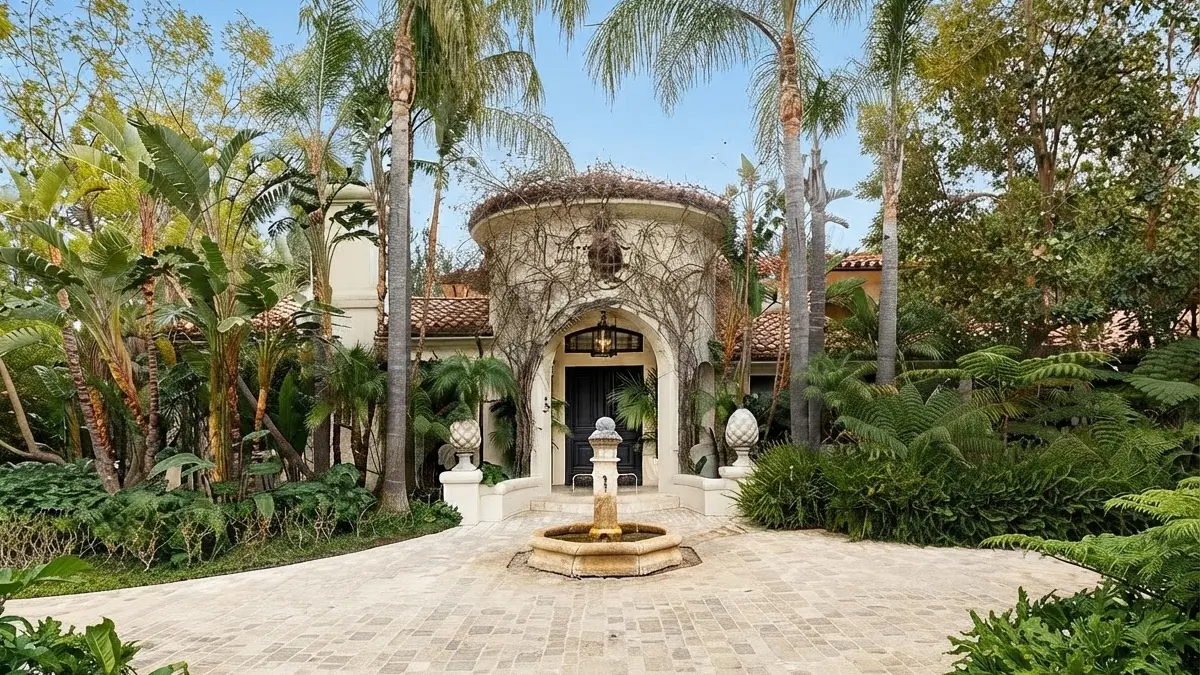

A hotel provides short-term lodging in a fixed location, while a resort delivers a self-contained vacation experience with on-site dining, activities, and entertainment. You pay for a room at a hotel. You pay for an experience at a resort. This guide breaks down 7 differences, real 2026 pricing, and the exact factors that decide which property type fits your trip.
What Is the Main Difference Between a Hotel and a Resort?
The main difference between a hotel and a resort is self-containment. A hotel functions as a base you leave to find food, entertainment, or activities. A resort functions as a destination you never need to leave. Hotels suit travelers who explore a city or attend business meetings. Resorts suit travelers who want relaxation, recreation, and dining packaged into one property.
You can identify a true resort if it offers 3 or more of these features on-site: multiple restaurants, a spa, a pool complex, organized activities, and private beach or golf access. A property with fewer than 3 qualifies as a hotel, even if marketed as a resort.
The distinction affects more than vocabulary. Pricing structure, daily schedule, and even staffing levels change based on which model a property follows. A 200-room hotel runs efficiently with 40–60 staff members across front desk, housekeeping, and maintenance. A 200-room resort requires 150–300 staff members to cover spa technicians, activity coordinators, multiple kitchen brigades, and entertainment teams.
Revenue sources also diverge sharply. Hotels generate 65% of revenue from room sales alone, with food and beverage contributing roughly 25%. Resorts flip this balance, often pulling 40–56% of total revenue from spa visits, dining, and activity fees rather than the room rate itself.
What Is a Hotel?
A hotel is a property that offers paid overnight rooms with basic services and a fixed-size building footprint. Hotels prioritize convenient access to a city, airport, or business district over on-site entertainment.
Hotels operate on a vertical layout to maximize room count on limited land. A typical city hotel occupies 0.5–2 acres (0.2–0.8 hectares), compared to 20–200 acres (8–80 hectares) for a major resort.
Travel purpose drives most hotel bookings. Business travelers book 38% of all US hotel room nights, prioritizing fast check-in, reliable Wi-Fi, and proximity to meeting venues over leisure amenities. Leisure travelers booking hotels typically plan to spend most of their day outside the property, treating the room as a place to sleep between activities rather than the activity itself.
Core Hotel Amenities
Hotels deliver 5 standard amenities across nearly every property type.
- Front desk service available 24 hours
- Daily housekeeping and linen service
- Wi-Fi access included or billed per day
- 1 restaurant or breakfast service, sometimes none
- Parking, either included or charged separately
Hotel Star Rating System
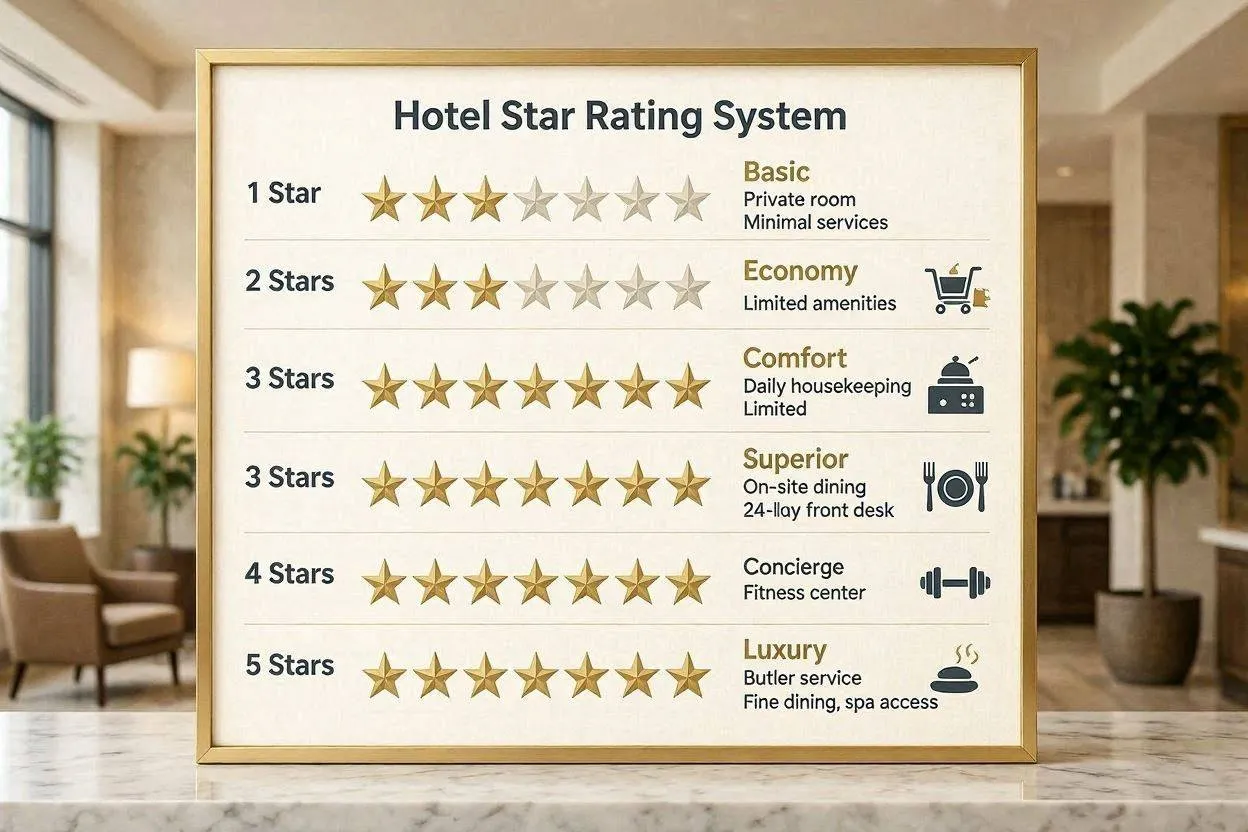
Hotels carry a 1-star to 5-star rating set by the American Hotel and Lodging Association (AHLA) and third-party inspectors. A 1-star or 2-star hotel offers a bed and bathroom only. A 4-star or 5-star hotel adds concierge service, room service, and a fitness center. Brands like Hilton and Marriott operate across all 5 tiers under different sub-brands.
What Is a Resort?
A resort is a destination property that combines lodging with dining, recreation, and entertainment in one location. Guests rarely leave the grounds because the resort supplies food, activities, and relaxation directly on-site.
Resorts sit in destination settings such as beaches, mountains, and islands. Examples include ski resorts in Aspen, Colorado, beach resorts in the Florida Keys, and golf resorts across Hawaii.
Resorts fall into 5 main categories based on their primary draw: beach resorts, ski resorts, golf resorts, spa and wellness resorts, and all-inclusive tropical resorts. Each category builds its amenity mix around 1 signature activity, then layers additional dining and recreation options around that core experience. A ski resort in Aspen prioritizes slope access and après-ski dining, while a spa resort prioritizes treatment rooms and quiet relaxation spaces over nightlife.
Core Resort Amenities
Resorts add 6 amenity categories that hotels typically skip.
- Multiple restaurants and themed dining venues
- Full-service spa with body treatments and massage
- Multiple pools, often with a water park or lazy river
- Organized activities like yoga, water sports, and kids’ clubs
- Golf courses or private beach access
- Evening entertainment including live music or shows
All-Inclusive Resort Packages
An all-inclusive resort bundles room, meals, drinks, and activities into 1 upfront price. You pay once at booking and avoid tracking expenses during the stay. Properties like Four Seasons and Ritz-Carlton offer both all-inclusive and room-only resort pricing depending on location.
Hotel vs Resort: 7 Key Differences Compared
The table below compares 7 factors side by side.
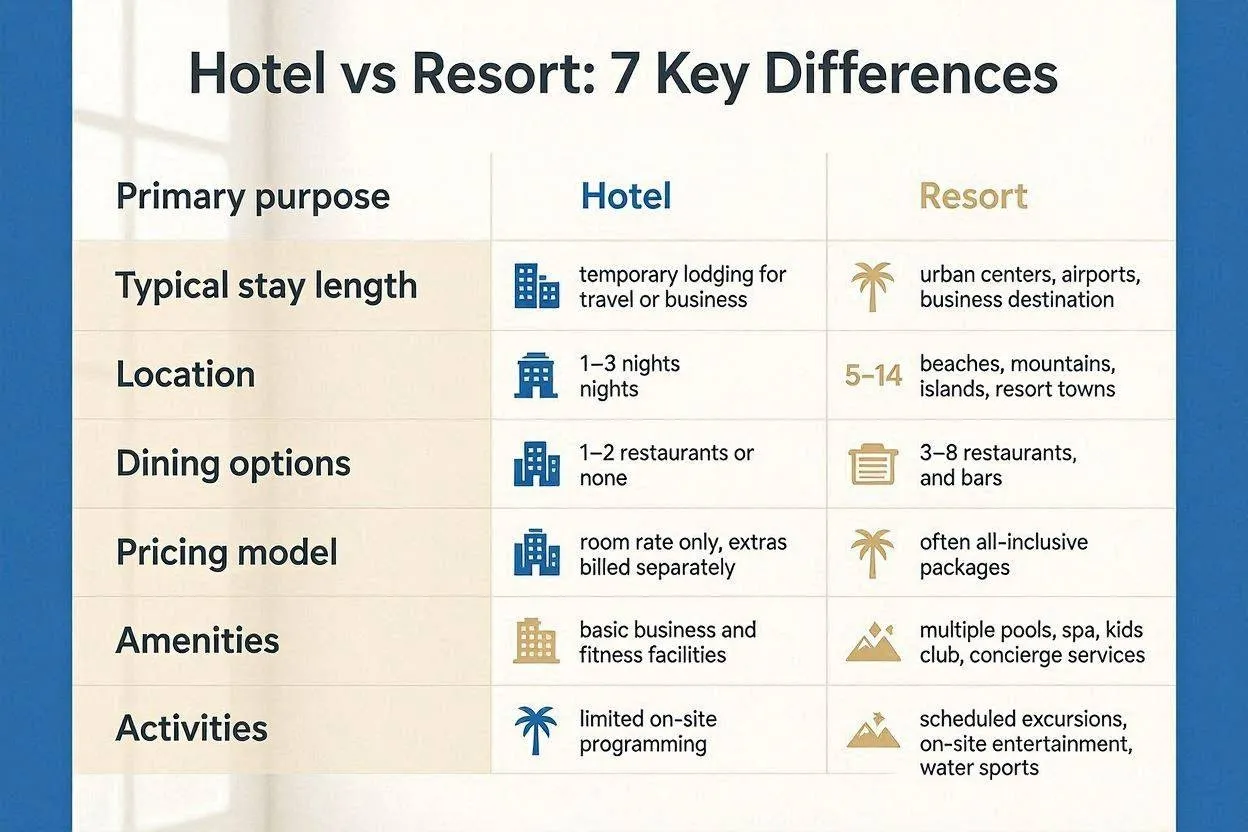
| Factor | Hotel | Resort |
| Primary purpose | Temporary lodging for travel or business | Self-contained vacation destination |
| Typical stay length | 1–3 nights | 5–14 nights |
| Location | Urban centers, airports, business districts | Beaches, mountains, islands, resort towns |
| Dining options | 1–2 restaurants or none | 3–8 restaurants and bars |
| Pricing model | Room rate only, extras billed separately | Often all-inclusive: room, meals, activities |
| On-site activities | Limited or none | Pools, spas, golf, water sports, kids’ clubs |
| Best guest fit | Business travelers, short city trips | Couples, families, honeymooners, long stays |
How Much Do Hotels and Resorts Cost?
Hotels average $120–$350 per night for a standard room in a US city. Resorts average $300–$1,200 per night, with luxury beachfront resorts reaching $2,000+ per night. The room rate excludes resort fees in most cases.
A standard hotel room measures 300–400 square feet (28–37 square meters). A resort suite measures 500–900 square feet (46–84 square meters), reflecting the larger land footprint resorts use.
Guest satisfaction scores track this spending gap closely. Properties charging resort fees average a 4.2 out of 5 guest rating when amenities match the fee, but drop to 3.1 out of 5 when guests feel the fee adds no real value. Hotels without mandatory fees average a steadier 4.0 out of 5, since guests pay only for what they actually use.
Hidden Resort Fees Explained
Yes, resort fees apply to 50.8% of US resorts but only 2.8% of hotels. The average resort fee runs $42.41 per night, adding roughly 11% to a guest’s total bill. Resort fees cover pool access, Wi-Fi, fitness center use, and sometimes daily activities. Always check the fine print before payment, since resort fees rarely appear in the headline room rate.
Do Hotels or Resorts Deliver Better Value?
Resorts deliver better value on stays of 5 nights or longer, while hotels deliver better value on stays under 4 nights. The math comes down to fixed costs spread across more days. A $500 resort fee package covering meals and activities saves money once daily food and entertainment costs exceed $100 per person, which typically happens by day 4 or 5 of a trip.
Calculate true value with 3 numbers: the nightly room rate, the daily resort fee or package cost, and the amount you would otherwise spend on meals and activities off-property. A family of 4 spending $150 per day on restaurant meals alone often breaks even on an all-inclusive resort package by the third night, since that package typically bundles 3 meals per person without per-item pricing.
How to Choose Between a Hotel and a Resort
To choose between a hotel and a resort, match the property type to your trip length, budget, and activity goals. A trip under 3 nights favors a hotel for cost and convenience. A trip over 5 nights favors a resort for value, since on-site amenities reduce daily transport and dining costs.
Apply these 4 criteria before booking.

- Trip length: choose a hotel for 1–3 nights, a resort for 5+ nights
- Travel purpose: choose a hotel for business, a resort for leisure
- Group type: choose a hotel for solo or business travel, a resort for couples and families
- Budget structure: choose a hotel for pay-as-you-go spending, a resort for fixed all-inclusive pricing
Couples planning a milestone trip often start with our guide to best luxury resorts in the US, which ranks 15 verified properties by amenities and privacy.
How Do Hotel and Resort Amenities Compare in 2026?
In 2026, wellness amenities lead resort growth while hotels invest in tech-driven convenience. Spa revenue per occupied room at resort-area properties grew 27.7% between 2018 and 2022, pushing more resorts to expand treatment rooms and add dedicated wellness wings. Hotels moved in a different direction, prioritizing mobile check-in, digital room keys, and AI-powered concierge chat over physical amenity expansion.
This split reflects what each guest type values. Resort guests pay a premium for human-delivered experiences like massage therapy and guided excursions, where automation adds little value. Hotel guests pay a premium for speed and friction-free logistics, where automation removes wait time at check-in and reduces staffing costs that get passed to room rates.
Sustainability also separates the 2 models. Resorts increasingly market eco-certifications tied to their larger land footprint, including reef-safe sunscreen policies and solar-powered pool heating. Hotels focus sustainability messaging on smaller-scale changes like linen reuse programs and reduced single-use plastics, since their compact footprint limits large-scale green infrastructure.
When Should You Book a Hotel Instead of a Resort?
Book a hotel instead of a resort if you plan to explore a city, attend business meetings, or stay 1–2 nights. A hotel costs less per night and places you closer to restaurants, transit, and attractions outside the property.
Boutique hotels bridge the gap for travelers who want unique design without resort-scale amenities. A boutique hotel typically holds 10–100 rooms, compared to 300+ rooms at a major resort.
Direct booking through the property website typically saves 5–15% compared to third-party online travel agency (OTA) platforms. Properties pass along the commission they would otherwise pay an OTA, usually 15–25% per booking, in the form of lower direct rates, free room upgrades, or waived resort fees. This advantage applies equally to hotels and resorts, though resorts have more room to offer perks given their wider service menu.
If a beach setting matters more than a full resort package, our roundup of the best beach resorts USA covers 10 properties across Florida, Hawaii, and the East Coast with verified pricing.
Quick Reference: Hotel vs Resort Booking Tasks
Use this table to plan your booking timeline.
| Task | Best Timing | Method | Difficulty |
| Compare hotel vs resort rates | 8–12 weeks before travel | Direct booking site comparison | Easy |
| Confirm resort fees | Before payment | Call property or check fine print | Easy |
| Book all-inclusive package | 3–6 months before peak season | Resort website or travel agent | Moderate |
| Verify star rating accuracy | During research phase | AHLA or third-party review sites | Easy |
| Negotiate group resort rates | 6+ months before event | Direct sales contact | Hard |
Travelers focused on recovery and wellness should compare options in our guide to luxury spa resorts, which lists properties built specifically for massage, body treatments, and skin care therapy.
Final Verdict: Hotel or Resort for Your Next Trip
A hotel wins for short stays, business travel, and city access. A resort wins for vacations longer than 5 nights, couples, families, and anyone who wants dining and activities included in 1 price. Neither option beats the other in every scenario, since the right choice depends entirely on trip length, group composition, and how much you value structured activities versus independent exploration.
Match the property type to your trip length and budget, then book directly through the property for the best rate. Ready to find your match? Browse our full collection of vetted luxury properties across the US at The Pinnacles List and book your next stay with confidence.