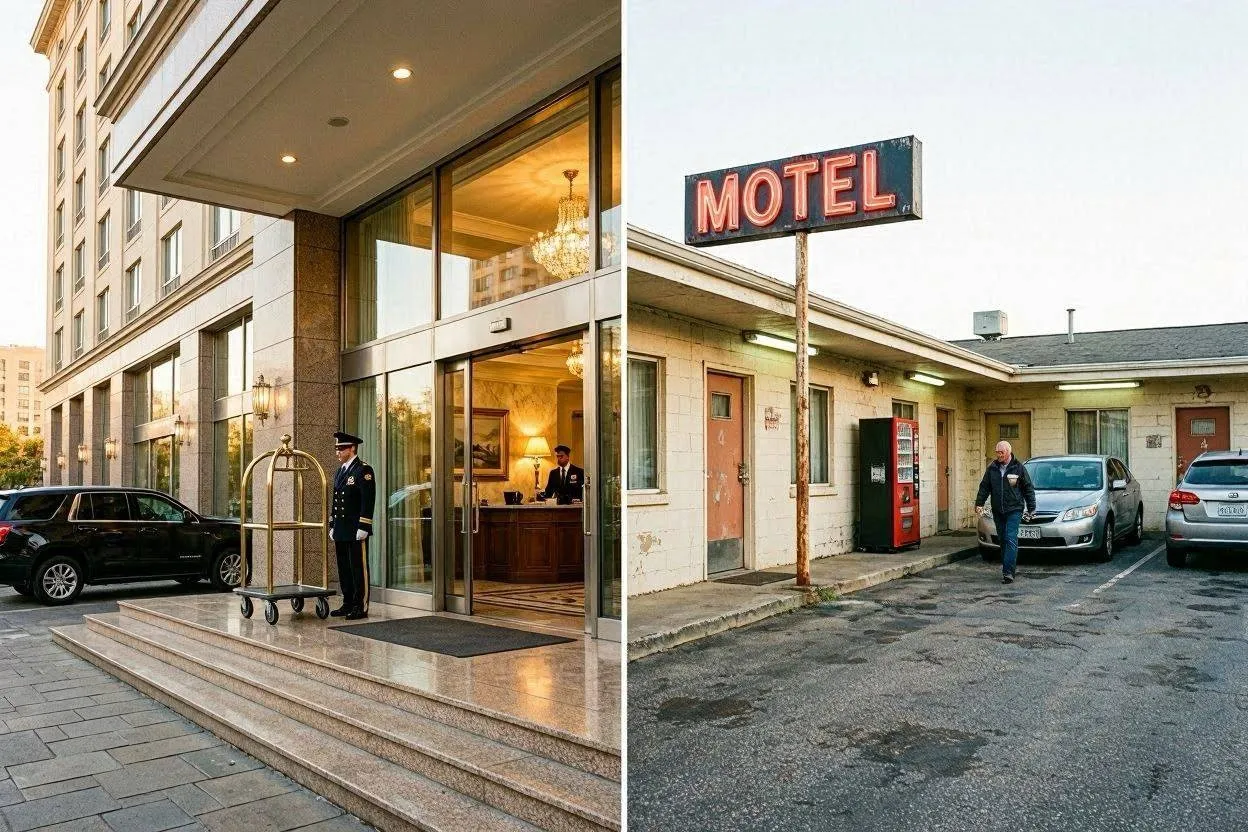
The main difference in a hotel vs motel comparison is room access: hotels open into interior hallways and a shared lobby, while motels open directly onto an outside parking lot. That single design choice shapes everything else — price, privacy, staffing, and the type of traveler each property attracts.
You see both options on every booking app, but the labels do not always tell you what to expect. This guide breaks down the 7 differences that matter, gives you a price comparison, and tells you exactly when to pick one over the other.
What Is the Main Difference Between a Hotel and a Motel?
A hotel is a multi-story building with interior corridors and a full staff; a motel is a 1-2 story property with exterior room doors that open straight to the parking lot. The word motel itself comes from “motorist’s hotel,” a term coined in the 1920s when road travel exploded across the United States and drivers needed a quick, no-fuss place to sleep.
A hotel typically runs a front desk, housekeeping team, and often a restaurant or fitness center. A motel runs with a skeleton staff — usually just a receptionist and a housekeeper, and in small properties the same person handles both roles.
Hotel vs Motel: 7 Differences Compared Side by Side
These 7 factors separate every hotel from every motel: room access, amenities, location, size, staffing, price, and stay length. The next 3 sections break down the differences that affect your booking decision the most.
Room Access and Building Layout
Motel rooms open directly onto the parking lot; hotel rooms open onto interior hallways reached through a lobby. You park your car steps from your motel door, carry your bags straight in, and skip the lobby entirely in many cases. A hotel routes you through a check-in desk first, then an elevator or staircase, then a corridor.
Motels rarely exceed 2 floors. Hotels regularly run 5 to 30 floors, with major chains like Marriott and Hilton building flagship properties over 40 floors (12 meters per 4 floors, roughly) in dense city centers.
The exterior-access layout also changes how fast you can leave. A motel guest loads the car and drives off within 2 minutes of waking up. A hotel guest navigates an elevator, a checkout desk, and often a valet line before reaching the parking garage.
Amenities and On-Site Services
Motel amenities cover 4 basics: a bed, a television, a private bathroom, and free parking. Hotels add a wider range — pools, gyms, restaurants, room service, and business centers — depending on the star rating.
Some motels include a small pool or a continental breakfast room, but few go beyond this. Hotels at the 3-star level and above typically add Wi-Fi guarantees, a fitness center, and a business center for travelers working remotely.
Luxury hotels at the 4-star and 5-star tiers add a concierge desk, valet parking, a spa, and turndown service. The AAA Diamond Rating system and Forbes Travel Guide both inspect these higher-tier hotels on a 5-point scale, while motels rarely carry a formal star rating at all.
Location and Surrounding Area
Motels sit along highways, interstates, and rural roads; hotels cluster in city centers, near airports, and inside tourist districts. This single difference explains why motels attract road-trippers and why hotels attract business travelers, conference attendees, and vacationers chasing a specific destination.
A motel built along Interstate 95 (I-95) serves drivers covering long distances overnight. A hotel built 3 blocks from a downtown convention center serves a completely different traveler — one who plans to walk, not drive, to most destinations during the stay.
How Much Does a Hotel Cost Compared to a Motel?
Motels average $60–$100 per night; hotels range from $100 at the budget tier to over $500 at the luxury tier. The gap comes from overhead — a motel runs with 2 to 4 staff members and a small building footprint, while a hotel carries dozens of employees, larger common areas, and higher utility costs across 50 to 500 rooms.
Location pushes hotel prices even higher. A hotel near an airport or inside a major city core can charge double the rate of an identical hotel 32 km (20 miles) outside town, while motel pricing stays flatter because most sit in similar roadside locations regardless of city.
Seasonal demand widens the gap further. A hotel in a beach destination can triple its rate during peak summer weeks, while a highway motel nearby holds a steadier price year-round since it serves passing traffic rather than vacation bookings.
Is a Motel Safe to Stay In?
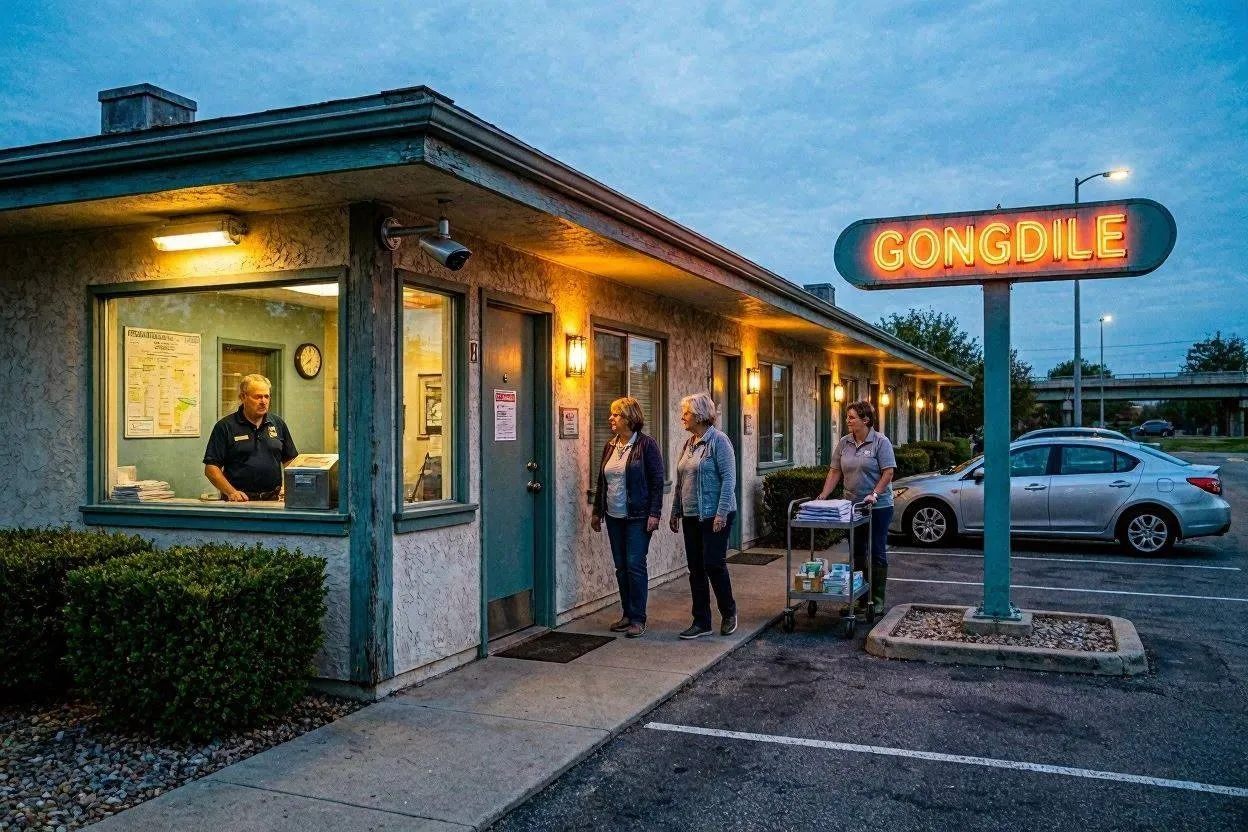
Yes, motels are safe to stay in when you check 4 specific features before booking: a deadbolt lock plus peephole on the door, a well-lit parking area, a phone capable of outside dialing, and a location inside a busier area rather than an isolated stretch of road.
Reading recent reviews adds a fifth safeguard — guests flag lighting issues, lock problems, or neighborhood concerns faster than any star rating does. National chains such as Motel 6, Super 8, and Best Western maintain consistent safety standards across thousands of locations, which makes brand recognition a reasonable shortcut when you have no local reviews to check.
Independent motels deserve the same 4-point check, but with one extra step: call the property directly before booking. A staffed phone line that answers promptly signals an attentive front desk, which correlates with better overall property maintenance.
How to Choose Between a Hotel and a Motel for Your Trip
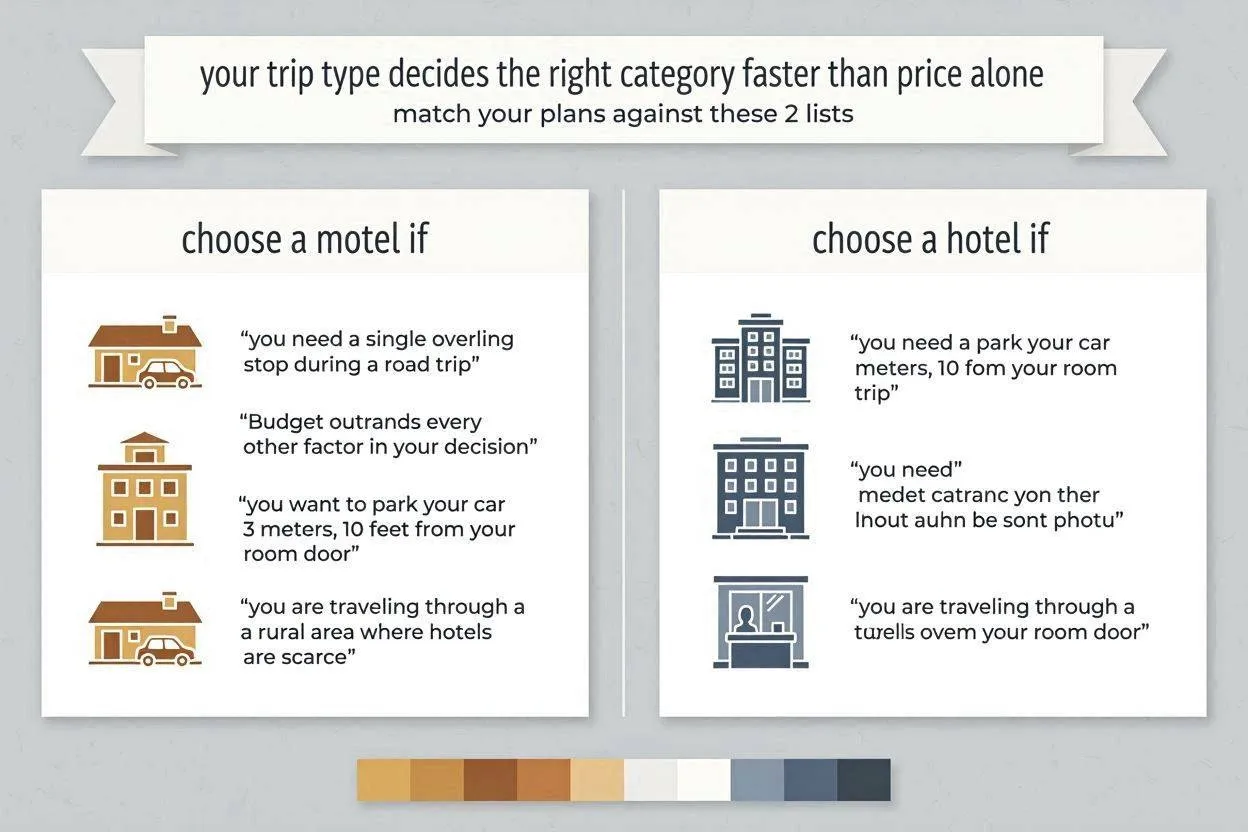
Your trip type decides the right category faster than price alone. Match your plans against these 2 lists.
Choose a Motel If
- You need a single overnight stop during a road trip
- Budget outranks every other factor in your decision
- You want to park your car 3 meters (10 feet) from your room door
- You are traveling through a rural area where hotels are scarce
Choose a Hotel If
- Your stay runs 3 nights or longer
- You need on-site amenities like a pool, gym, or restaurant
- Your trip is for business and requires meeting rooms or fast Wi-Fi
- You want a central location near an airport or major attraction
If your weekend plans lean toward a beach destination rather than a highway stopover, a best beach resorts USA guide narrows the search to 10 verified properties across 5 coastal states.
What Is the Difference Between a Hotel, Motel, and Inn?
An inn sits between a motel and a hotel in price and size — smaller than a hotel, more personal than a motel, and often family-run. Inns predate both categories by centuries, with roots tracing back to merchant lodging along Roman trade routes.
Pricing reflects the 3-way split clearly: motels run $60–$100 per night, inns run $100–$200 per night, and hotels span $100 at the budget level to over $500 at the luxury level. Inns typically include breakfast in the rate, a feature most motels skip and most budget hotels charge separately.
Travelers planning a longer countryside stay often compare inns against luxury resorts for couples, since both categories prioritize a quieter, slower pace over highway convenience.
Hotel vs Motel Quick Comparison Table
This table summarizes the 7 differences covered above into a single reference.
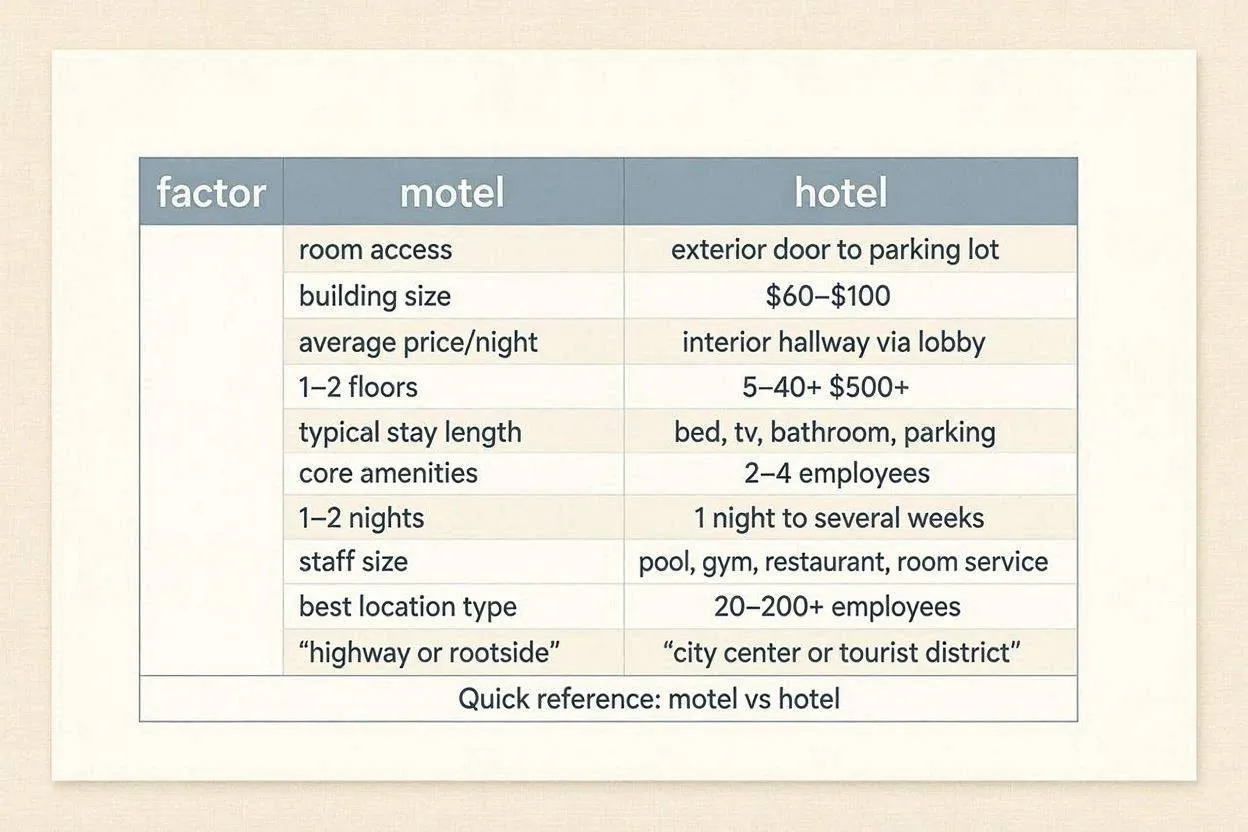
| Factor | Motel | Hotel |
|---|---|---|
| Room access | Exterior door to parking lot | Interior hallway via lobby |
| Building size | 1–2 floors | 5–40+ floors |
| Average price/night | $60–$100 | $100–$500+ |
| Typical stay length | 1–2 nights | 1 night to several weeks |
| Core amenities | Bed, TV, bathroom, parking | Pool, gym, restaurant, room service |
| Staff size | 2–4 employees | 20–200+ employees |
| Best location type | Highways, rural roads | City centers, airports |
Conclusion
Room access tells you everything in seconds: an exterior door facing the parking lot means motel, an interior hallway past a lobby means hotel. Price, amenities, and location all follow that one structural choice.
Match the category to the trip — a motel for a fast overnight stop, a hotel for a multi-night stay with amenities attached, and an inn for a slower, countryside pace. Your trip length and budget decide the rest.
Planning a longer luxury stay instead of a quick highway stop? Browse our types of villas guide for 12 private property styles across the United States, complete with 2026 pricing for every category.